The Ghost of the Nicked Copper: A Lesson in Forensic Wiring
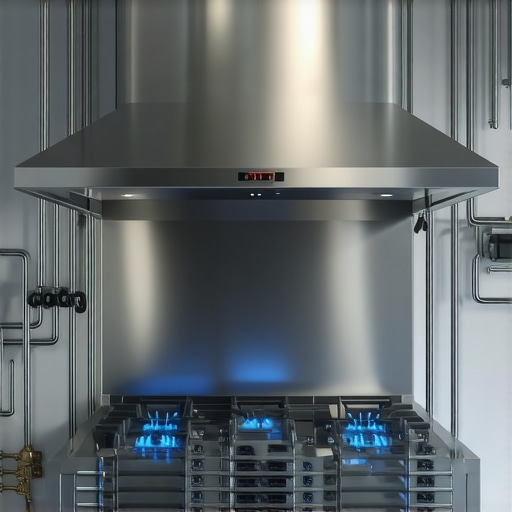
My old journeyman, a guy who smelled like burnt ozone and cheap coffee, used to smack my hand with a pair of dikes if he saw me stripping a wire with a pocketknife. ‘You nick the copper, you create a hot spot,’ he’d scream. At 19, I thought he was just a cranky old-timer. Twenty years later, standing in a soot-stained kitchen looking at a melted junction box behind a $5,000 professional range hood, I realized he was a prophet. That tiny nick reduced the cross-sectional area of the conductor, increased resistance, and under the heavy draw of a commercial-grade motor, it turned into a heating element. This isn’t just about making fans spin; it’s about the physics of heat, the reality of cold creep, and the terrifying incompetence of ‘renovation experts’ who treat electricity like a hobby.
The Load Calculation: Why Your 14/2 Romex is a Fire Starter
Most residential kitchens are rough-in with standard 14-gauge wire on a 15-amp circuit, often shared with the breakfast nook or a series of under-cabinet lights. That works fine for a cheap microwave fan that moves 100 CFMs. But the second you install a commercial-grade beast designed to suck the grease out of a six-burner wolf range, the math changes. These units often pull significant amperage not just for the high-velocity blower, but for integrated infrared heat lamps and multi-stage halogen arrays. If you try to pull 12 or 13 amps through an aged 14-gauge home run that’s already burdened by other loads, you are inviting a 24 hour emergency electrician to your house at 3:00 AM on Thanksgiving.
‘Fixed electric space-heating equipment shall be rated not more than 20 amperes and shall be supplied by an individual branch circuit if the equipment exceeds certain wattage thresholds.’ – NEC Article 422.10
When we talk about ‘Component Zooming,’ we have to look at the terminal screws on the hood’s internal junction box. In mid-century homes, we often see aluminum wiring. Aluminum has a much higher coefficient of thermal expansion than copper. Every time you flip that hood on, the wire heats up and expands. When you turn it off, it contracts. This ‘breathing’ eventually loosens the screw. Once that connection is loose, you get micro-arcing. The air itself becomes a conductor, the temperature spikes to over 2,000 degrees Fahrenheit, and the plastic insulation turns into fuel. This is why a sauna heater installation or a high-end range hood requires precision torque, not just a ‘gut-tight’ turn with a multi-bit driver.
Forensic Breakdown: The Anatomy of a High-Velocity Failure
I’ve performed enough infrared thermography scans to know that heat hides where you least expect it. On a recent call involving holiday emergency calls, the homeowner complained of a ‘fishy’ smell coming from the wall. That’s the smell of burning Bakelite and PVC. The culprit? A ‘handyman special’ where the installer used a tick tracer to find power, tapped into a nearby outlet switch repair, and called it a day. He didn’t account for the inductive load of the motor. Inductive loads have an ‘inrush current’ that can be three to five times the running current. That split-second spike is enough to degrade a weak connection over time until it finally gives up the ghost.
Protecting the Brains of the Operation
Modern commercial hoods aren’t just motors and metal; they have sensitive control boards for touchscreens and variable speed sensors. These boards are incredibly susceptible to voltage spikes. If you’re investing $10,000 in a kitchen appliance package, not having whole house surge protection is like buying a Ferrari and parking it in a hail storm. One lightning strike or a utility transformer pop, and your expensive hood becomes a very heavy paperweight. We often recommend home automation setup integration so the hood can be monitored, but that only adds more complexity to the grounding requirements. You need a solid, low-impedance path to dirt. If your house still has a two-prong system with monkey shit (duct seal) stuffed into the conduits, you aren’t ready for a pro-chef kitchen.
The Pro Method: Rough-in to Trim-out
To do this right, we pull a dedicated 20-amp circuit using 12-gauge Romex or THHN in conduit if the local code requires it. We don’t use the push-in ‘stab’ connections on the back of any devices; those are for people who want to see me again for an outlet switch repair in three years. We use side-wire terminals, looped clockwise, and torqued to the manufacturer’s specifications. If you’re doing office lighting upgrades or landscape lighting install, you might get away with a little slack, but with high-wattage kitchen appliances, there is zero margin for error. We use a Wiggy (solenoid voltmeter) to verify the circuit under load, checking for voltage drop that indicates a high-resistance joint somewhere back at the panel.
‘The small-appround branch circuits… shall not be used to supply other outlets.’ – NFPA 70 (National Electrical Code)
Conclusion: Sleep Better Knowing It’s Torqued
Electricity is a lazy, dangerous beast. It wants to find the shortest path to ground, and it doesn’t care if that path is through your dry-rotted 1950s insulation or your body. When you upgrade to a commercial-grade stove and hood, you are fundamentally changing the electrical profile of your home. This isn’t a DIY project. It’s a forensic engineering task. Sign up for annual maintenance contracts to ensure your panel lugs stay tight and your breakers aren’t internal-welding. Because at the end of the day, a kitchen should smell like roasted garlic, not ionized copper and regret. If you aren’t sure about your wiring, get a pro out there before your range hood becomes a widow maker. “,”image”:{“imagePrompt”:”A close-up, high-detail photo of a master electrician’s hand using a digital multimeter to test a thick 12-gauge copper wire connection inside a stainless steel commercial range hood junction box, with a focused beam of light showing the texture of the copper and the professional torque on the screws.”,”imageTitle”:”Professional Electrical Wiring for Range Hood”,”imageAlt”:”Master electrician testing 20-amp wiring for a commercial-grade range hood installation.”},”categoryId”:0,”postTime”:””}