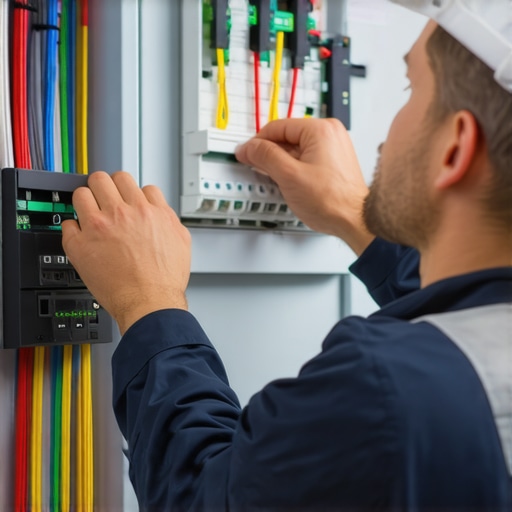
You smell it before you see it. It is that acrid, ozone-heavy stench of a 20-amp circuit attempting to commit suicide inside a wall cavity. Most people call it a ‘flicker,’ but to a forensic inspector who has spent 35 years in the trenches, it is the sound of an impending insurance claim. I have spent decades pulling ‘widow makers’ out of panels and tracking down why a ‘perfectly good’ system suddenly decided to melt. The difference between a building that stays energized for fifty years and one that becomes a charred skeleton often comes down to the hands that first turned the screwdriver. If those hands didn’t belong to a certified journeyman, you are likely sitting on a ticking time bomb.
The Forensic Breakdown: The Ghost in the Structural Column
I was called into a supposedly high-end commercial ‘renovation’ last year where the owner was complaining about a persistent humming sound near the lobby. I pulled out my circuit tracer and started chasing a signal that didn’t make sense. It led me to a structural support column that had been beautifully wrapped in mahogany. I had the crew pull the wood. Behind it, buried under a layer of spray-foam insulation, was a 277-volt junction box with no cover. The ‘electrician’ the flipper hired had used masking tape instead of wire nuts. The tape had dried, cracked, and fallen off, leaving the hot conductor arcing against the metal box every time the HVAC system kicked on and vibrated the floor. That is the reality of non-certified work; it is hidden, it is lethal, and it is expensive to fix once the smoke starts pouring out.
The Physics of Failure: Why Terminals Melt
When we talk about certified journeyman services, we aren’t just talking about someone who knows how to strip Romex. We are talking about an understanding of Contact Resistance. Every electrical connection is a point of resistance. If a terminal isn’t torqued to the specific inch-pounds required by the manufacturer, you trigger a feedback loop of thermal runaway. As the connection heats up due to resistance, the metal expands. When the load drops, it cools and contracts. This cycle, known as ‘cold creep,’ eventually loosens the screw. Once loose, the resistance spikes, the heat becomes intense enough to crystallize the copper, and suddenly you have a fire.
“All mechanical elements used to terminate conductors shall be tightened to the torque values specified on the equipment or in the installation instructions.” – NEC 110.14(D)
A handyman ‘snugs’ a screw; a journeyman uses a calibrated torque screwdriver because he knows that 15 inch-pounds is the difference between a functional panel and a molten mess. This level of precision is why annual maintenance contracts are not an upsell—they are a safeguard. During these inspections, we use infrared thermography scans to look for these hotspots before they become visible to the naked eye. We are looking for the ‘Delta-T’—the temperature difference between phases. If I see a 5-degree Celsius jump on a single lug, I know that connection is failing internally.
The Underground Nightmare: Moisture and Electrolysis
Many property owners overlook their underground wiring services until the parking lot lights go dark. I have seen bollard light installation jobs where the installer used standard PVC glue and didn’t debur the conduit. Over three years, the vibration of nearby traffic caused the sharp internal edge of the conduit to saw through the insulation of the conductors. Because the conduit wasn’t sealed with monkey shit (duct seal), moisture wicked into the pipe. The resulting electrolysis literally ate the copper wires from the inside out, turning them into a green powder. A certified pro knows that underground systems are essentially submarines; they must be watertight and chemically protected. Repairing a botched underground run requires excavation, which costs ten times more than doing the rough-in correctly the first time.
The Math of Modern Life: Electrical Load Calculations
We live in an era where people try to plug a 50-amp EV charger into a 100-amp service that is already struggling with an aging HVAC unit. I see this constantly during standby generator install consultations. People want the power but don’t want the electrical load calculations. They think electricity is a ‘limitless’ utility, but physics says otherwise. If you exceed the continuous load rating of your bus bars, you are annealing the metal, making it brittle and prone to failure. We perform 100% accurate load calcs to ensure your after hours electrical repair calls are zero. We look at the ‘harmonic distortion’—especially when we are doing network cable installation alongside power lines. If you run Cat6 too close to high-voltage lines without proper shielding and separation, the electromagnetic interference (EMI) will shred your data packets, leading to ‘ghost’ network issues that IT departments spend thousands trying to diagnose.
“Maintenance of electrical equipment is essential to safety. A lack of maintenance can lead to equipment failure, which can result in fire, explosion, or electrical shock.” – NFPA 70B Standard for Electrical Equipment Maintenance
Thermal Imaging: The Forensic Inspector’s Best Friend
If you aren’t utilizing thermal imaging inspections as part of your facility management, you are flying blind. I remember a case where a main distribution board was humming like a beehive. Using a wiggy (solenoid tester), I could see the voltage was stable, but the infrared thermography scans showed the center phase was glowing at 180 degrees Fahrenheit. The culprit? A manufacturing defect in the bus bar that only revealed itself under 80% load. Without that scan, the board would have eventually catastrophically failed, likely taking the building’s main transformer with it. Certified journeymen don’t just ‘check the wires’; we audit the health of the system’s molecular structure.
Precision in the Details: From Bollards to Generators
Even something as simple as a bollard light installation requires a journeyman’s eye. It isn’t just about the light; it is about the grounding path. If your grounding electrode system isn’t bonded correctly, a lightning strike 200 feet away can travel through your underground wiring and fry every piece of electronics in your building. We ensure that every home run is isolated and that the trim-out is as clean as the day the gear left the factory. We don’t use dikes to strip wire because we know a single nick in the copper creates a localized point of high resistance. We use the right tools, the right math, and the right code cycles.
Conclusion: Sleep Better When It Is Torqued
At the end of the day, you pay for electrical expertise now, or you pay for a forensic investigator later. Certified journeyman services are an investment in the structural integrity of your property. Whether it is a standby generator install to keep the lights on during a storm or network cable installation to keep your data flowing, the quality of the ‘unseen’ work determines your long-term costs. Don’t trust your safety to a tick tracer and a prayer. Get the math right, get the torque right, and keep the fire department where they belong—at the station. “