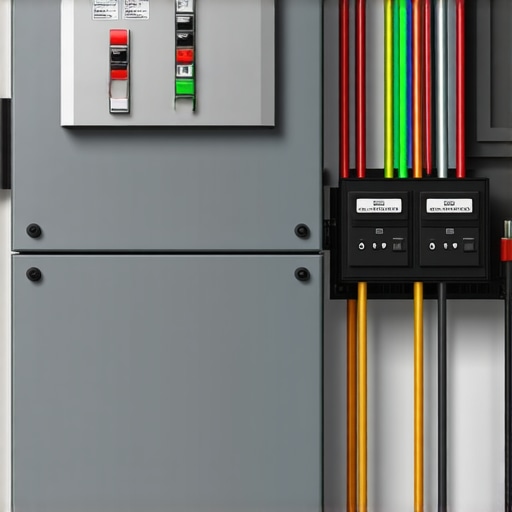
The Ghost in the Copper: Why Your Generator Needs a Gatekeeper
I remember my first year as an apprentice, standing in a damp basement while my journeyman, a man who smelled exclusively of stale coffee and electrical ozone, watched me terminate a heavy-gauge feeder. He didn’t just watch; he hovered. When I went to strip the insulation with my pocket knife, he swiped the blade out of my hand and tossed it across the concrete. ‘You nick that copper, kid, and you’ve just built a fuse where you wanted a conductor,’ he growled. ‘A nick creates a hot spot. Heat leads to resistance. Resistance leads to a fire. You treat every wire like it’s a fuse waiting to blow, or you find a different trade.’ That lesson stuck. It’s why I get a twitch in my eye when I see homeowners talking about ‘suicide cords’ or ‘backfeeding’ through a dryer outlet. When you’re talking about integrating a portable generator into your home’s electrical system, you aren’t just ‘plugging things in.’ You are creating a complex power quality analysis problem that can either keep your family safe or turn your service panel into a molten pile of slag. The transfer switch isn’t a luxury; it’s the physical manifestation of safety protocols designed to prevent you from killing a lineman or burning your house to the waterline.
The Physics of the Widow Maker: Why Backfeeding is a Death Sentence
Let’s talk about why we don’t just ‘hack’ it. When you backfeed a generator into your home without a transfer switch, you’re creating what we call a ‘Widow Maker.’ The power flows from your generator, through your panel, and right back out through your service mast into the utility lines. That 240 volts hits the utility transformer and steps up to 7,200 volts or more. A lineman working three blocks away, thinking the lines are dead because the neighborhood is dark, suddenly gets hit with 7,000 volts from your ‘little’ generator. Beyond the lethal risk to others, there’s the ‘Cold Creep’ and thermal expansion issues. Most mid-century homes built between 1960 and 1980 often have lingering aluminum branch wiring or even service entrance cables that have seen better days. When you suddenly dump a 50-amp generator load onto an old bus bar, the heat causes the metal to expand. Because aluminum has a different coefficient of expansion than the steel or brass screws in your panel, the connection loosens—a phenomenon called cold creep. This creates an air gap, which leads to arcing. You won’t see it, but your infrared thermography scans would show that panel lighting up like a Christmas tree. This is where home rewiring services become a non-negotiable prerequisite for generator integration in older structures.
“Aluminum wire connections can overheat and cause a fire without tripping the circuit breaker.” – CPSC Safety Alert 516
Blueprint C: The Load Calculation—Ohm’s Law Doesn’t Care About Your Comfort
Before you buy a switch, you have to do the math. Electricity isn’t a hobby; it’s a rigid system governed by Ohm’s Law. Most people look at their generator’s ‘starting watts’ and think they can run the whole house. They’re wrong. You need to perform a rigorous load calculation to determine if you need a 30-amp or 50-amp manual transfer switch, or a full-scale automatic system. If you’re running a data center power setup for a home office, your needs are vastly different than someone just trying to keep the fridge cold and a ceiling fan spinning. We’re talking about the ‘Rough-in’ phase of your emergency power strategy. You have to account for inductive loads—things with motors like your AC compressor or well pump. These require a massive ‘inrush current’ to start, often three times their running wattage. If your transfer switch isn’t rated to handle that surge, the contactors inside will pit and eventually weld themselves shut. I’ve seen cheap, off-brand switches where the contactor bounce was so bad it fried the sensitive electronics in a smart meter installation. When we do a certified journeyman services inspection, we’re looking at the ‘Home Run’—the main line from the switch to the panel—to ensure the voltage drop doesn’t exceed 3%. Anything more, and you’re just wasting fuel to heat up your wires.
The Forensic Breakdown: Manual vs. Automatic Systems
There are two main paths: the Manual Transfer Switch (MTS) and the Automatic Transfer Switch (ATS). An MTS is a ‘Break-Before-Make’ switch. It physically prevents the generator and the utility from being connected at the same time. You have to go outside, fire up the genny, and flip the lever. It’s rugged and reliable. The ATS, however, is a different beast. It monitors utility voltage. When the ‘tick tracer’ in its logic board detects a drop in power quality, it commands the generator to start and flips the load. This is essential for a fire alarm system install where 24/7 uptime is a code requirement. However, in mid-century homes with Federal Pacific or Zinsco panels, installing an ATS can be a nightmare. These old panels are notorious for ‘jammed pivots’—the breakers simply refuse to trip even under massive overloads. If you’re putting an ATS on an FPE panel, you’re essentially putting a Ferrari engine in a lawnmower. It’s going to end in tears. This is why I always recommend infrared thermography scans after the first 24 hours of operation under load to ensure those old bus bars aren’t reaching critical temperatures.
“The grounding electrode conductor shall be connected to the grounded conductor of the derived system at the same point on the separately derived system where the system bonding jumper is connected.” – NEC Article 250.30(A)(1)
The Grounding Trap: Bonding and Stray Voltage
Here is where the ‘handymen’ really mess up: the Neutral-Ground bond. Most portable generators have the neutral bonded to the frame. When you plug that into a house panel that also has a neutral-ground bond, you’ve created parallel paths for the return current. Now, your grounding system—including your swimming pool bonding—is carrying live current. I’ve been on jobs where the homeowner complained of ‘tingling’ when they touched their kitchen faucet during a power outage. That’s because their generator wasn’t wired as a ‘Separately Derived System.’ If you don’t switch the neutral, you’re inviting stray voltage to dance through every metal pipe and ground wire in your home. It can even interfere with power quality analysis equipment. A proper installation by a pro ensures that the ‘Monkey Shit’ (duct seal) is in place to prevent moisture migration and that the grounding path is singular and solid. We often offer a military discount wiring package for veterans because they understand the importance of ‘standard operating procedures.’ They know that when things go sideways, you don’t want to be second-guessing your equipment. You want to know that your system was torqued to spec with a Wiggy or a high-end multimeter, not just ‘hand-tightened’ by a guy with a pair of dikes and a dream. If you want to sleep at night, stop treating your electrical panel like a DIY project and start treating it like the life-support system it is. Get the right switch, get the right professional, and keep the fire inside the wires where it belongs. “,”image”:{“imagePrompt”:”A close-up, high-detail macro photograph of a professional grade 50-amp manual generator transfer switch installed next to a modern electrical service panel. The image should show clean copper wiring, clear labeling of circuits, and a sturdy metal handle in the ‘Utility’ position. Lighting should be crisp, highlighting the textures of the metal and the precision of the electrical terminations in a clean, dry basement setting.”,”imageTitle”:”Professional Generator Transfer Switch Installation”,”imageAlt”:”A heavy-duty manual transfer switch installed beside a residential electrical panel for emergency power safety.”},”categoryId”:0,”postTime”:””}“`