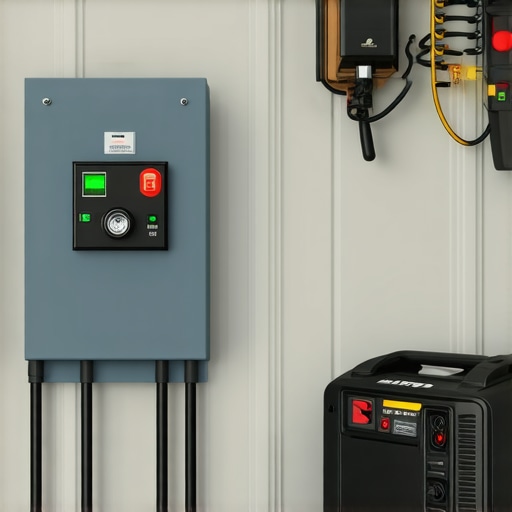
The Ghost in the 1940s Panel
I’ve spent thirty-five years listening to the hum of electricity, and let me tell you, it isn’t always a happy song. Last week, I stood in a basement in a post-war bungalow, the kind with the old glass screw-in fuses and a service entrance that looked like a bird’s nest of brittle cloth-covered wire. The homeowner wanted a whole-home backup system. They’d been sold a bill of goods by a big-box salesman who promised a ‘seamless’ automatic transition. But here’s the cold, hard truth that most contractors won’t tell you: an Automatic Transfer Switch (ATS) on a 100-amp vintage service is a recipe for a catastrophic failure. My journeyman used to smack my hand if I stripped a wire with a knife. ‘You nick the copper, you create a hot spot,’ he’d scream. He was right. That same principle applies to these high-end switches—the more complex the gadget, the more points of resistance you’re introducing to a system that’s already gasping for air. For a budget-conscious homeowner, especially those living in older infrastructure, a manual transfer switch (MTS) isn’t just a cost-saver; it’s the only way to sleep at night without smelling ozone in your dreams.
The Physics of Failure: Why ATS Isn’t Always the Answer
When you install an automatic switch, you’re relying on a series of sensitive electronic relays and a motorized contactor to decide when to flip the load. In the world of high-voltage forensics, we call those ‘failure points.’ In a coastal environment, salt air enters the enclosure and begins a slow, invisible process of galvanic corrosion on the PCB boards. Before you know it, the logic gate fails, and the switch won’t throw when the grid goes dark. A manual transfer switch, however, is a mechanical beast. It’s a physical interlock or a heavy-duty double-throw switch. There are no capacitors to leak, no firmware to glitch, and no sensors to get confused by a brownout. When you throw that handle, you’re making a solid, physical connection. You’re the logic gate. For the price of one high-end ATS, you could invest in home rewiring services or whole house surge protection—upgrades that actually protect your electronics 24/7, not just during an outage.
“Transfer equipment, including automatic transfer switches, shall be identified for its intended use and shall be designed and installed so as to prevent the inadvertent interconnection of normal and alternate sources of supply in any operation of the transfer equipment.” – NEC Article 702.5
The Component Zoom: Cold Creep and Contact Resistance
Let’s talk about why your lights flicker when the neighbor’s AC kicks in. It’s often ‘Cold Creep’ in your main lugs. In the 60s and 70s, aluminum was king, but aluminum has a high coefficient of thermal expansion. It expands when hot, squishes under the lug screw, and then stays squished when it cools. Over time, the connection loosens. Now, imagine putting an ATS into that mix. Every time it cycles, it creates a momentary arc. If those lugs aren’t torqued to the inch-pound (not just ‘tight,’ but calibrated-tight), that resistance generates heat. I’ve seen lugs that reached 400 degrees Fahrenheit without ever tripping a breaker. A manual interlock kit on your existing panel avoids the need to cut into your main service conductors, preserving the integrity of your home rewiring services and preventing the need for an expensive ‘heavy-up’ service upgrade. You keep the warranty backed repairs simple because there’s less to break.
Budget Logic: Choosing Reliability Over Convenience
If you’re worried about the bottom line, look at the labor. Installing an ATS often requires a sub-panel, which means I’m in your basement for two days pulling Home Runs and re-identifying every circuit. If you have an older home, I might find outlet switch repair issues or bootleg grounds that need fixing before I can even touch the panel. With a manual transfer switch or an interlock, I’m in and out in a few hours. That leaves you with enough cash to finally handle that holiday light installation you’ve wanted or to fix the spa grounding services that have been tingling your toes every time you jump in the tub. We’re talking about a difference of thousands of dollars. Why pay for a computer to flip a switch when you have a perfectly good hand to do it?
“Aluminum wire connections can overheat and cause a fire without tripping the circuit breaker.” – CPSC Safety Alert 516
The Modern Load Problem
We live in a world of ‘dirty power.’ Your sensitive electronics—the security camera wiring and ethernet wiring services—don’t like the micro-surges that occur when an automatic switch toggles under load. When you use a manual switch, you have the ‘Human Delay.’ You shut off the main, you turn off your sensitive breakers, you start the generator, let it stabilize, and then you throw the transfer. This sequence prevents the massive inrush current that fries motherboards. It’s the same logic I use when wiring boat lift wiring; the environment is harsh, and the loads are heavy. You want manual control over the sequence of events. You don’t want a machine guessing if the voltage is stable enough to power your $3,000 OLED TV.
The Forensic Conclusion: Torqued and Tested
At the end of the day, my job is to make sure your house doesn’t become a statistic. I’ve seen the aftermath of ‘Handyman Specials’ where someone tried to backfeed a dryer outlet with a double-male cord—we call those ‘Widow Makers.’ A manual transfer switch, installed correctly with NEC code updates in mind, is the gold standard for the pragmatic homeowner. It’s about knowing that when the wind is howling and the grid is down, you have a mechanical, fail-safe connection to your backup power. No ‘Tick Tracer’ is going to find a phantom voltage on a properly interlocked manual system. It’s clean, it’s legal, and it’s cheap. Don’t let a salesman talk you into a Ferrari when a Jeep is what’s going to get you through the mud. Get the MTS, spend the savings on whole house surge protection, and sleep soundly knowing your connections are torqued, your grounds are solid, and your family is safe.