
The Smell of a Pending Disaster
I can usually smell a bad electrical job before I even pull my Wiggy out of the bag. It is that sickly sweet scent of ozone mixed with melting PVC insulation—a smell that tells me someone tried to run a high-draw Level 2 EV charger on a circuit that was never meant for it. My journeyman used to smack my hand if I stripped a wire with a knife. ‘You nick the copper, you create a hot spot,’ he’d scream. He was right. That microscopic notch in the conductor acts as a bottleneck, forcing electrons through a narrower path, generating heat that eventually carbonizes the surrounding insulation. When you are dealing with the 240-volt continuous load of an electric vehicle, that ‘hot spot’ is a countdown to a structure fire.
“Continuous loads, such as EV charging stations, must be calculated at 125 percent of the maximum current to prevent overheating of the circuit conductors.” – NEC 210.19(A)(1)
The Load Calculation Crisis: Why Your 60 Amp Panel Upgrade is Overdue
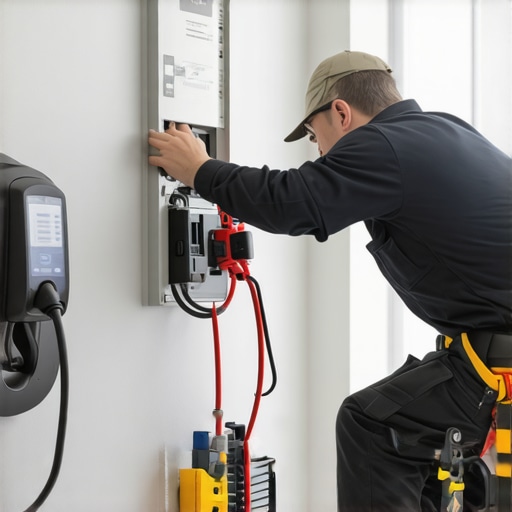
If you are living in a home built before the 1980s, there is a high probability you are staring at a 60-amp or 100-amp service. In the days of incandescent bulbs and gas stoves, 60 amps was plenty. Today, you add a 48-amp EV charger and a few high-velocity ceiling fans, and you are redlining your electrical system. This is where AI fault detection comes into play. Modern smart panels can now monitor the specific ‘signature’ of your appliances. When your EV charger kicks in, the AI looks for the distinct waveform of an arc-fault. If your old-school breakers are humming, they aren’t ‘working hard’; they are failing. A 60 amp panel upgrade isn’t just an ‘upsell’—it is the difference between a functional home and a Widow Maker scenario where the main bus bar melts into the enclosure.
[IMAGE_PLACEHOLDER]
Forensic Troubleshooting: From Ceiling Fans to Industrial Motor Controls
When a client calls for same day service appointments because their ceiling fan is ‘acting weird,’ I’m not looking at the pull chain. I’m looking at the Rough-in. A wobbling fan creates mechanical stress on the Romex connections inside the junction box. If those wire nuts weren’t torqued properly, the vibration creates an intermittent connection. This arcing generates heat, which is why I use drone thermography scans for larger properties and industrial motor controls. A drone equipped with a FLIR camera can spot a high-resistance connection in a solar panel electrical hookup or an overhead service mast from 30 feet away. We see the heat signature before the copper turns to liquid.
OSHA Compliance and the Industrial Standard
In the commercial realm, the stakes are even higher. OSHA compliance wiring isn’t a suggestion; it’s a legal mandate to prevent arc-flash incidents. This includes maintaining emergency exit lighting and ensuring PA system installation doesn’t interfere with life-safety circuits. When I’m doing a Trim-out on a commercial site, I’m checking for ‘Monkey Shit’ (duct seal) in the conduits to prevent moisture from traveling between temperature zones. Moisture leads to corrosion, and corrosion leads to the kind of resistance that turns a Home Run into a heater. We use Dikes to clean up the rats’ nest of wires left by the previous ‘electrician’ and ensure every terminal is torqued to the inch-pound specified on the equipment label.
“Electrical equipment shall be installed in a neat and workmanlike manner.” – NFPA 70 (National Electrical Code)
The Physics of Failure: Why DIY EV Hooks Fail
Many homeowners think a solar panel electrical hookup or an EV charger is just ‘positive and negative.’ Electricity doesn’t care about your feelings; it cares about the path of least resistance. If you use the wrong gauge of wire for a long run, you get voltage drop. Voltage drop causes motors (like the one in your ceiling fan) to run hot and inefficiently. In an EV charger, it can lead to thermal runaway at the plug. I’ve seen Tick Tracer readings that show phantom voltage on the ground wire because of a shared neutral—a classic ‘Handyman Special’ mistake. Don’t let a $50 DIY project turn into a $50,000 insurance claim. Sleep at night knowing your lugs are torqued, your service mast is sealed with Monkey Shit, and your panel can actually handle the load of your modern life.