
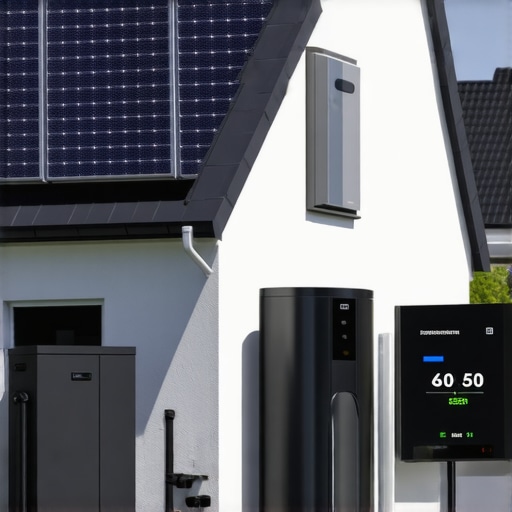
Listen, if you think your electrical panel is just a metal box with some switches, you’re the reason I have a mortgage. I’ve spent thirty-five years pulling fried lizards out of bus bars and smelling the distinct, metallic tang of an arc-fault before the drywall even starts to discolor. Electricity doesn’t care about your Pinterest board or your ‘open concept’ kitchen; it cares about resistance, heat, and the cold, hard math of Ohm’s Law. As we barrel toward 2026, the utility companies are sharpening their knives with ‘Time-of-Use’ (TOU) rates that would make a loan shark blush. If you’re not looking at Energy Storage Systems (ESS), you’re essentially volunteering to fund the CEO’s next yacht. But before you go slapping a battery on the wall, you need to understand the forensic reality of your home’s infrastructure.
The Old Timer’s Lesson: Why Your Infrastructure is a Time Bomb
My first journeyman, a grizzly old guy named ‘Red’ who could identify a grounded neutral by the way the hair on his arms stood up, used to smack my hand if I stripped a wire with a knife. ‘You nick the copper, you create a hot spot,’ he’d scream. He was right. That tiny nick reduces the circular mil area of the conductor, creating a bottleneck where electrons crowd together like a freeway merge at rush hour. Heat builds. The insulation undergoes molecular degradation. Eventually, you’re calling for fire damage wiring restoration. When you integrate a modern ESS into a mid-century home, you’re putting a Ferrari engine into a Model T chassis. You need to know if your circuit breaker replacement history is a list of band-aids or a legitimate safety strategy.
“Aluminum wire connections can overheat and cause a fire without tripping the circuit breaker.” – CPSC Safety Alert 516
In mid-century homes built between 1960 and 1980, we deal with the ‘Cold Creep’ of aluminum wiring. Aluminum expands and contracts at a different rate than the steel screws in your camper electrical panel or your main house load center. Every time you turn on a high-draw appliance, that wire heats up, expands, and slowly pushes itself out from under the terminal. Over decades, the connection loosens. High resistance leads to oxidation, and oxidation is an insulator. Now you’ve got a connection that’s acting like a heating element. If you’re planning on slashing bills in 2026, we first have to ensure your ‘home run’ isn’t a funeral pyre waiting to happen.
1. Peak Shaving: Beating the Utility at Its Own Game
By 2026, ‘Peak Shaving’ won’t just be for industrial plants. Your utility provider loves it when you come home at 5:30 PM, crank the AC, and plug in your EV. They charge you triple for that privilege. An ESS allows you to ‘shave’ that peak. The battery discharges during those expensive hours, and then recharges at 2:00 AM when the grid is begging people to take power. But here’s the kicker: your home automation setup needs to be smart enough to manage these transitions without flickering your architectural lighting. If the inverter switching frequency isn’t synchronized, you get harmonic distortion that eats your sensitive electronics for breakfast.
2. Power Quality Analysis and the Silent Killer
We don’t just look at ‘is the light on?’ anymore. We perform a power quality analysis. Most homeowners don’t realize that the power coming off the grid is ‘dirty.’ It has voltage sags, swells, and transients. A high-end ESS acts as a massive filter, providing a pure sine wave. I’ve used drone thermography scans to look at transformers on the street and then at the main lugs in a customer’s panel. The difference in thermal signature when a house is running on conditioned battery power versus raw grid power is staggering. Heat is the enemy of longevity. By smoothing out the voltage, you’re not just saving on the bill; you’re extending the life of every motor in your house, from the fridge to the HVAC compressor.
3. The ADU Loophole: Doubling Down on Efficiency
With the explosion of ADU electrical services, I’m seeing people try to run an entire secondary dwelling off a 200-amp service that’s already gasping for air. An ESS allows you to avoid a massive ‘heavy-up’—that’s trade talk for a service mast and meter base upgrade. Instead of paying the utility five grand to trench a new line, you use the storage system to manage the ‘in-rush’ current. When the tenant in the ADU kicks on their stove, the battery kicks in to assist the main service. This is where access control wiring and smart sub-panels become critical. You’re managing a micro-grid, not just a house.
“The energy storage system shall be listed and labeled for the intended application and shall be installed in accordance with the manufacturer’s instructions.” – NEC Section 706.5
4. Thermal Forensics: The Role of Drone Thermography
When I go into a forensic inspection, I’m looking for what the naked eye misses. Drone thermography scans allow us to see the ‘heat map’ of a roof’s solar integration and the external disconnects. In 2026, if your ESS isn’t shedding heat properly, its internal resistance climbs, and your efficiency drops off a cliff. I’ve seen ‘handyman specials’ where the batteries were installed in unventilated closets. I walk in with my Wiggy and my thermal camera, and the wall is literally glowing. You’re losing 15% of your stored energy just to waste heat. A master install ensures that ‘Monkey Shit’ (that’s duct seal, for the uninitiated) is properly applied to prevent moisture migration into the conduits, which causes localized corrosion and more heat.
5. 24-Hour Emergency Mitigation and Grid Services
The final way you slash bills is by participating in ‘Virtual Power Plants.’ In 2026, the utility will pay you to occasionally suck a little juice out of your battery to stabilize the neighborhood grid. But you need a 24 hour emergency electrician on speed dial who actually knows how to troubleshoot an islanding inverter. If the grid goes down and your system doesn’t ‘decouple’ properly, you could back-feed the line and kill a lineman. That’s what we call a ‘Widow Maker.’ A proper setup uses dikes to trim the control wiring precisely—no bird nests in the cabinet—ensuring the ‘Rough-in’ and ‘Trim-out’ are clean enough to pass a forensic audit. You want the insurance company to see a work of art, not a liability.
Conclusion: Torque is Not a Suggestion
At the end of the day, 2026 electric bills will be a nightmare for the unprepared. Slashing those bills requires more than just buying a gadget; it requires a total system audit. From the access control wiring at your gate to the circuit breaker replacement in your garage, every connection must be torqued to spec. I’ve seen houses burn because a guy ‘hand-tightened’ a lug and called it a day. Don’t be that guy. Get a pro who understands that electricity is a physical force, not a magic trick. When the sun goes down and your neighbor’s meter is spinning like a top, you’ll be sitting in your architectural lighting, powered by the silent, cool efficiency of a system that was built to last, not just to sell. And you’ll sleep better knowing every single wire was stripped with a pair of dikes and a prayer, not a utility knife and a hope.