
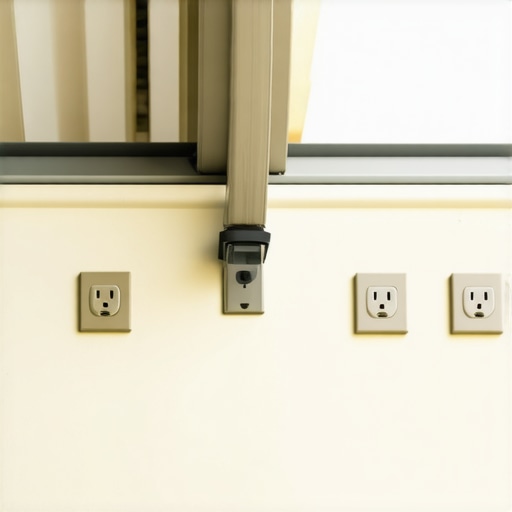
The Sensory Warning: Why Your Patio Is Trying to Kill Your Breaker
If you are sitting under your patio cover and you hear a faint buzzing that sounds like a trapped hornet, do not look for a nest. Look at your outlets. That is the sound of electricity trying to jump a gap it was never meant to cross—a phenomenon we call arcing. I have spent over three decades as a forensic inspector, and I can tell you that the outdoor living trend is creating a harvest of house fires. People treat their outdoor outlets like they are in a dry living room. They are not. They are in a battlefield where humidity, salt air, and temperature swings are constantly trying to turn your electrical system into a pyrotechnic display. My old journeyman used to smack my hand if I stripped a wire with a knife. ‘You nick the copper, you create a hot spot,’ he would scream. He was right. That tiny little notch in the metal reduces the surface area, increasing resistance. Resistance generates heat. Heat causes expansion. And before you know it, you have got a cherry-red conductor melting through its insulation. This is not just a ‘handyman’ problem; even in a massive warehouse lighting retrofit, these same principles apply. If the connection is not torqued, it is a ticking bomb.
“Aluminum wire connections can overheat and cause a fire without tripping the circuit breaker.” – CPSC Safety Alert 516
The Anatomy of an Outdoor Electrical Failure
When I conduct drone thermography scans on high-end patio installs, I often see the same forensic profile: heat blooming from the receptacle box. This happens because of moisture ingress and the failure of the GFI’s internal relay. Electricity is lazy; it always wants to find the easiest path to the ground. In a patio environment, that path is often a bridge of salt and dust that builds up inside the outlet cover. We call this ‘tracking.’ Eventually, that bridge becomes conductive enough to allow an arc. This is why a standard 200 amp panel install needs to be paired with high-quality branch circuit protection. You can have the best three phase power services in the world at your shop, but if your home’s patio ‘home run’ is compromised, the whole system is a liability. Using a Tick Tracer on a damp day might give you a false sense of security, but a Wiggy will show you the truth: the voltage drop across a corroded terminal is where the fire starts.
Fix 1: Transitioning to Weather-Resistant (WR) Rated Receptacles
The first fix is non-negotiable. You cannot use a standard $2 outlet for your patio. You must install a Weather-Resistant (WR) rated GFI. These devices are built with UV-stabilized plastics and nickel-plated metal components to resist the ‘Galvanic Reaction’ that happens when moisture hits dissimilar metals. If you are near the coast, salt air acts as a catalyst, accelerating corrosion until the internal spring tension of the outlet fails. Once that tension is gone, the plug fits loosely, creating an air gap. Air is an insulator, but if the voltage is high enough, it will ionize that air, creating a plasma arc that hits temperatures exceeding 3,000 degrees Fahrenheit. This is the same level of thermal management we worry about in a data center power setup. You need components that can handle the environment.
Fix 2: Replacing Flap Covers with ‘Extra-Duty’ While-In-Use Enclosures
I cannot tell you how many times I have seen those cheap, spring-loaded metal flap covers. They are useless. They only provide protection when nothing is plugged in. The moment you plug in your patio lights, the flap stays open, and the rain follows the cord straight into the hot terminal. The NEC now requires ‘extra-duty’ while-in-use covers, often called ‘bubble covers.’ These allow the cord to exit the bottom while the face of the outlet remains shielded. For a professional underground wiring services install, I also recommend using Monkey Shit (duct seal) at the point where the Romex or THHN enters the back of the box. This prevents the ‘chimney effect,’ where warm air from inside your home’s wall cavity meets the cold outdoor air inside the conduit, causing condensation to drip directly onto the terminations.
Fix 3: Managing the ‘Cold Creep’ with Proper Torque and Materials
In mid-century homes, we often find aluminum branch wiring leading to patio covers. Aluminum has a much higher coefficient of thermal expansion than copper. This leads to ‘Cold Creep’—the wire expands under load, pushes against the screw, and then stays slightly deformed when it cools. Over hundreds of cycles, the screw becomes loose. A loose wire is a heater. If you are doing an EV charger installation or a patio upgrade, you must use AlumiConn connectors or specialized anti-oxidation grease. I always take my Dikes and cut back the old, oxidized wire to find fresh, shiny metal before making a new termination. If you do not have enough slack, you are looking at a rough-in failure that requires pulling a new home run.
“Ground-fault circuit-interrupters shall be installed in a readily accessible location.” – NFPA 70 (NEC) Article 210.8
Fix 4: Decoupling the Patio Load from Sensitive Home Circuits
Many patio shorts happen because the patio was ‘tapped’ off a bedroom or kitchen circuit. Modern life demands more. If you are integrating battery backup wiring or a microgrid integration, your patio should be on its own dedicated circuit. This prevents a nuisance trip on your patio from shutting down your home office or refrigerator. When we perform an overhead service drop or a 200 amp panel install, we ensure the outdoor loads are isolated. This is critical for the safety of the entire structure. If you are seeing flickering on your patio, it might not be the bulb; it could be the resistance in an old underground wiring services run that has been compromised by root intrusion or shifting soil.