
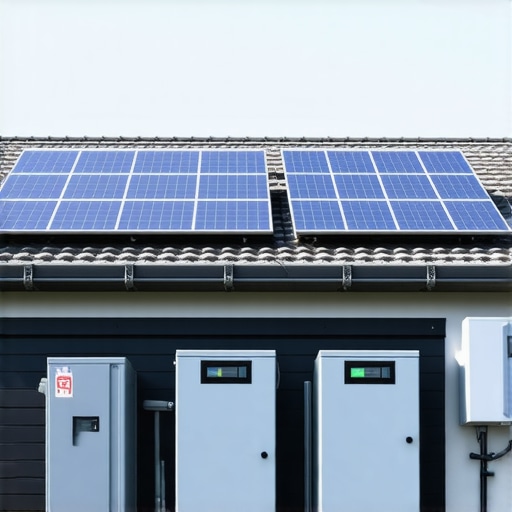
The Load Calculation: Why Your 1970s Service Is a Financial Sinkhole
I’ve spent the better part of four decades pulling back the dead front on panels that haven’t seen the light of day since Nixon was in office. You walk into a basement, and before you even touch your Wiggy to the bus bar, you smell it—that sharp, metallic tang of ozone. It’s the scent of money burning and copper crying for mercy. Most homeowners treat electricity like a magic trick; you flip a switch, and the light comes on. But in 2026, with utility companies pivoting to predatory Time-of-Use (TOU) rates and demand-charge structures, that ‘magic’ is going to cost you a second mortgage if you aren’t prepared. Energy Storage Systems (ESS) aren’t some boutique green-energy toy anymore; they are the literal shield against a grid that is becoming increasingly volatile and expensive.
The Old Timer’s Lesson: The Physics of the Hot Spot
My journeyman used to smack my hand if I stripped a wire with a knife. ‘You nick the copper, you create a hot spot,’ he’d scream. He was right. That microscopic gouge creates a point of high resistance. In a high-amperage system like a whole-home battery or a modern home backup generator install, resistance isn’t just a theoretical problem—it’s a thermal event waiting to happen. When we talk about slashing electric bills in 2026, we aren’t just talking about software; we are talking about the integrity of the physical connection. If you’re trying to push 40 amps of stored energy back into your house through a Rough-in that was done with dull pliers and zero respect for torque specs, you’re losing money to heat before the electrons even reach your toaster.
“Aluminum wire connections can overheat and cause a fire without tripping the circuit breaker.” – CPSC Safety Alert 516
1. Peak Shaving: The Death of the Demand Charge
By 2026, the ‘Peak’ isn’t just a couple of hours in the afternoon; it’s a surgical strike on your wallet. Utilities are moving toward demand charges—billing you based on your highest 15-minute spike of usage. If your HVAC kicks on while the dryer is running and the EV is charging, your bill triples. An ESS acts as a buffer. It ‘shaves’ those peaks by discharging stored energy during high-demand moments, keeping your grid draw flat. We call this ‘load leveling.’ To do this right, your AFCI breaker services must be up to date to ensure that the rapid switching between battery and grid doesn’t trigger nuisance trips or hide legitimate arcing in aged branch circuits.
2. TOU Arbitrage: Buying Low, Living High
The grid is a market, and the price of power fluctuates like the stock exchange. An ESS allows you to engage in ‘Energy Arbitrage.’ You pull from the grid at 2:00 AM when the utility is practically giving it away, and you run your entire house off that stored power at 6:00 PM when the rates are 500% higher. However, you can’t implement this level of sophistication in a house riddled with legacy failures. If we’re performing a knob and tube removal, it’s usually because the homeowner realizes that those cloth-wrapped wires can’t handle the continuous current required by modern smart-home ecosystems. You wouldn’t put a Ferrari engine in a wooden wagon; you shouldn’t put an ESS on 1920s wiring.
3. Eliminating the ‘Ghost Load’ Through Infrastructure Audits
Energy storage works best when it isn’t fighting your own home. I see it every day: people wanting to save on bills while their 1980s warehouse lighting retrofit (now in a home workshop) is sucking 400 watts of parasitic power. By integrating an ESS, we perform a forensic audit of your home’s bonding jumper services and grounding systems. Proper bonding ensures that stray currents aren’t dissipating into the earth or heating up your gas pipes. A tight, efficient system means every kilowatt-hour stored in your battery is a kilowatt-hour used, not lost to ground-fault leakage or poor insulation.
4. Avoiding the Infrastructure Tax
In many regions, if you want to add a massive new load—like a chandelier installation in a grand foyer plus two EV chargers—the utility will force you to pay for a ‘Heavy-Up’ or even a transformer upgrade on the pole. An ESS can actually prevent this. By managing the internal load, the ESS ensures you never pull more than your current service mast can handle. This is where financing electrical upgrades becomes a strategic move. Instead of paying the utility to upgrade their equipment, you invest in your own storage, effectively ‘expanding’ your 200-amp service without the utility’s permission or their recurring fees.
5. The Resilience Dividend: Security and Longevity
A bill isn’t just what you pay the electric company; it’s the cost of replacing a fried refrigerator after a brownout. ESS provides voltage regulation. When the grid sags, the battery stabilizes the 120V sine wave. This protects sensitive electronics, from your security camera wiring to your smart appliances. When you combine this with a lifetime workmanship guarantee from a master who actually torques every lug with a calibrated wrench, you are reducing the total cost of ownership of your home. You’re also ensuring that your smoke detector installation remains powered during a catastrophic grid failure, providing safety that a standard bill-payer simply doesn’t have.
“Each year, thousands of fires result from faulty electrical systems, many of which could be prevented by modern overcurrent protection and proper energy management.” – NFPA 70E Electrical Safety Standard
Forensic Conclusion: Torque Matters
Electricity isn’t a hobby. It’s a relentless force of physics that wants to find the path of least resistance, and usually, that path involves burning something down. Whether it’s a home backup generator install or a complex lithium-iron-phosphate battery array, the success of the system comes down to the Trim-out. If the installer didn’t understand the difference between a neutral and a ground at the sub-panel, or if they left a Widow Maker (an ungrounded hot wire) in a junction box, your 2026 savings will be eaten by diagnostic fees and fire insurance deductibles. Do it once, do it right, and torque it to spec. Sleep at night knowing the electrons are exactly where they belong.