
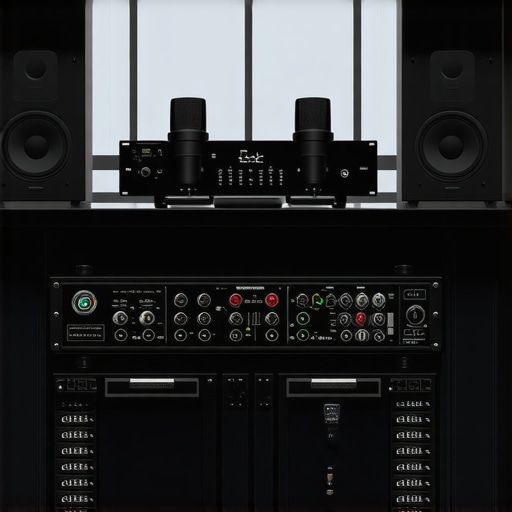
The Sound of a Potential Disaster
I’ve spent 35 years listening to the hum of commercial infrastructure, and I can tell you exactly when a system is about to go south before the smoke even starts. There is a specific, sickening smell—a mix of ozone and roasting PVC—that happens when a commercial PA system is pulling more juice than the legacy wiring can handle. You see it a lot in these older warehouses being converted into ‘modern’ offices. People think audio is ‘low voltage’ and therefore ‘low risk.’ They are dead wrong. I’ve seen 70-volt speaker lines arcing against a drop-ceiling grid until they burned a hole right through the tile. This isn’t just about sound quality; it’s about making sure your building doesn’t become a forensic investigation site.
The Old Timer’s Lesson: The Nick that Costs a Fortune
My journeyman used to scream at me if he caught me using a pocket knife to strip wire. He’d grab his dikes and smack the back of my hand. ‘You nick that copper, kid, and you’ve just built a heater,’ he’d bark. He was right. In the context of the massive 2026 NEC updates, that lesson is more relevant than ever. When you’re dealing with the high-output amplifiers required for modern commercial paging and mass notification, every connection point is a potential failure. A single nicked conductor under a terminal screw creates a localized hot spot. As the current flows, the metal expands. When the system shuts down at night, it cools and contracts. This thermal cycling leads to what we call ‘Cold Creep’—a phenomenon where the wire literally crawls out from under the screw. By the time you notice the audio is crackling, that terminal is likely 400 degrees Fahrenheit and well on its way to igniting the enclosure.
“Audio cables and equipment shall be installed in a neat and workmanlike manner. Cables installed exposed on the surface of ceilings and sidewalls shall be supported by the building structure in such a manner that the cable will not be damaged by normal building use.” – NEC Article 640.6
Update 1: Class 4 Fault-Managed Power Systems
The 2026 code is going to hit hard on the implementation of Class 4 circuits. We aren’t just talking about your standard Power over Ethernet (PoE) anymore. We are looking at systems that can deliver hundreds of watts of power while monitoring for faults in real-time. If you’re planning a load center upgrade to accommodate a massive PA system, you need to understand that the protection isn’t just in the breaker anymore; it’s in the intelligent power supply. If a human touches a live Class 4 line, the system shuts down in milliseconds—faster than a standard GFCI. However, if your licensed master electrician doesn’t understand the bonding requirements for these new systems, the ‘smart’ features will constantly trip, leaving your PA system dead when you need it most. This isn’t a job for a guy with a tick tracer and a dream; it requires forensic-level precision during the rough-in phase.
Update 2: The End of Legacy Aluminum in Distribution
If your commercial building was put up in the late 70s, you’re likely sitting on a ticking clock. The 2026 updates are tightening the screws on aluminum wiring repair within commercial distribution. The physics are brutal: aluminum has a different coefficient of thermal expansion than the brass or copper terminals in your load center. In a commercial PA setup, the amplifiers pull heavy, pulsating loads. This causes the aluminum to expand and contract rapidly, loosening the connection and creating an oxide layer. Aluminum oxide is an insulator; it resists the flow of electricity, which creates even more heat. If you haven’t looked at an electrical panel upgrade recently, you’re playing a dangerous game. I’ve opened panels where the main lugs were so brittle from heat they snapped off like a dry twig when I touched them with my Wiggy. We now use AlumiConn or similar purple-rated connectors, but for a commercial amp rack, the only real solution is a complete copper home run back to the panel.
Update 3: Surge Protection is No Longer Optional
The 2026 NEC is expanding the requirements for Surge Protective Devices (SPDs). In the past, people thought of surge protection as a power strip you buy at a big-box store. For a commercial PA system—especially one integrated with fence line lighting or outdoor speakers—a whole-building surge protector is now a code-mandated reality. When lightning strikes a pole half a mile away, that surge travels through the meter socket and looks for the path of least resistance. Often, that path is your sensitive audio processors. If you’re doing a meter socket replacement, you need to ensure the SPD is integrated directly into the service entrance. This isn’t just about saving your amplifiers; it’s about preventing the fire that occurs when a surge jumps the gap in a transformer winding.
“Aluminum wire connections can overheat and cause a fire without tripping the circuit breaker.” – CPSC Safety Alert 516
Update 4: Redundant Grounding for Mass Notification
We are seeing a massive shift in how ‘Mass Notification Systems’ (MNS) are grounded. In 2026, the NEC is aligning closer with NFPA 72 requirements. Your PA system isn’t just for background music; it’s for life safety. This means the grounding path must be bulletproof. I’ve seen ‘handymen’ tie the ground wire to a water pipe that eventually gets replaced with PEX plastic, effectively un-grounding the entire system. That’s what we call a ‘widow maker.’ A licensed master electrician knows that you need a dedicated grounding electrode system. Whether you are installing hot tub wiring services or a 5,000-watt PA, the physics of grounding don’t change. You need a low-impedance path to earth to clear a fault. If you don’t have it, the chassis of your equipment becomes live. Imagine a staff member touching a microphone and getting hit with 120 volts because the ground was ‘bootlegged’ to a neutral wire. It happens more than you think.
The Load Calculation: Why Your Panel is Screaming
Electricity is a zero-sum game. You can’t just keep adding loads like sauna heater installation or massive audio racks without looking at the total demand. A 100-amp service in a commercial unit is often already at 80% capacity with HVAC and lighting. When those PA amps kick in during a bass-heavy announcement, the voltage drop can be significant. This isn’t just an audio problem; it’s a heat problem. Low voltage causes higher amperage draw for the same wattage output, which heats up the conductors. During the trim-out, if I see the lights flicker when the PA system tests, I know the service is undersized. You need permit pulling services to properly document a heavy-up. Trying to bypass the permit process is the fastest way to lose your insurance coverage when the meter socket eventually melts into a puddle of slag. We use monkey shit—that’s duct seal for the laypeople—to keep moisture out of the conduits, but no amount of sealant can fix an overloaded bus bar. You need a pro who can calculate the circular mil area of your conductors versus the peak inrush current of your equipment. Anything less is just guessing with people’s lives.
Final Inspections and Forensic Peace of Mind
When I walk away from a job, I want to know that every lug is torqued to the manufacturer’s specs. I don’t just tighten them until they feel ‘snug.’ I use a calibrated torque wrench. Why? Because the NEC mandates it. If a fire starts and the forensic investigator finds that the lugs weren’t torqued, the liability shifts entirely to the owner and the installer. Whether you’re looking for hot tub wiring services at home or a commercial audio overhaul, the mantra remains: Torque is not a suggestion. It’s the difference between a system that lasts 40 years and one that fails in 40 days. Don’t let a ‘trunk-slammer’ with a cheap pair of pliers touch your infrastructure. Get a licensed master electrician who understands that the 2026 code updates aren’t hurdles—they’re blueprints for survival.
This article highlights some critical updates and best practices that often get overlooked. I’ve personally seen how neglecting to torqued the lugs correctly can lead to catastrophic failures, especially with the new code mandates for proper torque. It’s a reminder for all of us to always double-check our work with calibrated tools and not just rely on ‘feels.’ Also, the emphasis on surge protection resonated with me. Out here in flood-prone zones, a single lightning strike can wipe out entire systems if not properly shielded. Has anyone tackled upgrading older buildings with aluminum wiring recently? Would love to hear experiences on how you managed those connections and ensured compliance with these new standards.
Reading through this post reminded me of my own experience with an older warehouse converted into offices. We had a subtle smell of ozone and slight crackling in the speakers that we initially thought was just equipment aging. Turns out, it was overloaded wiring that started arcing—a tragedy waiting to happen. I especially resonate with the emphasis on proper torque and secure connections. I once saw a system failure caused by a loose lug, which heated up over time until it ignited. It’s crucial that we use calibrated tools for torque and follow the manufacturer’s specs, especially with these new NEC mandates. The updates on surge protection are also eye-opening; it’s no longer just about power strips, but building-wide solutions. Has anyone here implemented the new Class 4 power systems? How challenging was the integration with existing infrastructure, especially concerning bonding and fault monitoring? Overall, these code changes push us toward a much safer and more reliable system design, which I think is long overdue.