
The Ghost in the Conduit: Why Your Smart Home is Dying
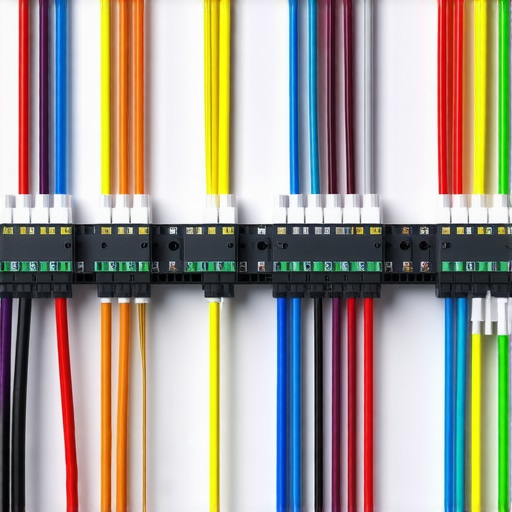
You smell it before you see it. That sickly-sweet aroma of ionizing PVC, a scent every master electrician knows as the prelude to a structural fire. Last week, I was called to a 10,000-square-foot ‘smart home’ where the owner complained his gigabit fiber felt like dial-up. I didn’t reach for a laptop; I grabbed my Wiggy and a thermal imager. Inside the structured wiring cabinet—a bird’s nest of tangled Romex and Cat6—the temperature was hitting 140 degrees. The culprit? A data center power setup crammed into a space with zero airflow, causing thermal throttling of the switches and physical degradation of the conductor insulation. My old journeyman used to smack my hand if he saw me leave a jagged edge on a piece of 1-inch EMT. ‘You nick the copper or scrape that jacket, you create a hot spot that’ll haunt the drywall for twenty years,’ he’d scream while chewing on a piece of copper wire. He wasn’t being a jerk; he was teaching me about the physics of resistance. If you’re prepping for 2026 speeds, your electrical wiring services need to move past ‘good enough’ and into forensic precision.
“Mechanical execution of work. Communications circuits and equipment shall be installed in a neat and workmanlike manner.” – NEC 800.24
1. The Data Center Power Setup: Managing Heat and Harmonic Distortion
By 2026, the average home will pull more data and localized power than a small office did in 2010. When we talk about data center power setup at the residential level, we’re looking at the home run. Every cable must be a direct line from the panel to the device. The autopsy of a failed network often reveals ‘daisy-chained’ wires that increase resistance. Resistance isn’t just a number on a multimeter; it’s heat. At the microscopic level, electron collisions in a cramped structured wiring panel generate thermal energy that increases the Power Factor. This is where power factor correction becomes vital. If your reactive power is too high, you’re paying for electricity you aren’t using, and your sensitive smart-home processors are swimming in ‘dirty’ power. We install dedicated circuits for the network rack, isolated from the high-draw pool pump electrical lines that kick back inductive surges every time the motor starts.
2. Underground Wiring Services and the Integrity of the Shield
If you’re running 10G or 50G speeds to an ADU or a gatehouse, underground wiring services are your biggest failure point. I’ve pulled up ‘direct burial’ cable that looked like it had been chewed by a xenomorph because the installer didn’t use monkey shit (duct seal) at the conduit ends. Moisture migrates through the pipe, sits in the low spots, and begins a slow Galvanic Reaction with the shielding. For 2026, we utilize Schedule 80 PVC with sweeping elbows to maintain the bend radius. If you kink a high-speed data line, you change the ‘twist’ of the internal pairs. That twist is there for a reason: Differential Signaling. When you crush it, you get crosstalk, and your fast smart home becomes a stuttering mess.
“Aluminum wire connections can overheat and cause a fire without tripping the circuit breaker.” – CPSC Safety Alert 516
3. Microgrid Integration and Power Factor Correction
The 2026 home isn’t just a consumer; it’s a producer. Microgrid integration—combining solar, battery backup, and the utility grid—requires a panel that can think. If your electrical wiring services don’t account for the phase sync between your battery inverter and the grid, you get ‘flicker’ that fries the logic boards in your security camera wiring. We use power factor correction capacitors to stabilize the voltage. Think of it like a shock absorber for your house. When the Tesla charger kicks on at 48 amps, the capacitor prevents the voltage dip that would otherwise reset your smart hubs. We’re seeing more ‘widow makers’—improperly wired transfer switches—than ever before. A forensic inspection ensures your microgrid doesn’t backfeed the utility line and kill a lineman.
4. Tree Mounted Lights and Drone Light Inspections
Modern aesthetics demand tree mounted lights for that moonlit look, but trees grow. A wire stapled to an oak in 2024 is a widow maker by 2026. The tree literally swallows the Romex, creating a high-impedance ground fault that can’t be found without drone light inspections. We use drones equipped with FLIR (Forward Looking Infrared) cameras to fly the perimeter of these large estates. We’re looking for ‘hot’ branches where a wire is arcing inside the bark. For the rough-in phase of outdoor lighting, we use stainless steel stand-offs that allow the tree to breathe and grow without tensioning the copper. This isn’t ‘landscaping’; it’s high-voltage arboriculture.
5. The Zero-Failure Annual Maintenance Contract
The ‘set it and forget it’ mentality is how houses burn down. An annual maintenance contract is the only way to ensure your security camera wiring hasn’t been compromised by rodents or UV degradation. During a trim-out, I always check the torque on the main lugs. Copper ‘creeps’ under pressure. A lug that was tight three years ago might be a quarter-turn loose today. That loose connection creates an air gap, which creates an arc, which creates a fire. We use a tick tracer to find ghost voltages and dikes to clean up the ‘spaghetti’ wiring left by previous technicians. If your technician doesn’t own a torque screwdriver, kick them off the job site. Electricity is a law of physics, not a suggestion.