
The Ghost in the Circuit: Why Your Home Theater is a Fire Hazard
I remember my first week as a green apprentice back in the late 80s. My journeyman, a guy who smelled exclusively of stale coffee and burnt insulation, caught me using a pair of dikes to strip the jacket off a 12-gauge Romex line. He didn’t just correct me; he slapped the tool out of my hand and threw it across the job site. ‘Every nick you put in that copper is a localized bottleneck for electrons,’ he barked. ‘You’re creating a hot spot that will smolder for ten years before it finally decides to take the house down.’ He was a paranoid old salt, but thirty-five years of conducting electrical inspections and forensic autopsies on charred drywall have proven him right. When you’re planning your 2026 movie night with a 4K laser projector and a 2,000-watt subwoofer, you aren’t just buying gear; you’re demanding a level of performance that your 1974-era electrical load calculations simply cannot sustain.
1. The Dedicated 20-Amp Home Run: Solving the ‘Pop’
Most living rooms are wired on a shared 15-amp circuit. In a typical mid-century home, that circuit might also handle the floor lamps, the vacuum cleaner in the hallway, and maybe even the whole house fan wiring in the attic. When your home theater amp draws a sudden peak of current during an explosion on screen, the voltage drops. This isn’t just a flicker in the lights; it’s a thermal event. By installing a dedicated 20-amp home run—a direct line from your panel to the theater—you eliminate the ‘voltage sag’ that kills sensitive electronics. We’re talking about 12-gauge copper, not the flimsy 14-gauge found in standard outlets. Using a Tick Tracer, I’ve found dozens of ‘handyman specials’ where people tapped into a bathroom circuit to power their theater, a direct code violation correction waiting to happen.
“Equipment intended to interrupt current at fault levels shall have an interrupting rating at nominal circuit voltage at least equal to the current that is available at the line terminals of the equipment.” – NEC 110.09
2. The 200 Amp Panel Install: Feeding the Beast
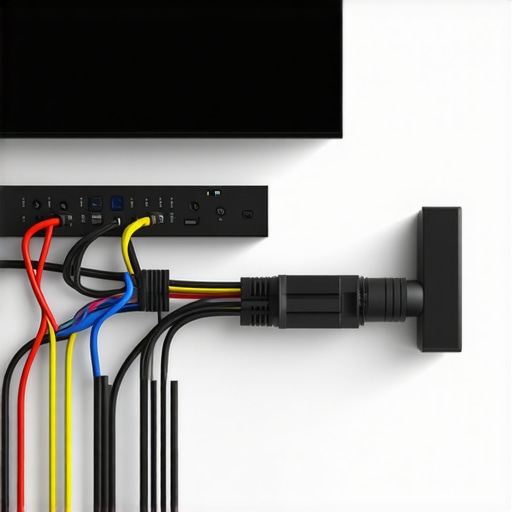
If you’re still running on a 100-amp service with a Federal Pacific or Zinsco panel, you’re playing Russian Roulette with a fully loaded cylinder. These brands are the ‘Widow Makers’ of our industry. The bus bars in these panels are notorious for cold creep—a phenomenon where the metal expands and contracts under load until the connection becomes loose. A loose connection creates resistance, and resistance creates heat. For a modern home theater, a 200 amp panel install is often the baseline. It’s not just about the total capacity; it’s about the structural integrity of the bus bar. When I perform a warehouse lighting retrofit or a heavy residential upgrade, I look for signs of ‘pitting’ on the breakers. If you see carbon scoring, your ‘2026 movie night’ might end with a call to a 24 hour emergency electrician. [image_placeholder_1]
3. Harmonic Distortion and Industrial-Grade Surge Protection
Modern AV equipment uses switch-mode power supplies. These things are notorious for creating ‘noise’ on the line, or Total Harmonic Distortion (THD). This isn’t just a problem for your sound quality; it’s a problem for your wiring. High THD can cause the neutral wire to overheat even if the breaker hasn’t tripped. To combat this, we look toward industrial motor controls logic: heavy-duty filtering and Type 1 surge protection at the main panel. Don’t rely on a $20 power strip. Those contain tiny Metal Oxide Varistors (MOVs) that literally explode after one significant surge, leaving your gear unprotected. A true fix involves a hardwired surge suppressor that can shunt 50,000 amps to ground faster than you can blink.
4. Grounding, Bonding, and the ‘Hum’ Problem
If you hear a low-frequency hum in your speakers, you have a ground loop. This is often caused by a potential difference between your cable line and your electrical ground. In forensic inspections, I’ve seen cases where a lack of proper swimming pool bonding or poor grounding at the service entrance caused the theater’s shielded cables to act as a path to ground for the entire house. This is a massive fire risk. Everything needs to be bonded to a single point. If you have a boat lift wiring setup or a pool nearby, the bonding grid must be verified with a Wiggy or a high-impedance voltmeter to ensure there’s zero volts between any metallic components.
“Aluminum wire connections can overheat and cause a fire without tripping the circuit breaker.” – CPSC Safety Alert 516
5. Correcting Code Violations: The Hidden Splicing Trap
I once investigated a fire where the homeowner had ‘neatly’ tucked all his excess wire into the wall cavity. He had 120V power lines running parallel to low-voltage speaker wires for 30 feet. This creates inductive coupling. The high-voltage line ‘bleeds’ energy into the low-voltage line, which can fry the input stage of a high-end receiver. During the rough-in phase, you must maintain at least 12 inches of separation between power and data, crossing only at 90-degree angles. If I find monkey shit (duct seal) used to hide illegal splices behind a home theater wall, I know I’m looking at a system built on a lie. Proper trim-out requires UL-listed junction boxes that remain accessible. Never, ever bury a splice. It’s not just a code violation; it’s a thermal time bomb.
Conclusion: Torque is Not a Suggestion
At the end of the day, electricity doesn’t care about your movie experience. It only cares about finding the path of least resistance. If that path is through your expensive laser projector because of a loose neutral or an undersized conductor, it will take it. When we finish a 200 amp panel install, every lug is torqued to the manufacturer’s inch-pound specifications. We don’t guess. We don’t ‘feel’ it. We use a torque wrench. Because sleeping at night is better than wondering if that fishy smell in the basement is just the cat or the sound of your theater’s wiring slowly turning into plasma. Get an electrical inspection before you plug in that 2026 setup. Your house will thank you.