
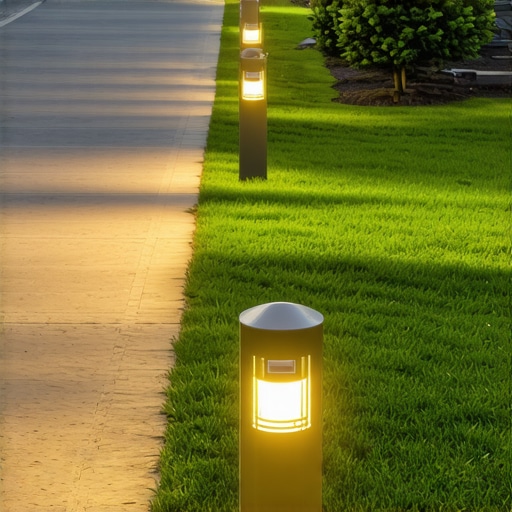
The Autopsy of a Dark Driveway
I stood on a client’s lawn last Tuesday, the air smelling of damp earth and that unmistakable, metallic tang of ionized copper. The homeowner was baffled. They’d spent five figures on a ‘luxury’ landscape lighting install only six months ago, and now, half the driveway was a graveyard of expensive, dark pillars. I pulled my Wiggy out of my bag—it’s an old solenoid tester that doesn’t lie like those digital meters that pick up ghost voltage. The needle didn’t even twitch. I started digging. Ten minutes later, I found the culprit: a flipper special. They’d buried a standard indoor-rated junction box four inches under the sod, wrapped in electrical tape and packed with what they probably thought was ‘waterproofing’ but was actually just cheap silicone caulk. The box was a miniature aquarium, and the Rough-in was a mess of green corrosion. When I pulled the wire, the insulation crumbled like an overbaked cookie. This is what happens when people treat electricity like a hobby. 2026 curb appeal isn’t just about the glow; it’s about the physics of survival in a subterranean environment.
“Direct buried conductors and cables emerging from the ground shall be protected by enclosures or raceways extending from the minimum cover distance required by Section 300.5(A) to a point at least 2.5 m (8 ft) above finished grade.” – NEC Section 300.5(D)(1)
1. The Physics of Soil Chemistry and Conduit Selection
When you’re planning a landscape lighting install, you aren’t just fighting water; you’re fighting chemistry. Soil is a reactive soup of minerals, moisture, and stray current. Most guys throw some PVC in the ground and call it a day, but in 2026, we’re seeing higher soil acidity due to shifting fertilization patterns. If you’re using metallic conduit without a PVC coating, you’re inviting galvanic corrosion to eat your system alive. I’ve seen load center upgrades where the exterior Home Run looked like Swiss cheese because of a bad ground and acidic soil creating a battery effect between the pipe and the earth. Use Schedule 40 PVC at a minimum, but if you’re under a driveway, step up to Schedule 80. The Cold Creep of the earth under vehicle weight will snap thin-wall pipe, and suddenly your smart home wiring is shorting out against a rock. Don’t be the guy who uses a Tick Tracer to find a break three feet under concrete.
2. Addressing the Inrush Current of Modern LEDs
People think LEDs are low-power, so they can just daisy-chain fifty bollards on a thin 14-gauge wire. They forget about Inrush Current. When a smart lighting installation kicks on at dusk, the initial surge to charge the capacitors in those LED drivers can be ten times the running current. If your wire is too thin or your load center upgrades didn’t account for the total reactive load, you’ll hear your breakers ‘singing’ or, worse, you’ll experience a voltage drop that fries the drivers prematurely. I always calculate for a 3% maximum voltage drop. If you’re pushing 12V lights 100 feet out, you’d better be pulling 10-gauge copper, or you’re just installing expensive heaters in the ground. Heat is the enemy of electronics; a driver running at 10V instead of 12V runs hotter and dies younger.
3. The ‘Monkey Shit’ Seal: Preventing Capillary Action
Water is a persistent bastard. It uses Capillary Action to climb up inside the insulation of your wires. I’ve opened bollard heads five feet in the air and found them filled with water that wicked up from a buried splice. This is why I insist on using Monkey Shit—that’s trade talk for duct seal—and resin-filled underground splice kits. Never, ever use standard wire nuts outdoors, even if they claim to be ‘grease-filled.’ They fail. Use a permanent, re-enterable resin or a heat-shrink butt connector with an adhesive lining. If you don’t seal the end of the conduit where it enters the bollard, the temperature differential between the warm earth and the cool night air will turn your conduit into a straw, sucking moisture right into the fixture’s guts.
“Aluminum wire connections can overheat and cause a fire without tripping the circuit breaker. This is especially true in outdoor environments where moisture accelerates oxidation.” – CPSC Safety Alert 516
4. Integrating Augmented Reality Troubleshooting
By 2026, we aren’t just guessing where the wires are anymore. Augmented reality troubleshooting is becoming a standard for high-end smart home wiring. During the Rough-in phase, I now use a 360-degree camera to map the trenches. Later, if a homeowner decides to plant a Japanese Maple and hits a line, I can put on a headset or use a tablet to ‘see’ through the dirt. It saves hours of hunting and prevents the Widow Maker scenario where a shovel hits a live 120V line that some hack buried without a Tick Tracer check. If you’re doing a retail store wiring job for a commercial storefront, this AR mapping is non-negotiable for future maintenance.
5. Load Center Upgrades for the Modern Exterior
You can’t just keep adding ceiling fan circuits, EV chargers, and 5,000 watts of landscape lighting to an old 100-amp Zinsco or Federal Pacific panel. Those panels are The Time Bomb. The bus bars corrode, and the breakers jam. If you’re adding bollards, check your total demand. Often, a load center upgrade is the first step of a landscape lighting install. I’ve seen panels where the main lug was so pitted from arcing that it looked like a moon landscape. We’re moving toward 200-amp services as a baseline because of home automation setup requirements and portable generator hookups. If your panel smells like fish or ozone when the yard lights kick on, stop reading this and call a real sparky.
6. Smart Home Wiring and Network Cable Installation
Bollards in 2026 aren’t just lights; they’re often nodes for your mesh network. I’m frequently pulling network cable installation alongside my power lines. But here’s the kicker: you cannot run Cat6 in the same pipe as your 120V power. The electromagnetic interference will shred your data packets, and you’ll have ‘smart’ lights that are functionally lobotomized. You need separation. I use shielded, direct-burial rated Ethernet cable for home automation setup to ensure that when you want to change the color of your driveway from your phone, it actually happens instead of buffering for three minutes.
7. The Portable Generator Hookup Contingency
If you’re digging up the yard for bollards, that is the time to install the conduit for a portable generator hookup. There is nothing worse than a homeowner realizing they want a backup power inlet after the $50,000 pavers are laid. I always suggest a manual transfer switch and a dedicated 30-amp or 50-amp inlet. It’s about more than just keeping the ceiling fan spinning during a storm; it’s about safety. Back-feeding a panel through a dryer outlet is a death sentence for utility workers. Do it right, torque the lugs to spec, and sleep soundly when the grid goes down.
Conclusion: Don’t Let Your Curb Appeal Become a Forensic Scene
Landscape lighting is the most abused sector of our trade. People think because it’s ‘low voltage’ it can’t hurt them. Tell that to the guy whose smart lighting installation caused an arc-fault that burned his cedar mulch and took the siding with it. Use your dikes to clean up those frayed ends, torque every screw, and for the love of all that is holy, bury your wire deep enough. Electricity is a lazy, hungry beast; it’s always looking for a shorter path to ground, and your body or your house is a perfectly acceptable substitute. 2026 is about smarter, safer, and more resilient systems. If you can’t test it with a Wiggy and know it’s solid, you haven’t finished the job.