
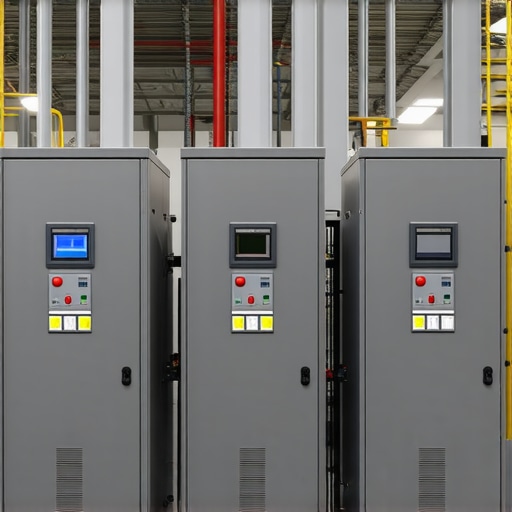
The Forensic Autopsy of a Dying Factory Floor
You can smell a factory’s electrical failure long before you see the smoke. It’s that sharp, metallic tang of ozone mixed with the sickly-sweet scent of melting PVC. When I walk onto a floor where the plant manager is complaining about intermittent CNC resets or motor starters chattering like a set of wind-up teeth, I don’t reach for a thermal camera first. I reach for my nose. By the time we get to 2026, the demand on our aging industrial grids is going to reach a breaking point. If you aren’t performing a power quality analysis now, you’re just waiting for the magic smoke to leave the components.
The Journeyman’s Lesson: The Sin of the Nicked Conductor
My journeyman used to smack my hand if I stripped a wire with a knife. ‘You nick the copper, you create a hot spot,’ he’d scream. He was right. In a three-phase system pulling high amperage, that tiny nick becomes a point of extreme resistance. Resistance creates heat. Heat causes the metal to expand and contract—a cycle that eventually backing out the lug. I’ve spent 35 years seeing ‘professionals’ treat 480V systems like they’re wiring a bedroom lamp. They forget that electricity isn’t just a utility; it’s a physical force that wants to tear your equipment apart.
“For branch circuits, the maximum total voltage drop on both the arm and the circuit should not exceed 5% for the best efficiency.” – NEC 210.19(A) Informational Note No. 4
The Physics of the Drop: Why Your Motors are Screaming
Voltage drop isn’t just a suggestion; it’s a law of physics. When you run a home run over 200 feet without up-sizing the conductor, you’re fighting Ohm’s Law. In a three-phase motor, a voltage drop of just 3% can cause a 10% to 15% increase in temperature. This happens because of Inductive Reactance and the Skin Effect. As the voltage dips, the current (amperage) must rise to maintain the same power output. That extra current creates heat, which degrades the winding insulation until you have a phase-to-phase short. By the time your 400-amp breaker finally decides to trip, your motor is already a five-thousand-pound paperweight.
We also have to talk about Cold Creep. This is particularly nasty in older facilities using aluminum bus bars. Aluminum expands at a different rate than the steel bolts holding it. Over years of thermal cycling, the connection literally pushes itself apart. You end up with a high-resistance bridge that acts like a heater. If your facility hasn’t had its torque specs checked lately, you’re sitting on a time bomb.
Stopping the Bleeding: Industrial Solutions
Fixing these issues isn’t about slapping on a band-aid. It requires a systematic approach. First, we look at demand response systems. Modern factories are now being throttled by the grid during peak hours. If your internal distribution is already weak, a grid-level brownout will drop your plant voltage into the danger zone. We often recommend a standby generator install specifically sized to handle the inductive kick-start of your largest motors, ensuring that your 2026 production schedule doesn’t die when the grid hiccups.
During the rough-in phase of any factory expansion, we focus on access control wiring and dedicated circuits to ensure sensitive electronics aren’t sharing a neutral with a 50HP motor. Even smaller details like pendant light hanging or tree mounted lights for the exterior perimeter need to be calculated into the total load. People laugh when I pull out the Wiggy to check for phantom voltage on a lighting circuit, but those parasitic loads add up. I’ve seen tree mounted lights in a parking lot create a ground loop that sent enough feedback to fry a PLC in the main building.
“Employers shall provide training to ensure that the purpose and function of the energy control program are understood by employees.” – NFPA 70E / OSHA 1910.147
Safety isn’t just about the hardware; it’s about the people. This is why lockout tagout training (LOTO) is non-negotiable. I’ve seen a guy lose three fingers because someone flipped a breaker on a circuit that wasn’t properly tagged. He thought he was safe because he used a tick tracer, but those things can lie to you. You always use a solenoid-style tester like a Wiggy to prove a circuit is dead. There is no ‘close enough’ with three-phase power.
Modernizing for Efficiency and Rebates
The good news is that 2026 is bringing more rebate assistance programs than ever before. Utilities are desperate for factories to stabilize their loads. By installing power factor correction capacitors and upgrading to high-efficiency transformers, you can often get the state to foot a significant portion of the bill. We also suggest a priority service membership for forensic monitoring. We use monkey shit (duct seal) to seal conduits against moisture and corrosive gases, preventing the ‘rotting from the inside out’ effect seen in many chemical-heavy plants.
Whether you’re looking at a home automation setup for the office wing or a heavy-duty industrial overhaul, the principles remain the same: torque it to spec, size the wire for the distance, and never trust a circuit you haven’t personally tested. Electricity is a faithful servant but a vengeful master. Don’t let a 2026 voltage drop be the reason your factory floor goes silent. Check your lugs, watch your sine waves, and keep your dikes sharp. It’s the only way to sleep at night.