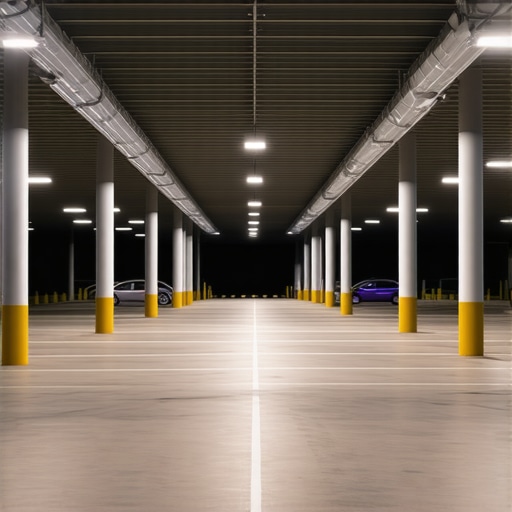
The Autopsy of a Dark Lot: Where Liability Starts
You smell it before you see it. That ozone-heavy, metallic tang that tells you a 480-volt HID ballast is screaming its final rites. I’ve walked onto far too many commercial properties where the owner thinks a flickering pole is just an ‘aesthetic issue.’ It isn’t. It’s a forensic trail leading straight to a courtroom. When that light goes dark, your liability for trip-and-falls, assaults, and vehicle collisions skyrockets. My old journeyman used to smack my hand if I stripped a wire with a knife. ‘You nick the copper, you create a hot spot,’ he’d scream. He was right. That tiny nick creates a point of high resistance, which leads to heat, which leads to charred insulation, and eventually, a call to the fire department. In the world of commercial parking lots, we aren’t just looking at nicked copper; we are looking at thirty years of thermal expansion, salt-air rot, and ‘handyman’ bypasses that turn your light poles into potential widow makers.
“Aluminum wire connections can overheat and cause a fire without tripping the circuit breaker.” – CPSC Safety Alert 516
1. The Battle Against Salt-Air Corrosion and Galvanic Rot
If your property is anywhere near the coast, your electrical system is under constant chemical attack. Salt air is an electrolyte. It bridges the gap between phases in your meter cans and junction boxes, starting a process of electrolysis that eats away at your lugs. I’ve opened handholes on parking poles where the aluminum conductors looked like they were covered in white, fuzzy moss. That’s aluminum oxide, and it’s an insulator, not a conductor. As the oxide layer builds, resistance goes up. As resistance goes up, heat increases. This is the ‘Cold Creep’ phenomenon where the metal expands and contracts at different rates than the steel terminal, eventually spitting the wire right out of the lug. To fix this, we don’t just tighten the screw. We wire-brush the conductor to the bare metal, apply a heavy layer of dielectric grease—we call it ‘monkey shit’ in the trade—and use stainless steel enclosures. If you have coastal assets, checking your [boat lift wiring] or exterior lighting for this green and white rot is the difference between a functional system and a structural fire.
2. Stabilizing the Grid with Surge Protector Installation
Modern parking lot lighting has shifted from old-school ballasts to LED drivers. These drivers are essentially computers that happen to produce light. They are incredibly sensitive to transient voltage spikes. A single lightning strike or even a utility-side switching surge can fry $20,000 worth of LED heads in a millisecond. This is why a professional [surge protector installation] at the lighting contactor panel is no longer optional; it’s a liability shield. We look for the clamping voltage—the point where the protector shunts the excess energy to the ground. If your grounding rod is a rusted-out piece of rebar from 1974, that surge has nowhere to go but through your expensive fixtures. We use a Wiggy to check for phantom voltage and ensure the ground path is solid enough to handle a massive discharge. Without it, you’re just waiting for a summer storm to put your property in the dark.
3. The Forensic Inspection of Security and Access Control Wiring
Lighting doesn’t exist in a vacuum. Most modern lots integrate [security camera wiring] and [access control wiring] onto the same poles. Here’s the forensic reality: when a ‘flipper’ or a cheap contractor runs high-voltage power lines and low-voltage data lines in the same conduit without proper shielding, you get EMI—electromagnetic interference. This causes ghosting in your camera feeds and ‘false opens’ in your gates. During a rough-in, if I see someone pulling Romex through a commercial trench meant for THHN, I know they’ve cut corners. We analyze the voltage drop across long runs. If your 12V cameras are only getting 10.2V because the wire gauge is too thin for the distance, the night vision infrared will fail exactly when a crime is being committed. Proper shielding and separate raceways are the only way to ensure your ‘integrated’ system actually works when the police ask for the footage.
“The authority having jurisdiction may require evidence of the suitability of the equipment for the environment in which it is installed.” – NFPA 70: National Electrical Code
4. The Heavy-Up: 60 Amp Panel Upgrade for Remote Hubs
Many older lots were designed for a few high-pressure sodium lamps. Today, we are adding EV chargers, gate motors, and high-intensity [up lighting services] to those same circuits. I’ve seen 40-year-old sub-panels that were never meant to handle a continuous load for 12 hours a day. The bus bars get pitted, the breakers lose their spring tension, and they fail to trip when a short occurs. A [60 amp panel upgrade] for your lighting hub isn’t just about ‘more power’; it’s about new, clean contact points that won’t arc-over. When we do a trim-out on a new panel, we use a torque screwdriver. If a lug is specified for 45 inch-pounds and you ‘feel’ it to 30, it will vibrate loose under the 60Hz hum of the transformer. That loose connection is where the fire starts. While we are at it, we often find the need for [kitchen range hood wiring] or other interior upgrades, but the parking lot panel is the most neglected heart of the property.
5. Structural Integrity and Fire Alarm Integration
The last fix is the one no one wants to talk about: the pole base. Water collects in the base of the light poles, rotting the conduit and the conductors from the bottom up. This creates a ‘chimney effect’ where moist air is pulled up the pole, corroding the [pendant light hanging] hardware or the LED driver at the top. We use a tick tracer to ensure the pole itself hasn’t become energized. If a ground fault occurs and your grounding system is compromised, the entire metal pole becomes a live conductor—a true widow maker. Furthermore, your exterior lighting should be tied into your [fire alarm system install] logic in some jurisdictions, allowing for emergency illumination during an evacuation. Keeping your system maintained through a [priority service membership] ensures that a master electrician is looking for these forensic red flags—like thermal discoloration on a breaker or the smell of burning dust—before the system fails. Sleep at night knowing your lot is torqued to spec, grounded to earth, and shielded from the legal fallout of a dark corner.
Comments are closed.