
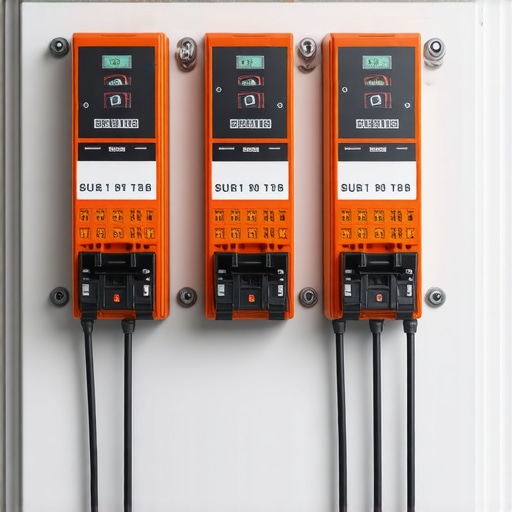
The 2026 Reckoning: Why Your Mid-Century Panel is a Liability
I’ve spent 35 years tracking down the smell of ozone and the sound of sizzling bus bars. If you live in a home built between 1960 and 1980, you’re sitting on a logistical landmine. Insurance carriers have finally caught on to what we’ve known in the field for decades: old infrastructure cannot handle modern electronic loads. By 2026, the grace period for basic surge protection is evaporating. Carriers are shifting from ‘recommended’ upgrades to ‘mandatory compliance’ for policy renewals. This isn’t about selling you a shiny new box; it’s about preventing a thermal event that turns your attic into a tinderbox. Most people think a surge is a lightning strike. It’s not. It’s the cycling of your neighbor’s industrial motor controls or your own HVAC unit sending transient voltage spikes back into your Home Run. Over time, these spikes degrade the insulation on your Romex and fry the microprocessors in everything from your smart fridge to your high-end chandelier installation.
I recently walked into a ‘fully renovated’ kitchen where the flipper had buried live junction boxes behind the backsplash. I found them with my tracer after the homeowner complained of a fishy smell—the classic scent of overheating phenolic plastic. The flipper had bypassed the main disconnect services to save a few bucks, leaving the entire kitchen circuit unprotected. If that homeowner hadn’t called for electrical inspections, that kitchen would have been a forensic scene within a month. This is the reality of ‘The Flipper Special’ and why insurance companies are now demanding proof of code violation corrections before they’ll even quote a premium. They want to see that your system can clamp a surge before it reaches the ‘Widow Maker’—that old, ungrounded panel that’s been hummed along since the Nixon administration.
“Surge protective devices (SPDs) shall be an integral part of the service equipment or shall be located immediately adjacent thereto.” – NEC 2020/2023 230.67(A)
Rule 1: The Mandatory Main Disconnect Service Upgrade
The first rule for 2026 compliance centers on the entry point of your power. You can’t just slap a power strip on a wall and call it protected. Insurance companies are now looking for a Type 1 SPD installed at the main disconnect services. This is the heavy lifting of surge protection. It handles the external transients from utility switching and lightning. In those 1970s homes, we often find Federal Pacific or Zinsco panels. These are notorious ‘No-Trip’ breakers. The bus bars are often oxidized, creating a high-resistance path that generates heat even under normal loads. When a surge hits these panels, the breakers jam, and the energy has nowhere to go but into your appliances. Upgrading to a modern service with a dedicated SPD is the only way to satisfy a 2026 inspector. We use our dikes to clear out the old, brittle wiring and perform a full rough-in of the new service, ensuring every connection is torqued to manufacturer specs to prevent ‘Cold Creep’—the physical deformation of aluminum conductors under thermal stress.
[image placeholder]The transition to aluminum wiring in the mid-century era created a unique physics problem. Aluminum expands and contracts at a rate 30% higher than copper. This ‘breathing’ at the terminals loosens the screws. When the connection loosens, resistance increases. When resistance increases, heat follows. If you add a voltage surge to a loose aluminum connection, you get an arc-fault. This is why virtual consultation wiring and remote electrical diagnostics have become vital; we can often spot the signs of thermal distress or improper grounding over a high-definition video feed before we even roll a truck. If I see a scorched neutral or a ‘bootleg ground’ through my screen, I know we’re looking at a code violation correction that can’t wait until 2026.
Rule 2: Harmonic Filter Services and Industrial Load Management
The second rule involves the ‘noise’ inside your own walls. We are seeing a massive increase in non-linear loads—LED drivers, variable speed pool pumps, and those fancy electric gate opener systems. These devices don’t draw current in a smooth sine wave; they chop it up, creating ‘harmonics.’ This harmonic distortion reflects back into your electrical system, causing the neutral wire to carry significantly more current than it was designed for. In a mid-century home, the neutrals are often shared (Multi-Wire Branch Circuits), and they weren’t sized for this kind of abuse. Harmonic filter services are no longer just for factories; they are becoming a requirement for high-value residential properties to prevent electronic fatigue. This is especially critical if you have expensive assets like a kitchen range hood wiring system with integrated logic boards or a complex chandelier installation that uses delicate dimming protocols.
“Aluminum wire connections can overheat and cause a fire without tripping the circuit breaker.” – CPSC Safety Alert 516
When we perform electrical inspections, we don’t just use a Wiggy to see if a circuit is ‘hot.’ We use power quality analyzers to check for Total Harmonic Distortion (THD). If your THD is above 5%, your insurance company may classify your home as a high-risk asset. They know that harmonics lead to premature insulation failure. By installing harmonic filters alongside your Type 2 SPDs at the sub-panel, you’re creating a secondary line of defense. Think of the Type 1 as the castle moat and the Type 2/Harmonic Filter as the inner keep. This layered approach is what the 2026 standards are aiming for.
Rule 3: Verified Grounding and Remote Diagnostics Compliance
The third rule is the most ignored: the grounding electrode system. You can have the most expensive surge protector in the world, but if the energy has no path to the earth, it will find a path through your body or your electronics. Many old homes rely on a single 8-foot rod that was driven into the ground in 1964. Over time, soil chemistry and corrosion turn that rod into a useless piece of rusted iron. Modern compliance requires a verified low-impedance ground path. We often have to install new ground rings or chemical grounds for homes with sensitive equipment like industrial motor controls used in home workshops. Using remote electrical diagnostics, we can walk a homeowner through a visual check of their grounding system, looking for the ‘Monkey Shit’ (duct seal) that’s dried out or the copper-clad steel that’s snapped off at the grade line.
Electricity isn’t a hobby. It’s a physical force that wants to return to its source, and it will burn your house down to get there. Whether it’s securing a home run for a new EV charger or diagnosing a flickering kitchen range hood wiring, the goal is always the same: zero resistance, maximum safety. If you’re waiting until 2026 to look at your panel, you’re already behind the curve. The ‘Time Bomb’ is ticking, and the fuse is made of 50-year-old insulation. Get the inspection, fix the code violations, and sleep at night knowing your torque is right and your SPDs are active.