The Sound of Impending Failure: Why Your Panel Can’t Handle the Future
You hear that? It is a faint, rhythmic hum coming from the utility room, or perhaps the sharp tink-tink-tink of a cooling transformer. To most homeowners, it is background noise. To me, after 35 years of chasing electrons, it is the sound of a system under duress. When the sky turns a bruised purple and the wind starts howling, most people pray the grid stays up. But prayer is not a strategy. The grid is a geriatric beast, held together by duct tape and hope, and when it fails, your ‘smart home’ becomes a very expensive, very dark brick. This is where microgrid integration moves from a luxury to a survival necessity.
The Old Timer’s Lesson: The Mystery of the Hot Lug
My first journeyman, a man we called ‘Grizzly’ Pete because he was about as friendly as a cornered badger, used to hover over me during every rough-in. I remember one February, my fingers so numb they felt like frozen sausages, I was tightening the main lugs on a 200-amp service. Pete slapped my hand away with a pair of dikes. ‘You think tight is tight?’ he barked. He pulled out a torque wrench and showed me that the lug moved another quarter turn. ‘Copper is a living thing, kid,’ he said. ‘It expands when it’s hot and shrinks when it’s cold. You nick that wire or leave it loose, you create a hot spot. A hot spot leads to high resistance. High resistance leads to a fire call.’ He was right. That lesson in the physics of Thermal Expansion is exactly why modern microgrids fail when installed by amateurs. If you aren’t torquing to inch-pounds, you are just waiting for a meltdown.
“The grounding electrode shall be used to connect the equipment grounding conductors, the service-equipment enclosures, and, where the system is grounded, the grounded service conductor to the grounding electrode(s).” – NEC Article 250.24(A)
Forensic Breakdown: The Physics of the Microgrid
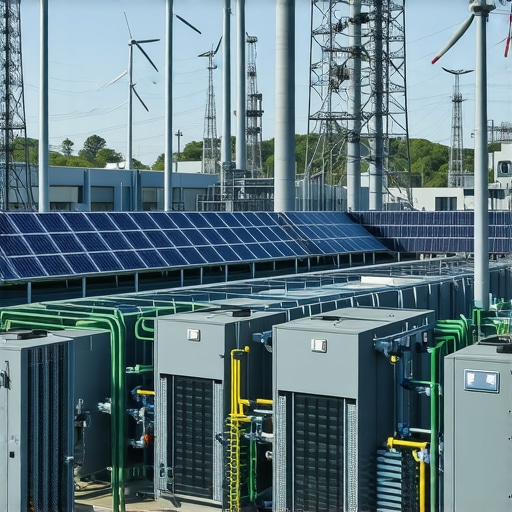
A microgrid is not just a battery sitting in your garage; it is a localized energy ecosystem. It involves an intelligent controller that can ‘island’ your home from the utility grid the moment it detects a frequency drop. But here is the problem: most mid-century homes are still running on 100-amp services or, god forbid, a fuse box to breaker conversion that was never actually finished. When you try to integrate a microgrid with old-school infrastructure, you run into the ‘Skin Effect.’ This is the tendency of an alternating electric current to become distributed within a conductor such that the current density is largest near the surface of the conductor. In older, oxidized wiring, this creates immense heat. If your grounding electrode install isn’t up to modern code, that microgrid has nowhere to dump excess energy during a surge. You aren’t just losing power; you’re risking a catastrophic arc flash.
The Load Calculation: Why Your 100-Amp Panel is a Liability
Let’s talk about Ohm’s Law and the reality of modern life. You want an EV charger installation, a sauna heater installation, and a home automation setup. Then you want to back it all up with a microgrid. You are asking a garden hose to do the job of a fire hydrant. During my thermal imaging inspections, I often see bus bars in 1970s-era panels glowing like neon signs because they are being pushed to 110% capacity. This is why a three phase power service upgrade or a simple heavy-up to 200 or 400 amps is non-negotiable. Without it, your microgrid controller will constantly trip, thinking there’s a short circuit when in reality, the wire is just physically unable to carry the load. We call this ‘Cold Creep’ in aluminum wiring—the metal literally deforms under the pressure of the screw, loosening the connection and creating a fire hazard that no circuit breaker can see coming.
“Aluminum wire connections can overheat and cause a fire without tripping the circuit breaker.” – CPSC Safety Alert 516
The Microgrid Solution: Islanding Your Critical Systems
When the grid goes down, your microgrid enters ‘Island Mode.’ It severs the connection to the utility to prevent ‘back-feeding’—which creates a widow maker scenario for line workers—and starts drawing from your local solar or battery storage. This requires a home run circuit to your critical load panel. This is where we protect the refrigerator, the medical equipment, and the security system. To ensure this system stays functional for decades, we apply monkey shit (duct seal) to the service entrance to prevent moisture from rotting your lugs from the inside out. We also insist on a surge protector installation at the main disconnect. Why? Because when the utility grid comes back online, it often does so with a massive voltage spike that can fry the delicate logic boards in your microgrid controller.
Eliminating the Handyman Special
I have seen too many code violation corrections where a ‘handyman’ tried to DIY a backup system. They use a ‘bootleg ground’ or fail to bond the neutral at the right point, creating a path where electricity can energize the metal skin of your appliances. If I touch your toaster and my Wiggy (solenoid tester) lights up, we have a life-safety crisis. Professional three phase power services and microgrid setups require a lifetime workmanship guarantee because the stakes are your family’s lives. We use a tick tracer to verify dead-front safety, but we rely on the math of the load calc to ensure the system never fails in the first place. This is about more than just convenience; it’s about the mechanical integrity of every junction box hidden behind your walls. If you’re serious about resilience, you stop looking at the price tag and start looking at the torque specs.
Comments are closed.