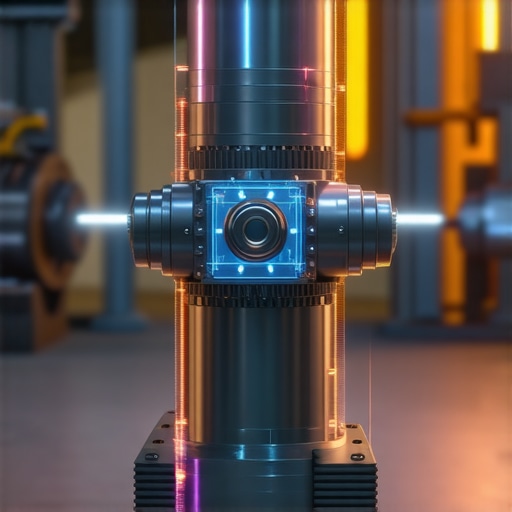
The Autopsy: When the Magic Smoke Escapes the Stator
The first thing you notice isn’t the noise; it’s the smell. It is a pungent, sharp metallic stink—the scent of varnish cooking off copper windings at four hundred degrees. I was called into a local processing plant last November because a three-phase, 400-horsepower motor had turned into a very expensive space heater. I grabbed my Wiggy and my Tick Tracer to check the lines, but the damage was done. The internal insulation had undergone a catastrophic failure, what we call an inter-turn short. If they had been using AI fault detection, I wouldn’t have been standing there in the dark, breathing in toxins. My old journeyman used to say that if you listen close enough, a motor will tell you how it wants to die. He’d put a screwdriver against the casing and his ear to the handle, listening for the ‘singing’ of a bearing. Today, we have AI that does that listening twenty-four hours a day, catching the frequencies we can’t hear. This isn’t about some fancy digital upgrade; it is about preventing the thermal runaway that turns a factory floor into a fire hazard.
“Failure to perform maintenance on electrical equipment can result in equipment failure and personal injury.” — NFPA 70B Standard for Electrical Equipment Maintenance
The Physics of Failure: Why Motors Die Slowly
To understand why AI is necessary, you have to understand the forensic breakdown of a motor’s heart. A motor is essentially a controlled electromagnetic storm. When you have a Home Run coming from the structured wiring panels to a massive motor, you’re dealing with massive amounts of energy. The enemy here is heat, but not just the kind of heat you feel from a lightbulb. We are talking about Thermal Expansion and Hysteresis Loss. Inside those windings, the copper is constantly expanding and contracting. Over time, this movement causes the thin layer of varnish on the wires to crack. This is where Cold Creep and microscopic vibration begin their work. Once that insulation nicks, you get an arc. Not a big one—just a tiny, micro-arc that carbonizes the surrounding material. A standard breaker won’t see that. It thinks everything is fine because the total amperage hasn’t hit the trip point yet. But the AI is looking at the Current Signature. It sees the ‘noise’ of that micro-arc long before the breaker ever thinks about moving its internal tripper.
Component Zooming: The Stator and the Bearing
Let’s zoom into the bearing housing. In the industrial world, a dry bearing is a Widow Maker. When lubrication fails, the friction increases the temperature of the rotor shaft. This heat travels down the shaft into the rotor bars. As they heat up, they expand more than the surrounding laminations. This is basic physics: the coefficient of thermal expansion for the aluminum or copper in the rotor bars is different than the steel laminations. This mechanical stress eventually leads to cracked rotor bars. An AI system monitors the vibration harmonics. It knows the ‘fingerprint’ of a healthy bearing. When the frequency shifts by even a few hertz, the AI flags it. This is far beyond the scope of a standard annual maintenance contract where a guy shows up once a year with a grease gun. This is real-time forensic monitoring. When we do a Rough-in for an industrial site, we are now looking at where we can place these sensors to ensure OSHA compliance wiring isn’t just about labels, but about active prevention.
“The employer shall ensure that electrical equipment is free from recognized hazards that are likely to cause death or serious physical harm.” — OSHA 1910.303(b)(1)
Beyond the Factory: Applying Industrial Logic to the Home
You might think AI fault detection is just for the big boys, but the same logic applies to your ceiling fan installation or your patio cover outlets. While you might not need a neural network to tell you a fan is wobbling, the principle of Resistance Equals Heat is universal. Every outlet switch repair I do is a forensic lesson. I’ve seen Romex pushed into ‘back-stabbed’ outlets where the spring tension has failed, creating a high-resistance connection. It’s the same thing as a loose lug on a 500HP motor—just on a smaller scale. If you’re dealing with storm damage electrical repair, you’re often looking for water intrusion that causes tracking. We use Monkey Shit (duct seal) to keep moisture out of the conduits, but the real safety comes from modern sensing. Whether it’s an AFCI breaker in your bedroom or an AI-driven monitor in a warehouse, the goal is the same: stopping the arc before it becomes a flame.
The Fix: Why You Can’t “Handyman” This
I’ve seen plenty of ‘maintenance guys’ try to bypass a tripping breaker because they think it’s ‘nuisance tripping.’ That is a death sentence for equipment. In an industrial setting, a bonded insured electrical contractor is mandatory for a reason. We don’t just swap parts; we calculate the load. When we do up lighting services or install new equipment, we are looking at the total harmonic distortion. If you have too many variable frequency drives on one line, you get ‘dirty power’ that cooks your motors. AI fault detection cleans up this mess by identifying the source of the harmonics. It’s the difference between guessing and knowing. When I pull my Dikes out of my pouch to Trim-out a new panel, I’m making sure every connection is torqued to spec, because I know that a quarter-turn too loose means a fire five years down the road. AI is simply the tool that tells us when that quarter-turn has vibrated loose. It’s about being able to sleep at night knowing the Home Run isn’t glowing cherry red inside a wall or a machine casing.
The Zero-Downtime Reality
The cost of downtime in a modern facility can be thousands of dollars a minute. Replacing a motor is one thing, but losing a week of production while you wait for a custom stator to be wound is another. AI fault detection moves us from Reactive Maintenance to Predictive Maintenance. We aren’t waiting for the storm damage electrical repair crew; we are preventing the damage from within. By the time a standard thermal camera sees a hot spot, the internal damage is usually at sixty percent. AI sees it at five percent. That’s the margin of safety. Whether you’re managing a fleet of industrial compressors or just making sure your structured wiring panels are up to code, the lesson is clear: electricity is a physical force that is constantly trying to return to the ground, and it will burn through anything in its way if you don’t respect the physics. Don’t wait for the smell of ozone. Get the sensors, do the annual maintenance contracts, and keep the magic smoke where it belongs—inside the wires.