The Invisible Fire: Why Your Transformer is Screaming Without a Sound
You smell it before you see it. That cloying, ozone-heavy scent that lingers in the back of your throat, signaling that somewhere, deep inside a steel enclosure, a transformer is cooking itself alive. In my thirty-five years of chasing shorts and charred copper, I’ve learned that electricity is lazy and spiteful; it always takes the path of least resistance, and when it can’t find one, it generates heat until something melts. If you’re running a high-demand operation, whether it is restaurant kitchen electrical setups with heavy-duty ovens or a residential complex with pool pump electrical loads, your transformer is the heart of the beast. When that heart fails, it doesn’t just stop; it often takes the whole building down with it.
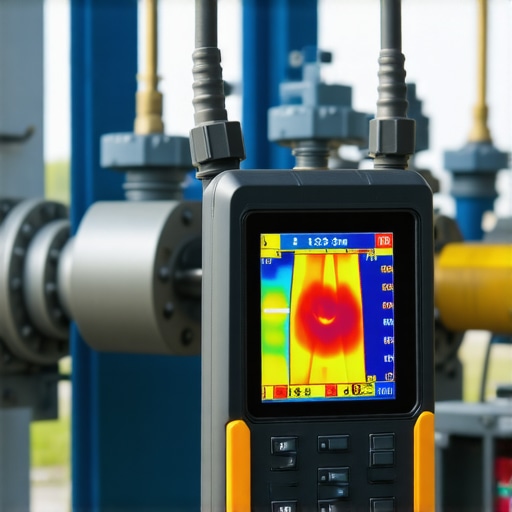
My old journeyman used to smack my hand away if he saw me reaching for a panel without checking the temperature first. ‘If you can’t feel the heat, you’re not looking hard enough,’ he’d growl. He was right. Back then, we used the back of our hands or a rudimentary thermometer. Today, we have infrared thermography, a tool that lets us see the thermal signature of a catastrophe before it happens. This isn’t just about pretty colors on a screen; it’s about understanding the physics of heat transfer and the destructive power of resistance.
“Electrical connections and components should be inspected for overheating using infrared thermography. High resistance in a connection can cause a fire without ever tripping an overcurrent protective device.” — NFPA 70B: Standard for Electrical Equipment Maintenance
The Forensic Breakdown: Why Transformers Fail from the Inside Out
To understand why we use infrared, you have to understand power quality analysis. In a perfect world, your voltage and current are in a beautiful, synchronized dance. But in the real world—especially in mid-century industrial zones or modern commercial kitchens—we deal with non-linear loads. Computers, LED drivers, and variable frequency drives create harmonics. These harmonics are like a virus in the system; they cause the transformer core to vibrate and the windings to overheat. This is where harmonic filter services become a literal life-saver for your infrastructure. Without filtering, that excess energy has nowhere to go but out as heat, degrading the insulation of the windings until you have an internal arc.
When I’m doing a forensic inspection, I’m looking for more than just a ‘hot spot.’ I’m looking for the delta-T—the temperature difference between phases. If Phase A is 15 degrees Celsius hotter than Phase B, we have a problem. It could be an unbalanced load, or it could be the beginning of a winding failure. We call this ‘Component Zooming.’ We don’t just look at the transformer; we look at the lugs. A loose lug on a transformer secondary is a widow maker. As the lug expands and contracts during the daily load cycle—a phenomenon known as thermal creep—it eventually loses its torque. This creates a high-resistance bridge that glows like a toaster filament inside your cabinet.
The Enemy of the Copper: Oxidation and Thermal Expansion
In mid-century equipment, we often see the disastrous results of ‘Cold Creep’ in aluminum-to-copper transitions. If the rough-in was done by a handyman who didn’t use an anti-oxidant joint compound (the old-timers call it monkey shit), the aluminum expands at a different rate than the copper lug. This creates a microscopic gap. Air enters. Oxygen meets metal. Oxidation forms a layer of non-conductive crust. Now, the electricity has to jump that gap. Every arc, no matter how small, adds carbon and more heat. Eventually, the insulation on the Romex or THHN wire becomes brittle, cracks, and you’re one humid day away from needing fire damage wiring restoration.
“Excessive temperature is the single greatest cause of transformer insulation failure. For every 8-10°C increase in operating temperature, the life of the insulation is halved.” — IEEE C57.91 Guide for Loading Mineral-Oil-Immersed Transformers
During a smart meter installation or a meter socket replacement, we often find that the thermal stress has traveled back up the line. Using a tick tracer might tell you the line is live, but only an infrared camera shows you that the bus bar is reaching 200 degrees Fahrenheit. If you see a glowing purple or white spot on the display at the transformer’s secondary bushings, you aren’t just looking at a repair; you’re looking at a potential explosion. This is why we insist on same day service appointments for thermal anomalies. You don’t wait for the weekend when the transformer is ‘puking’ oil or humming like a jet engine.
The Restoration Path: From Diagnosis to Torque
Repairing a failing transformer isn’t about slapping a band-aid on it. If we detect high heat in the windings, we perform a power quality analysis to see if harmonic filter services are required to stabilize the load. If the heat is localized at the terminals, we trim-out the damaged wire, replace the lugs, and use a calibrated torque wrench to meet manufacturer specs. Torque isn’t a suggestion; it’s a law of physics. We also look at the periphery. Is the chandelier installation in the lobby pulling too much from a single phase? Are the driveway sensor lights causing transient surges? We trace the home run back to the source to ensure the entire system is balanced.
At the end of the day, electricity is a force of nature we’ve merely tricked into staying behind drywall. When you ignore the thermal warnings of a transformer, you’re essentially hosting a controlled fire that’s trying to get out of its cage. Investing in annual infrared thermography isn’t just a code requirement; it’s the only way to sleep at night knowing your lugs are tight and your insulation isn’t turning into charcoal. Don’t wait for the smell of ozone. Get the scan, fix the resistance, and keep the lights on without the drama of a fire damage wiring restoration crew in your driveway.