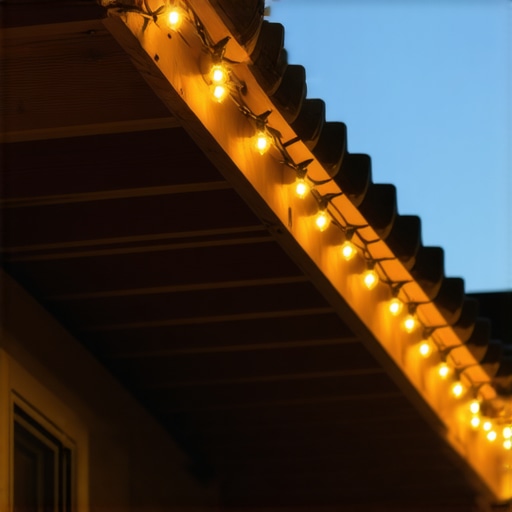
The Ghost of Christmas Fire Hazards Past
My journeyman used to smack my hand if I stripped a wire with a knife. “You nick the copper, you create a hot spot,” he’d scream. He was right. That tiny nick reduces the cross-sectional area of the conductor, forcing current through a bottleneck. In the world of holiday displays, this isn’t just theory—it’s a recipe for a 2:00 AM visit from the fire department. Most homeowners think they are just ‘decorating,’ but from my perspective, they are building a temporary, ungrounded, outdoor power grid using components that are often one step above junk. If you want to know how to hide Christmas light wires like a pro, you have to understand the physics of the Home Run and the limitations of your existing infrastructure. This isn’t just about aesthetics; it’s about preventing a catastrophic after hours electrical repair when your 1974 Federal Pacific panel decides to stop doing its job.
“Receptacles installed in wet locations shall have an enclosure that is weatherproof whether or not the attachment plug cap is inserted.” – NEC Section 406.9(B)(1)
The Anatomy of a Hidden Wire: Beyond the Staple Gun
Stop using a staple gun. Just stop. I have lost count of how many times I have taken a Tick Tracer to a gutter line only to find it screaming because a metal staple pierced the thermoplastic insulation of a cheap extension cord. Professionals don’t use staples; they use clips and gravity. When we talk about hiding wires, we are really talking about cable management and pathing. If you are running wires along a brick facade, use hot glue or specialized shingle clips. Why? Because these methods don’t compromise the integrity of the wire jacket. If you are dealing with a mid-century home, your exterior outlets are likely brittle and ungrounded. This is where the danger starts. If you’re pulling 15 amps for a massive LED display through a circuit that is already struggling with an old refrigerator in the garage, you’re creating a thermal event. This is why many homeowners look into financing electrical upgrades before the season starts, ensuring their service can actually handle the load.
The Physics of the Extension Cord: Resistance and Voltage Drop
Electricity is lazy and violent. It wants to find the shortest path to ground, and it will generate heat to get there. When you daisy-chain four 50-foot extension cords to reach a pendant light hanging on your porch, you are increasing resistance. Resistance equals heat. Heat equals fire. Component zooming: look at the prongs on your cords. If they are discolored or pitted, that’s carbon tracking. It’s evidence of arcing. If your house still has a Zinsco or FPE panel, these breakers often fail to trip even when the wire is literally melting. This is the ‘Time Bomb’ scenario. I’ve seen homeowners bury Romex directly in the mulch to hide it—that is a death wish. Unless it’s UF-rated and buried 18 inches deep, keep it above ground and protected. If you have an overhead service drop, never, under any circumstances, zip-tie your decorations to the service mast. I’ve seen masts ripped off houses because of ice loading on Christmas lights.
“Aluminum wire connections can overheat and cause a fire without tripping the circuit breaker.” – CPSC Safety Alert 516
Strategic Concealment and Safety Protocols
To hide wires along gutters, use the ‘tuck and run’ method with plastic clips that snap onto the lip. For ground-level runs, use PVC conduit or professional-grade cord protectors. If you are worried about the look, paint the conduit to match your siding. It’s better than having a flood water electrical safety crisis because a cord sat in a puddle for three weeks. While you’re up on that ladder, it’s the perfect time for a smoke detector installation update. If a fire starts in the attic because of a compromised wire, you want to know before the ceiling starts melting. Furthermore, if you’re already running new dedicated lines for your holiday cheer, consider installing an EV charger or a whole house fan wiring system simultaneously to maximize the electrician’s time and your budget.
Infrastructure Integrity: The Grounding and Bonding Factor
One of the most overlooked aspects of exterior wiring is the bonding jumper services. Your outdoor outlets must be GFCI protected. Period. No exceptions. If I see a ‘cheater plug’ (three-prong to two-prong adapter) on a Christmas display, I see a Widow Maker. A GFCI is a life-safety device that compares the current going out on the hot to the current coming back on the neutral. If there’s a leak—say, through a damp wire hidden in the grass—it trips. If your panel is too old to support modern GFCI breakers, or if your outdoor boxes are corroded with ‘monkey shit’ (duct seal) that’s dried out and cracked, you are at risk. This is why whole house surge protection is no longer a luxury; it’s a necessity to protect the sensitive electronics in your modern LED light strings and the rest of your home appliances. Don’t let your holiday spirit be the reason I have to perform a forensic autopsy on your charred bus bars.