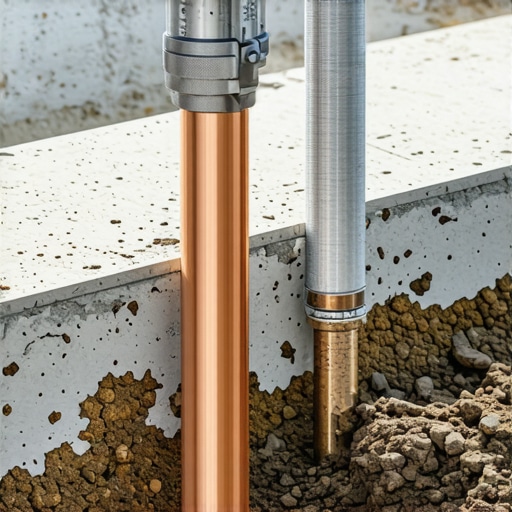
The Ghost of a Bad Ground: A Forensic Warning
I can smell a bad ground before I even pull my Wiggy out of my pocket. It is a sharp, metallic tang in the air, often accompanied by the faint scent of roasting insulation. Most homeowners—and frankly, too many lazy wire-pullers—treat the grounding electrode like an afterthought. They think if they’ve pounded a copper-clad rod into the dirt, the job is done. It isn’t. I’ve walked onto job sites where the Grounding Electrode Conductor (GEC) was flapping in the breeze because a weed-whacker decided to have it for lunch. That is not just a code violation; it is a ticking time bomb waiting for the next lightning strike or a transformer primary-to-secondary fault to turn your appliances into expensive heaters.
The Old Timer’s Lesson: The Nick That Kills
My journeyman used to smack my hand if I stripped a wire with a knife. ‘You nick the copper, you create a hot spot,’ he’d scream. He was right. But that lesson extends far beyond the rough-in at the outlet box. When you are dealing with the GEC—the heavy-gauge copper that connects your main service to the earth—any physical compromise is a failure point. A nick from a shovel or a crimp from a poorly placed staple increases resistance. In the world of high-voltage surges, resistance is heat. I once saw a GEC that had been pinched by a structural bracket; when a surge hit, the wire didn’t just fail—it vaporized, leaving a carbon track on the siding that nearly leveled the house. You treat that wire like it’s the only thing keeping you from meeting your maker, because it is.
The Physics of the Grounding Path
To understand why physical protection is paramount, you have to understand the physics of soil resistivity and the ‘Skin Effect.’ When a surge travels through your electrical wiring services, it is looking for the path of least impedance to the earth. If your grounding electrode is corroded or the conductor is frayed, that impedance spikes. We aren’t just talking about 60Hz household current; we are talking about high-frequency transients. These transients prefer to travel on the surface of the conductor. If that surface is mangled by physical damage, you’re forcing that energy to find another way out—usually through your load center upgrades or your new generator transfer switch. This is why we use drone thermography scans in industrial settings to find these high-resistance joints before they glow red.
“Where exposed to physical damage, a grounding electrode conductor or its enclosure shall be securely fastened to the surface on which it is carried.” – NEC 250.64(B)
The Autopsy: Why Mechanical Protection Fails
In many old homes built between 1900 and 1950, grounding was often an afterthought, sometimes just a wire clamped to a cold water pipe. Over decades, those pipes get replaced with PEX, and suddenly, your house has no ground. But even in modern systems, the failure point is almost always at the transition from the house to the dirt. This is the ‘death zone.’ It’s where the lawnmower hits, where the dog chews, and where the salt from winter de-icing minerals eats the copper alive. If I see a bare #6 copper wire stapled to a rim joist without any protection, I know I’m looking at a future repair bill. We use Schedule 80 PVC to protect that GEC. Why Schedule 80 and not 40? Because Schedule 80 is rated for physical damage. If you hit Schedule 40 with a lawnmower, it shatters. If you hit Schedule 80, the mower usually loses.
The Vulnerability of the ‘Acorn’ Clamp
The connection between the wire and the rod is usually made with a mechanical ‘acorn’ clamp. These are the weak links in the chain. Over time, ‘Cold Creep’ occurs—the copper wire actually deforms under the pressure of the screw, loosening the connection. Add a little vibration from the house or the movement of the soil during a freeze-thaw cycle, and suddenly that ‘secure’ connection is loose enough to rattle. This is why forensic inspectors like me look for ‘Monkey Shit’ (duct seal) used at the entry points to keep moisture out of the conduit, and why we prefer exothermic welding—literally melting the wire to the rod—for high-risk installations like office lighting upgrades or power factor correction systems.
Securing the Exterior: Beyond the Rod
If you have patio cover outlets or Christmas light services installed, your external grounding becomes even more critical. You are extending your electrical footprint into the elements. If the grounding electrode is damaged, a fault in your outdoor lighting could energize the metal frame of the patio cover. I’ve seen it happen. I’ve walked into yards with a tick tracer that started screaming six feet away from a metal fence because a damaged ground rod meant the entire fence was sitting at 90 volts. We don’t just ‘install’ a rod; we protect it. This means burying the connection point in a handhole box or a ‘ground well’ so it can be inspected without a shovel, while still being protected from the neighbor’s kid and his rogue frisbee.
“Aluminum wire connections can overheat and cause a fire without tripping the circuit breaker.” – CPSC Safety Alert 516
The Load Center Connection
Inside the house, the GEC must be a continuous run—no splices allowed unless you use irreversible compression fittings. This ‘Home Run’ goes straight to the neutral bus in your main panel. If this connection is loose, your surge protector installation is a waste of money. A surge protector works by shunting excess voltage to the ground. If the ground is broken or damaged, that surge has nowhere to go but through your motherboard. When we perform drone light inspections on large-scale facilities, we aren’t just looking for dead bulbs; we are looking for the structural integrity of the grounding system that supports those electronics.
The Inspector’s Checklist for Grounding Integrity
- Conduit Protection: Ensure the GEC is in Schedule 80 PVC or rigid metal conduit from the panel to at least 6 inches below grade.
- Secure Fastening: Use heavy-duty dikes to trim out any ties and ensure the conduit is strapped every 24 inches.
- Dielectric Grease: In coastal areas, we coat every connection in dielectric grease to prevent salt air from bridging the phases or corroding the copper-to-steel bond.
- Ground Well Installation: For any high-value system involving a generator transfer switch, install a ground well for easy access and physical protection.
Conclusion: Sleep at Night Knowing It’s Torqued
Electricity is a lazy, dangerous beast. It wants to get to the ground, and it will take the easiest path to get there. If you don’t provide a secure, physically protected grounding electrode, it will choose a path through your house, your appliances, or your body. Don’t be the guy who thinks a bare wire stapled to a fence post is ‘good enough.’ Get it in conduit, get it torqued to spec, and use the right materials. In this trade, there are no shortcuts—only fires and funerals. When I finish a trim-out, I want to know that even if a hurricane hits, that ground rod isn’t budging. That’s the difference between a handyman and a master. Check your GEC today; if it’s naked and vulnerable, you’re living in a house with a missing fuse.