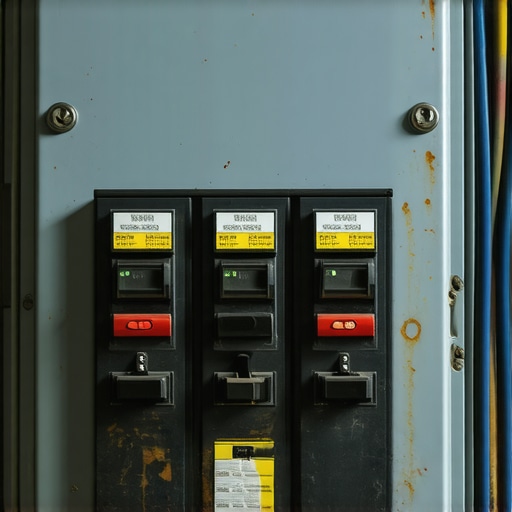
The Invisible Hazard: When Your Load Center Becomes a Liability
You don’t usually think about your electrical panel. It’s that gray box in the garage or the basement, quietly humming along. But as a forensic inspector who has spent three decades dissecting the charred remains of ‘renovated’ homes, I can tell you that silence is often a mask for a brewing catastrophe. Electricity isn’t a utility you should take for granted; it’s a powerful force contained by hardware that has a definitive shelf life. My old journeyman used to smack my hand if I stripped a wire with a knife. ‘You nick the copper, you create a hot spot,’ he’d scream. He was right. That tiny disruption in the conductor’s surface area increases resistance, and in the world of high-voltage physics, resistance equals heat. If your panel is ancient, those nicks, loose lugs, and metallurgical failures aren’t just possibilities—they are certainties.
“Aluminum wire connections can overheat and cause a fire without tripping the circuit breaker.” – CPSC Safety Alert 516
The Anatomy of a Time Bomb: Why Old Steel Fails
To understand why an electrical panel upgrade is necessary, we have to look at the forensic breakdown of the components. Most homeowners assume that if the lights are on, the system is fine. They don’t see the ‘Cold Creep’ happening inside the lugs. If your home was built between the 1960s and late 1970s, you likely have aluminum branch circuit wiring or aluminum bus bars. Aluminum is a fickle beast; it expands and contracts at a rate nearly 30% higher than copper. Every time you run your dishwasher or HVAC, those wires grow and shrink. Over forty years, this mechanical movement backs the wire right out from under the screw. Now you have a loose connection. When electricity tries to jump that gap, it creates an arc. We’re talking about temperatures exceeding 5,000 degrees Fahrenheit. This is why load center upgrades are the only logical path when the physical integrity of the bus bar is compromised. When I pull a breaker and see pitting or discolored plastic, that panel is a ‘Widow Maker.’ There is no ‘repairing’ a pitted bus bar; you replace the whole unit to maintain OSHA compliance wiring standards.
The Hall of Shame: Federal Pacific and Zinsco
If you open your panel door and see the name ‘Federal Pacific Electric’ (FPE) or ‘Zinsco,’ you aren’t looking at an electrical component; you’re looking at a fire starter. These brands are the pariahs of the forensic world. The FPE Stab-Lok breakers are notorious for a failure called ‘jamming.’ In a standard panel, if a circuit shorts out, the bimetallic strip inside the breaker heats up and trips the mechanism. In an FPE panel, that mechanism frequently jams. The breaker stays in the ‘on’ position while the Romex in your walls melts its insulation and ignites the 2×4 studs. Zinsco panels have a different, equally lethal flaw: the breakers often weld themselves directly to the bus bar. You might think you’ve turned the power off, but the connection remains live. I’ve seen guys get hit with 240 volts because they trusted a Zinsco handle that was in the ‘off’ position. This is why insurance companies are increasingly refusing to renew policies for homes with these panels until a full replacement is performed.
Modern Loads vs. Vintage Hardware
The average home in 1950 ran on a 60-amp fuse box. By the 70s, 100-amp service was the standard. Today, between EV chargers, energy storage systems, and high-efficiency heat pumps, a 100-amp panel is redlining. When you notice your lights dimming as the refrigerator compressor kicks in, that’s a voltage drop. Your panel is gasping for amperage it cannot provide. If you’re planning on a kitchen remodel with recessed lighting installation or adding a home office with dedicated ethernet wiring services, you need to calculate your total load. Adding a subpanel installation can help distribute the load, but if the main lugs are already running hot, you’re just putting a band-aid on a gunshot wound. A total replacement to a 200-amp or 400-amp service ensures that your home can handle modern life without the risk of a thermal event.
“The service disconnecting means shall have a rating not less than the load to be carried.” – NEC Article 230.79
The Forensic Signs: What to Look, Smell, and Feel For
You don’t need a Wiggy or a Tick Tracer to find some of the most obvious signs of failure. First, use your nose. An electrical fire doesn’t smell like a campfire; it smells like a sickeningly sweet, fishy chemical aroma. That’s the smell of burning phenolic resin and wire insulation. Second, use your eyes. Look for ‘Monkey Shit’ (the gray duct seal) that has dried up where the service mast enters the house. If water has been wicking down into the panel, you’ll see white oxidation or orange rust at the bottom of the enclosure. Corrosion is the enemy of conductivity. Third, check the rough-in area. If you see knob and tube removal that was done poorly—meaning the old wires are still spliced into new Romex without a junction box—the entire system is compromised. Finally, consider a priority service membership with a licensed firm to perform a thermal imaging scan. A FLIR camera will show ‘hot spots’ that the naked eye can’t see, pinpointing exactly where the resistance is building before it reaches the point of ignition.
The Solution: Professional Trim-Out and Safety
Replacing a panel isn’t a weekend DIY project. It involves coordinating with the utility company to pull the meter, ensuring the grounding rods are driven to the correct depth, and meticulously performing the trim-out so that every neutral and ground is landed on the correct bar. It’s about more than just power; it’s about safety features like AFCI (Arc-Fault Circuit Interrupter) breakers that detect the ‘signature’ of an arc before a fire starts. Whether you are upgrading for low voltage lighting or preparing for a solar battery backup, the panel is the heart of the system. Don’t let a ‘handyman’ touch it. Torque every lug to manufacturer specifications and sleep soundly knowing your home isn’t the next entry in a forensic inspector’s notebook.