The Hum of Impending Disaster: A Forensic Look at Your Electrical Service
Listen close, because that humming sound coming from your garage isn’t the sound of progress; it’s the sound of molecular vibration struggling against the laws of physics. I’ve spent thirty-five years pulling ‘Widow Makers’ out of walls and crawling through crawlspaces where the smell of ozone was thick enough to chew on. You don’t survive this trade by being an optimist; you survive by being paranoid. Electricity doesn’t want to power your toaster; it wants to find the shortest path to ground, and it doesn’t care if your house is in the way. I once walked into a ‘fully renovated’ kitchen where a flipper had buried three live junction boxes behind a custom marble backsplash. I didn’t need a high-end Tick Tracer to find them; I could feel the heat radiating through the stone. The grout was literally cracking from the thermal expansion of the arcing wires behind it. That flipper had ignored the basic math of a Home Run, and the owners were 24 hours away from a structure fire. This is the reality of an overloaded service entrance, and if you live in a home built between 1960 and 1980, you’re likely sitting on a ticking time bomb.
The Physics of Failure: Why Your Panel is Screaming
To understand an overload, you have to understand Resistance. Imagine trying to push a gallon of water through a cocktail straw in one second. The straw bursts. In your electrical system, the ‘straw’ is your service entrance conductors. When you demand more amperage than those wires are rated for, the electrons collide with the atoms of the conductor more frequently, generating heat. In mid-century homes, we often see 100-amp or even 60-amp services trying to handle a 2024 lifestyle. You’ve got a landscape lighting install, a ceiling fan installation in every room, and maybe you just added a permanent holiday lighting system. Each one of those draws a load. When that load exceeds the rated capacity, we see a phenomenon called Cold Creep, particularly in aluminum-wired homes. Aluminum expands at a different rate than the brass or steel lugs in your panel. Every time you turn on a high-draw appliance, the wire heats up and expands, pushing against the lug. When it cools, it contracts, but it never quite goes back to its original seat. Over years, the connection becomes loose. A loose connection is a high-resistance connection. High resistance produces heat. Heat produces fire.
“Aluminum wire connections can overheat and cause a fire without tripping the circuit breaker.” – CPSC Safety Alert 516
The Forensic Signs of an Overloaded Service
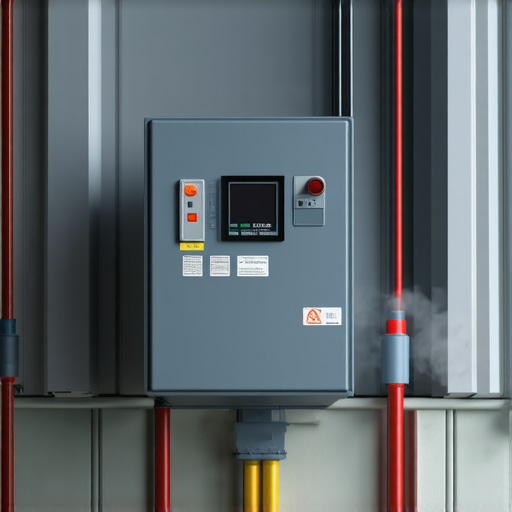
How do you know if your service is choking? First, use your senses. If you smell something fishy or like burnt plastic near your panel, that’s the PVC insulation on your Romex or service cables literally vaporizing. If you touch the dead front of your panel and it feels warm to the touch, you have a critical failure in progress. Look at your lights. Do they dim when the AC compressor kicks on? That’s a massive voltage drop because your service entrance can’t provide enough ‘pressure’ to maintain the load. This is especially common in restaurant kitchen electrical environments where industrial fridges and ovens cycle simultaneously, but it’s becoming a plague in residential settings too. [image_placeholder_1] If you see ‘Monkey Shit’ (that grey duct seal) melting and dripping out of the conduit where it enters the panel, you have a massive heat issue. I’ve seen deck lighting services tied into already burdened circuits that finally pushed the bus bar to its melting point. You might think a smoke detector installation is enough to save you, but if the fire starts inside the wall at the service entrance, the smoke might not reach the detector until the attic is fully involved.
The Brand Shaming: Federal Pacific and Zinsco
If you open your panel and see the name Federal Pacific Electric (FPE) or Zinsco, your service isn’t just overloaded; it’s defective by design. FPE Stab-Lok breakers are famous in the forensic community for ‘jamming.’ They won’t trip even when the wire is glowing cherry red. They lose their calibration over time due to the metallurgical failure of the internal trip mechanism. Zinsco panels have a different sin: the bus bars are made of an inferior aluminum alloy that is prone to severe oxidation. This oxidation creates a layer of crust that acts as an insulator, causing the breaker-to-bus connection to arc. I’ve had to use Dikes to pry Zinsco breakers off because they had literally welded themselves to the bus. If you have one of these, an electrical safety audit isn’t a suggestion; it’s a mandatory life-saving measure.
The Load Calculation: Why 100 Amps Isn’t Enough
Back in the day, a 100-amp service was plenty for a few lights and a radio. Today, we have EV chargers (40-50 amps), electric ranges (40 amps), and central air (30-40 amps). You can’t just keep adding circuits during a rough-in or trim-out without doing the math. According to the National Electrical Code, we have to perform a formal load calculation.
“The service-entrance conductors shall have sufficient ampacity to carry the load as computed in accordance with Article 220.” – NFPA 70: National Electrical Code
If your calculated load exceeds 80% of your main breaker’s rating for continuous loads, you are asking for a meltdown. This is why we recommend a ‘Heavy-Up’ to a 200-amp or even 400-amp service. When we do these upgrades, we don’t just swap the box. We replace the weather head, the service mast, the meter can, and the grounding electrodes. We ensure every connection is torqued to the specific inch-pounds required by the manufacturer—because ‘hand-tight’ is just another word for ‘house-fire.’
The Professional Solution: Beyond the Handyman
Don’t let a handyman touch your service entrance. They don’t have a Wiggy or the training to understand phase balancing. They’ll just ‘stab’ another breaker in and call it a day. A professional will check for signs of moisture ingress in the meter can, look for pitting on the bus bars, and ensure your lockout tagout training protocols are followed if they’re working on commercial equipment. We also highly recommend a priority service membership. This ensures you get an annual electrical safety audit where we use thermal imaging to find those ‘hot spots’ before they become ‘active fires.’ Whether you’re planning a holiday light installation or just tired of your breakers tripping every time you use the hairdryer, the health of your service entrance is the foundation of your home’s safety. Electricity is a powerful servant, but a vengeful master. Treat it with the respect it demands, or it will eventually demand your house. “, “image”: {“imagePrompt”: “A forensic close-up of a melted main lug inside an electrical panel, showing charred black insulation and copper wires with blue-green oxidation, high contrast, industrial photography.”, “imageTitle”: “Signs of Electrical Overload”, “imageAlt”: “Melted electrical lug showing signs of severe overheating and oxidation.”}, “categoryId”: 0, “postTime”: “”}