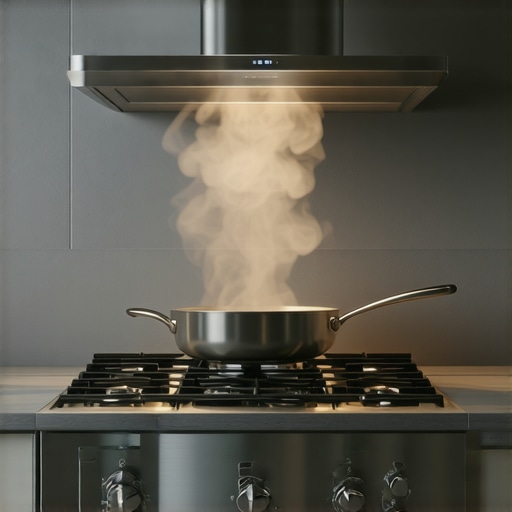
The Sensory Warning: Why Your Kitchen Smells Like 1974
Walk into a kitchen where the range hood is an afterthought, and you don’t just smell dinner; you smell the ghosts of three decades of fried fish and bacon grease. It’s a heavy, cloying scent that sticks to the back of your throat. As a forensic inspector, I don’t just look at the greasy filters; I look at the wiring. If that fan sounds like a dying turbine, it’s not just old—it’s likely starving for voltage. When a range hood is wired poorly, the motor struggles, heat builds up, and that grease in the air starts to undergo a chemical transformation, settling into your lungs and onto your cabinets. We aren’t just talking about comfort; we’re talking about the fundamental physics of air exchange and the electrical integrity of your home.
The Forensic Breakdown: An Autopsy of a Failed Circuit
I recently pulled a range hood off a wall in a 1940s bungalow. The homeowner complained of a ‘funny hum’ and a faint scent of ozone whenever they boiled pasta. What I found was a classic case of what I call the ‘Handyman’s Curse.’ Someone had tapped into an existing lighting circuit—already overloaded with office lighting upgrades from the 90s—to power a high-CFM professional hood. The wire they used? Old cloth-jacketed Romex that was so brittle it crumbled like a dry cigar in my hands. The physics of this failure are simple but deadly. As the fan motor tries to pull its rated current through a high-resistance connection, it creates a voltage drop. This causes the motor to run hotter, which in turn increases the resistance of the windings—a vicious cycle of thermal degradation. My mentor, an old-school journeyman who could bend EMT with his bare hands, used to smack my hand if I stripped a wire with a knife. ‘You nick the copper, you create a hot spot,’ he’d scream. ‘That nick is a bottleneck where electrons pile up like a traffic jam on the interstate.’ He was right. That 1940s kitchen had a ‘hot spot’ behind the drywall that was less than an hour away from igniting the lath and plaster.
“Aluminum wire connections can overheat and cause a fire without tripping the circuit breaker.” – CPSC Safety Alert 516
Component Zooming: The Physics of Resistance and Airflow
Let’s talk about the ‘why’ behind the failure. In these old homes, we often find un-grounded systems where the range hood is effectively ‘floating.’ Without a solid ground path, any internal fault in the fan motor can energize the entire metal chassis of the hood. If you’re leaning against a gas range and touch that hood, you become the path to ground. That is a widow maker scenario. Furthermore, we need to look at the ‘Rough-in’ phase. Most people think any 14/2 wire will do for a hood. But modern, high-performance hoods require a dedicated circuit to handle the inrush current of the blower motor. When you skimp on the electrical panel upgrade and try to daisy-chain a hood off a GFCI outlet installation meant for a toaster, you’re asking for a nuisance trip or a slow-burn fire. The insulation on older wiring wasn’t designed for the 21st-century heat loads of a gourmet kitchen. Over time, ‘Pyrophoric Carbonization’ occurs—the wood studs near a high-resistance electrical joint are slowly baked until their ignition temperature drops to that of a lit cigarette. You won’t even see the smoke until the wall is already gone.
The NEC Code Updates and Modern Standards
The NEC code updates are not suggestions; they are blood-bought rules. Modern code requires that any kitchen renovation includes proper circuit loading and, in many jurisdictions, AFCI (Arc-Fault Circuit Interrupter) protection. This is vital because it detects the signature of a sparking wire—the kind caused by a loose wire nut or a nicked conductor—and shuts the power down before the heat can build. If you’re doing a shed wiring install or a doorbell camera install, you might think you can handle a range hood, but the kitchen is a different beast. It’s a wet, greasy, high-heat environment. I always recommend a virtual consultation wiring review for DIYers, but for the actual trim-out, you need a licensed master electrician. We use a Wiggy or a Tick Tracer to verify that the neutral hasn’t been ‘bootlegged’ to a ground screw—a common trick used by hacks to pass a simple plug-in tester.
“The conductor shall not be used in a manner that will cause the insulation to be subjected to a temperature higher than that for which it is listed.” – NEC Article 310.10
The Solution: Dedicated Circuits and Clean Air
Improving kitchen health starts with a home run. That means a dedicated 20-amp circuit from the panel directly to the range hood. This ensures that when you crank that fan to clear out the smoke from a seared steak, the motor has the ‘juice’ it needs to operate at peak efficiency. It prevents voltage sag that can damage sensitive electronics in modern ‘smart’ hoods. While you’re at it, check your outlet switch repair needs and ensure all kitchen counter outlets have proper GFCI outlet installation to prevent shocks. For our older neighbors, we often provide senior discount services because no one should have to choose between a hot meal and a safe home. We aren’t just pulling wire; we are installing a life-safety system. When that hood is torqued down and the connections are solid, you can sleep at night knowing the only thing lingering in your kitchen is the smell of coffee, not the scent of arcing copper. Don’t let a ‘handyman’ turn your kitchen into a forensic site. Get it inspected, get it wired right, and breathe easy. After 35 years in the trade, I’ve never regretted over-engineering a circuit, but I’ve seen plenty of people regret under-wiring one. The peace of mind you get from knowing every lug is torqued to spec and every wire is the right gauge is worth more than any fancy backsplash.”