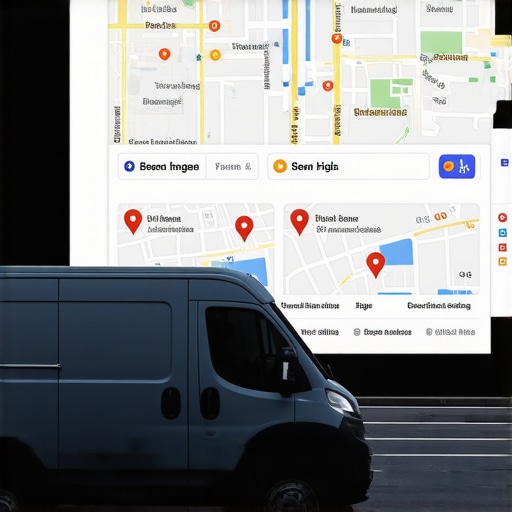
The Fastest Way to Rank Your Electrical Van in the Top 3 Map Pack
For a local electrician, being on page two of Google search results isn’t just a minor inconvenience – it is like being invisible during a total neighborhood power outage. When a homeowner’s fuse box starts sparking or an EV charger fails, they don’t scroll through pages of listings. They look at the “Map Pack,” those top three local results that appear prominently at the top of the search engine results page (SERP). If your van isn’t in that elite trio, you are effectively handing your leads to the competitor down the street.
To dominate this space, you need a sophisticated approach to google business profile seo. In my years consulting for local service-area businesses (SABs), I’ve seen that the algorithm doesn’t reward the “best” electrician; it rewards the one who best communicates their relevance and authority to Google’s local ranking engine. The local algorithm is built on three unwavering pillars: Proximity, Relevance, and Prominence. Understanding how to manipulate these levers – legitimately and strategically – is the difference between a quiet phone and a fully booked calendar.
For service-area businesses that operate out of a van rather than a brick-and-mortar storefront, the rules of the game are slightly different. You aren’t just trying to rank for a single point on a map; you are trying to project authority across an entire region. This guide will break down the exact mechanics of how to achieve that. Before we dive into the technical details, you might want to understand Why Your Electrical Business Stays Hidden in the Google Map Pack to identify the common pitfalls you are currently facing.
Why Service Area Businesses (SABs) Face Unique Challenges
The fundamental challenge for an electrician is that you are a Service Area Business (SAB). Unlike a coffee shop where the customer comes to you, you go to the customer. Historically, Google’s Map Pack was designed for storefronts. When the algorithm evolved to include SABs, it introduced a “Proximity Trap.” Google essentially “pins” your business to the address you used for verification – often your home or a small office – and your ranking strength radiates outward from that point like a heat map.
As you move further away from that physical pin, your visibility naturally drops. For an electrician with a 20-mile service radius, this is a major hurdle. You might rank #1 in your home neighborhood but disappear entirely two towns over. Data shows that Google Business Profile (GBP) signals, including how you define your service area, account for approximately 25% of the total local ranking signals. If you haven’t configured your profile specifically for an SAB, you are fighting with one hand tied behind your back.
Furthermore, Google’s “filtering” effect often hides businesses that are physically located too close to another business in the same category. If three electricians all use the same coworking space address or live in the same high-density residential complex, Google may only show the one it deems most “prominent,” filtering out the others to avoid redundancy. This is why mastering How We Use Proximity Tactics to Book More Electrical Jobs in Your Zip Code is essential for expanding your reach beyond your immediate street.
The Google Business Profile Optimization Checklist
To rank in the google map pack, your profile must be more than just “complete” – it must be optimized for the specific intent of your customers. Here is the technical breakdown of how to perform a high-level google business profile optimization.
- Primary and Secondary Categories: Your primary category must be “Electrician.” This is the most weighted signal for relevance. However, don’t ignore secondary categories. Adding “Electrical Engineer,” “Lighting Contractor,” and “Emergency Services” allows you to capture a broader range of search queries without diluting your primary focus.
- Service Area Definitions: Many electricians make the mistake of selecting a broad radius (e.g., “50 miles”). This is too vague for the modern algorithm. Instead, manually enter specific zip codes or neighborhood names. This tells Google exactly where your “van” is active and helps build relevance in those specific pockets of the city.
- The “Services” Menu: This is a goldmine for secondary keywords. Don’t just list “Electrical Work.” Break it down into “EV Charger Installation,” “Panel Upgrades,” “Recessed Lighting,” and “Ceiling Fan Repair.” Each service should have a detailed description (up to 300 characters) that includes local keywords.
- Business Description: You have 750 characters. Use them to establish your USP and mention the key cities you serve. While keywords in the description don’t directly impact rankings as much as the title or categories, they significantly impact conversion.
For those looking for an edge, using a professional google business profile audit tool can highlight gaps in your profile that the naked eye might miss, such as missing attributes or inconsistent service labels. For more granular tips, check out our guide on 5 Simple Profile Updates That Get Your Electrical Van Noticed Locally.
Building a 5-Star Review Engine for Prominence
Prominence is Google’s way of measuring how much the world trusts your business. In the local search world, reviews are the primary currency of prominence. However, it isn’t just about having a high star rating; it’s about the velocity (how often you get reviews) and the content of those reviews.
Google’s AI parses review text to understand what you do. If a customer leaves a review saying, “Great service,” it helps your rating but does little for your SEO. If a customer says, “Best EV charger installation I’ve had in Downtown Seattle, the team was professional and fast,” you have just gained a massive relevance boost for those specific keywords. You should actively encourage customers to mention the specific service and their location. This creates a “keyword-rich” profile that signals to Google you are a local authority.
The impact is measurable: profiles that are 100% complete and maintain a high volume of recent, positive reviews see 2.7x more customer trust and nearly 50% higher purchase consideration. To make this a reality, you need to implement 3 Simple Habits That Get Happy Customers to Leave Google Reviews as part of your daily workflow.
Technical Local Signals: Citations and Hyperlocal Content
While your GBP is the heart of your local strategy, it does not exist in a vacuum. Google looks at the rest of the web to verify that your business is legitimate. This is where local search optimization moves beyond the profile and onto your website and the broader internet.
NAP Consistency: Your Name, Address, and Phone number (NAP) must be identical across every directory on the web – from Yelp and Angie’s List to the local Chamber of Commerce. Inconsistencies (like “St.” vs. “Street”) can confuse the algorithm and diminish your trust score. This is a foundational element of local seo ranking tools and one of the first things an expert will audit.
City Pages and Hyperlocal Content: Since you don’t have a storefront in every city you serve, you must create “City Pages” on your main website. A page dedicated to “Electrical Services in [City Name]” that includes local landmarks, local project photos, and localized testimonials provides a landing spot for Google to crawl. These pages should link directly back to your Google Business Profile to create a closed loop of local relevance.
Finally, always embed a Google Map on your contact page. This isn’t just for users; it’s a technical signal that reinforces your service area to Google’s crawlers. If your digital footprint is messy, you are likely suffering from the issues outlined in Why Inaccurate Business Citations Are Quietly Killing Your Local Electrical Leads.
Troubleshooting: Why You Aren’t Ranking (Yet)
If you have optimized your profile and gathered reviews but still aren’t seeing your van in the top 3, you are likely facing one of three common issues: duplicate listings, the proximity filter, or a lack of “Geogrid” visibility. Many business owners don’t realize they have “ghost” listings created by old employees or automated scrapers that are siphoning off their ranking power.
One of the most effective ways to diagnose these issues is to use google maps seo tools to run a geogrid report. Unlike a standard search, a geogrid shows you exactly where your ranking drops off. You might be #1 at your house, but #12 just three miles away. This data allows you to target your “hyperlocal content” and citation building to the specific areas where you are weak. If you find yourself stuck, it might be time to look for google maps ranking service experts who can perform a deep dive into your account’s health. You can also self-diagnose by checking these 5 Red Flags Your Google Business Profile Audit Just Revealed.
Conclusion & The Path to Local Dominance
Ranking an electrical van in the Top 3 Map Pack is not a “set it and forget it” task. It is a continuous process of proving to Google that you are the most relevant, prominent, and proximate choice for a searcher’s needs. By meticulously optimizing your profile, automating your review collection, and building a consistent network of local citations, you can bypass competitors who have been in the market for decades.
The “Fastest Way” is a combination of technical precision and local authority. Don’t leave your leads to chance. Perform a thorough audit of your current standing today. If the technical side of local SEO feels overwhelming, consider hiring a professional google maps ranking service to handle the heavy lifting, allowing you to get back to what you do best: keeping the lights on for your community.