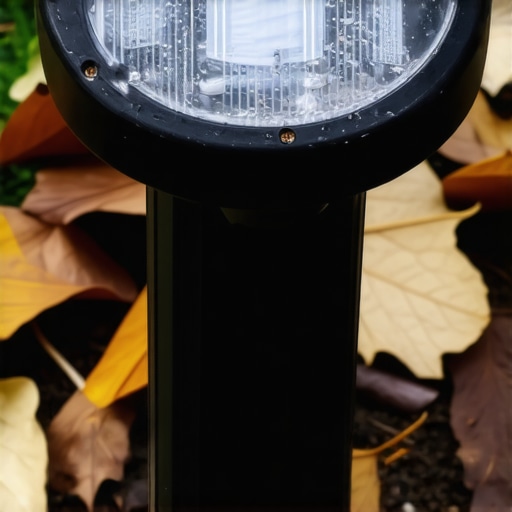
The Autopsy of a $15 Yard Light
I can usually smell it before I see it. It is that sickly, sweet scent of scorched polycarbonate and the ozone tang of a micro-arc. I recently stood in a client’s yard where they had installed twenty of those big-box store ‘special’ LED pathway lights. Six months later, the yard was a graveyard of dark plastic stakes. They called me for same day service appointments thinking it was a breaker issue. It wasn’t. It was physics. When you buy cheap exterior lighting, you aren’t buying a fixture; you’re buying a ticking clock. My old journeyman used to smack my hand if I didn’t leave a proper drip loop or if I used cheap ‘push-on’ connectors. ‘You’re building a straw for the rain, you idiot!’ he’d bark. He was right. Water is a marathon runner; it never stops, and it always finds the finish line inside your wire nut. That is the fundamental reality of the sign lighting installation world, and it applies just as harshly to your front walkway.
“Aluminum wire connections can overheat and cause a fire without tripping the circuit breaker.” – CPSC Safety Alert 516
The Thermal Pumping Effect: Why Seals Fail
Most homeowners assume a light fails because water ‘leaks’ in. That is too simple. The real killer is Thermal Pumping. During the day, the sun beats down on the fixture, heating the air inside the housing. This air expands and is pushed out through microscopic gaps in the seals or even through the wire insulation itself. When the sun goes down and the LED turns on, the fixture eventually cools (or gets hit by a cold sprinkler). This creates a vacuum. That vacuum literally sucks in the damp, humid night air. In coastal areas, this air is a salty brine that acts like an electrolyte. Once that moisture is inside, it can’t get out. It sits on the PCB (Printed Circuit Board), and the moment current flows, electrolysis begins. You’ll see it as a green, crusty growth—copper carbonate—that eats through the traces until the circuit is dead. This is why we insist on arc flash studies for industrial gear, but for your home, the risk is simply a dead system and a wasted investment.
Capillary Action and the ‘Widow Maker’ Short
If you’ve ever used a tick tracer (non-contact voltage tester) on a failed light and seen it glow even when the switch is off, you’re dealing with a ghost in the machine. Cheap low-voltage cable is often poorly extruded. If the insulation has even a pinhole, water enters. Because of capillary action, the water can travel feet—sometimes yards—inside the wire, between the copper strands and the plastic jacket. I’ve seen water travel from a garden stake all the way back to the transformer, corroding the terminals from the inside out. This is why a virtual consultation wiring session often ends with me telling a homeowner they need to rip it all out. If the copper is black (oxidized), you can’t solder it, and you can’t get a reliable mechanical connection. It’s ‘widow maker’ territory if it were high voltage, but in 12V land, it’s just a total system failure. This is why permit pulling services for even outdoor lighting are a safeguard; they ensure the use of direct-burial rated Romex or UF cable that can actually withstand the soil chemistry.
The Myth of ‘Integrated’ LEDs
The biggest scam in the ‘cheap’ light market is the integrated LED that isn’t heat-synced. LEDs are cold to the touch, but the junction temperature inside the chip is blistering. Without a heavy brass or aluminum heat sink to pull that heat away, the LED burns itself out in 2,000 hours instead of 50,000. Cheap lights use plastic housings that act like an oven. When we do a home automation setup, we use high-quality fixtures with replaceable ‘drop-in’ lamps. This allows for better heat dissipation and ensures that when a $5 lamp eventually fails, you aren’t throwing away a $100 fixture. For office lighting upgrades, we never use integrated plastic; why would you do it for your home? You want fixtures that are ‘potted’—meaning the electronics are encased in a solid block of epoxy (what we call ‘monkey shit’ in the trade, though that usually refers to duct seal) to keep moisture and heat from destroying the driver.
“Electrical equipment shall be installed in a neat and workmanlike manner.” – NEC Article 110.12
Soil Chemistry and Galvanic Corrosion
In many regions, the soil is naturally acidic. When you put a cheap aluminum stake into the ground and run current through it, you’ve created a battery. This is galvanic reaction. The metal will pit and dissolve until the stake snaps off when a dog walks past it. Professional-grade lighting uses cast brass or composite materials that are chemically inert. When we handle parking lot lighting or phone line installation near underground utilities, we have to account for soil pH. Your backyard is no different. If you aren’t using stainless steel fasteners and dielectric grease on your connections, you’re just inviting the earth to reclaim your hardware. For those who need a serious upgrade, lockout tagout training principles teach us that the only way to be safe is to have a system that is physically robust and properly isolated from these environmental stressors.
The Verdict: Quality Over Convenience
Don’t be fooled by the pretty box. If the fixture feels light, it’s garbage. You want weight. You want thick gaskets. You want a service that understands the nuances of sign lighting installation to handle your exterior ‘rough-in’ and ‘trim-out’. Don’t let a handyman ‘rough-in’ your yard with 18-gauge zip cord. Insist on 12/2 direct burial wire and waterproof connectors filled with silicone. It’s the difference between a lighting system that lasts twenty years and one that becomes landfill after the first frost. If you’re unsure, get a virtual consultation wiring check-up before you dig. It’s cheaper than replacing the whole run twice. Your home deserves better than a seasonal light show that dies before the snow melts.