
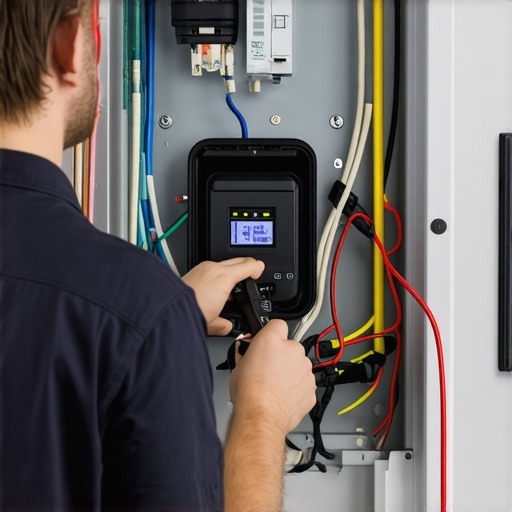
Ever been in the middle of my saying something important, only to have the ceiling fan sputter and die on me? Or worse, when I finally get around to plugging in my EV charger after a busy day, and it just refuses to work? That lightbulb moment hit hard: electrical issues aren’t just inconvenient—they can be downright frustrating, especially when you’re relying on these systems daily. I’ve been there, fumbling with wires, guessing, and wasting time, only to realize I missed some simple fix that could have saved the day.
Why Quick Troubleshooting Tricks Matter More Than Ever in 2024
Let’s face it: with the surge of electric vehicles and smart home gadgets, our homes are more reliant on proper electrical functioning than ever. A study by the Department of Energy revealed that nearly 60% of home electrical failures could have been prevented with quick, effective troubleshooting. But that doesn’t mean you should panic at the first sign of trouble. Instead, learning some proven, fast fixes can empower you to handle common issues—like a stubborn EV charger or a noisy ceiling fan—without calling in an electrician every time. This year, I’ve made it my mission to master those simple fixes, and I want to share what I’ve discovered so you don’t have to stumble in the dark.
And trust me, one of the biggest mistakes I used to make was trying to replace entire components without properly diagnosing the problem first. That approach not only cost me time and money but also risked more extensive damage. Now, I follow a set of quick, reliable steps I learned from seasoned electricians, which you can find detailed in guides like this expert troubleshooting guide. Ready to arm yourself with these easy yet powerful troubleshooting techniques? Let’s dive into what really works and how to get your systems back up and running in no time.
Identify the Symptom Clearly
Start with a precise description of what’s wrong. For instance, if your ceiling fan won’t start, note whether it makes noise, flickers, or remains silent. Similarly, for an EV charger, check if it powers on, charges slowly, or not at all. This initial step is like a doctor asking symptoms before diagnosing—be as specific as possible to guide your troubleshooting. I once faced a buzzing ceiling fan that only worsened over time; pinpointing the exact noise and when it occurred helped me target the issue quickly.
Isolate the Circuit or Power Source
Switch off the device and shut off the relevant circuit breaker or unplug it entirely. Think of it like shutting a water valve before fixing a leak—prevents new damage. Use a multimeter to verify that power is truly off, particularly with thicker wiring in EV chargers, where residual voltage can lurk. Once off, inspect visible components for signs of damage: burnt wires, loose connections, or corroded contacts. For example, I once found a loose wire in my ceiling fan’s housing that caused intermittent flickering. Addressing this simple issue restored proper operation without hassle.
Check for Obvious Faults
Look for loose screws, frayed wires, or burned components. For ceiling fans, confirm the switch and pull chain work correctly; for EV chargers, ensure the plug fits snugly and no debris blocks contact points. Remember, sometimes a loose connection mimics a faulty device. I learned this the hard way when my EV charger kept failing to initiate charging—tightly reseating the plug did the trick. To streamline this process, refer to this troubleshooting guide.
Test Components Methodically
Use a multimeter to test continuity and voltage at key points. For ceiling fans, check the capacitor, switch, and motor winding resistance. For EV chargers, verify the input voltage and resistance of internal fuses. Be methodical—test each part and document your findings. Do not jump to replacing parts randomly; that wastes time and money. I once replaced a fan motor that turned out to be fine after testing, saving me from unnecessary expenses. Learning precise testing techniques, as covered in this expert resource, is invaluable.
Reset and Attempt Power Cycling
Sometimes, a simple reset clears glitches. Turn off the device, wait a few minutes, then restore power. For smart or motorized systems, pressing a reset button or flipping the breaker back on can resolve odd behaviors. For instance, I once reset my ceiling fan’s remote receiver following a misfire, which restored normal operation instantly. Remember, this is like rebooting a computer to fix minor glitches. Always ensure safety first—use insulated tools when handling live circuits.
Implement the Fix and Observe
Apply your identified fix, such as tightening loose wires, replacing a faulty capacitor, or resetting the device. Turn the power back on and test thoroughly. Watch for proper operation: smooth fan rotation or steady charging from your EV station. Keep detailed notes of what you did; it helps if the issue recurs. I once found that reseating the EV charger’s plug and resetting the circuit resolved a charging halt—saving me hours of waiting. For more detailed step-by-step methods, check these expert tips.
Know When to Call a Professional
If these steps don’t resolve the problem, or if wiring is complex or unsafe, it’s time to contact a licensed electrician. Complex issues like burnt wiring or trapped internal faults require specialized tools and expertise. Remember, safety first—never attempt risky repairs beyond your skill level. When in doubt, consult a professional who can diagnose and fix efficiently, preventing further damage or hazards. As a rule, use a resource like this guide to find skilled help quickly.
Many home DIY enthusiasts and even seasoned electricians fall prey to common misconceptions that can hinder effective troubleshooting. One prevalent myth is that replacing components rashly saves time, but in my experience, a meticulous diagnostic approach—rooted in understanding electrical nuances—saves both time and money. For instance, a typical mistake is assuming a capacitor failure in a ceiling fan when, often, the root cause lies in wiring issues or control switches. Recognizing these subtle distinctions is crucial for advanced troubleshooting. According to expert electricians, a thorough understanding of the circuit flow often reveals hidden faults invisible to the untrained eye, reinforcing the importance of methodical testing over guesswork.
Another trap is over-reliance on visual inspection alone. While burnt wires or damaged capacitors are obvious indicators, many issues like internal resistance in EV chargers or subtle contact corrosion demand device-specific testing tools like a multimeter or insulation resistance tester. Jumping to conclusions without applying these nuanced diagnostics can lead to unnecessary component replacements, complicating the repair process. Honing your diagnostic skills to interpret multimeter readings accurately is a key step toward professional-level repair work, and resources like this guide provide excellent insights.
Why Do Internal Resistance and Parasitic Leakages Matter More Than Ever?
Advanced troubleshooting nowadays necessitates a grasp of complex phenomena like internal resistance in motors or parasitic leakages in high-voltage EV charging circuits. These issues can cause intermittent failures or reduced performance that seem trivial on the surface but are rooted in atomic-level electrical behavior. For example, a slight increase in internal resistance in a ceiling fan’s motor windings can lead to overheating and eventual failure if not detected early. Studies in electrical engineering have shown that such parasitic effects can significantly impair system longevity and safety, as highlighted in this research. Recognizing these nuances allows for preventive maintenance and more reliable repairs, although it requires specialized knowledge and detection tools beyond basic multimeters. So, next time you troubleshoot, consider the unseen electrical characteristics that could be sabotaging your system’s health.
Are you aware of these hidden electrical factors? Let me know in the comments below. For those looking to sharpen their diagnostic skills further, exploring professional resources like this expert guidance is highly recommended. Remember, mastering these nuances transforms you from a simple fixer into a true electrical trouble-shooter, ensuring safety and efficiency in every repair attempt.
Keeping It Working: Essential Equipment and Methods
Maintaining electrical systems, especially ceiling fans and EV chargers, requires not just knowledge but also the right set of tools. In my experience, the first step in ensuring long-term reliability is investing in quality testing equipment. I personally rely on a high-precision digital multimeter like the Fluke 115. Its true RMS measurement is crucial when diagnosing complex circuits, such as those involving inverter drives in ceiling fans or high-voltage circuits in EV chargers. This tool allows me to measure voltage, current, and resistance accurately, giving me confidence in my diagnostics.
Another indispensable device is a non-contact voltage tester, like the Sperry NCV Pro. Its ease of use lets me quickly verify live wires without risking a shock, especially when working in tight spaces like fan housing or behind connectors. I make it a habit to check every connection before touching wires, avoiding unnecessary accidents.
For more advanced diagnostics, I recommend an insulation resistance tester, or megohmmeter. When troubleshooting internal leakage or parasitic currents in high-voltage systems, this device helps me identify insulation breakdowns that a standard multimeter could miss. As highlighted in this guide, understanding insulation integrity is vital for safety and durability.
In addition to hardware, software tools have become increasingly valuable. I use oscilloscopes sparingly but find them essential when dealing with complex waveform issues or noise in your circuits. For example, detecting transient surges caused by faulty control switches or capacitors can prevent future system failures.
How do I maintain these tools over time?
Proper calibration is key to ensuring your equipment continues to provide accurate readings. Regularly calibrate your multimeter and insulation testers according to manufacturer recommendations. Store tools in a dry, dust-free environment, and perform periodic checks against known reference sources. Digital tools, like my portable oscilloscope, benefit from firmware updates, which I do periodically to ensure compatibility with newer electrical standards. Keeping your tools in top condition means less guessing and more precise repairs, extending the lifespan of your systems.
Looking ahead, I believe that integrating smart diagnostics—like IoT-enabled meters—will revolutionize troubleshooting by providing real-time data analytics. This evolution will make it easier to predict failures before they happen, saving time and money in the long run. For now, mastering these manual and digital tools remains the foundation of reliable electrical maintenance.
If you want to elevate your troubleshooting game, I highly recommend trying a multimeter with auto-ranging capabilities and true RMS measurement. It simplifies diagnostics and minimizes errors, especially when dealing with complex waveforms typical in modern systems. Get started today, and watch your confidence—and the reliability of your repairs—grow significantly.
Lessons I Wish I Learned Sooner in Electrical Fixes
One lightbulb moment was realizing that sometimes a simple reset or reseat solves what seems like a complex problem—saving time and money. I used to rush into replacing parts without thorough diagnostics, but now I know patience and systematic testing make all the difference.
My biggest misconception was believing all failure signs indicated a component breakdown. Often, loose connections or reactive switches cause issues that mimic hardware failures—something I only discovered after careful inspection and testing.
Another eye-opener was understanding the importance of internal resistance and parasitic leakages, especially in high-voltage EV chargers. Recognizing these nuanced issues through proper tools prevents future headaches and enhances safety.
Finally, I underestimated the value of quality testing equipment—like a reliable multimeter and insulation tester. These tools transform guesswork into confidence, leading to more effective and safer repairs.