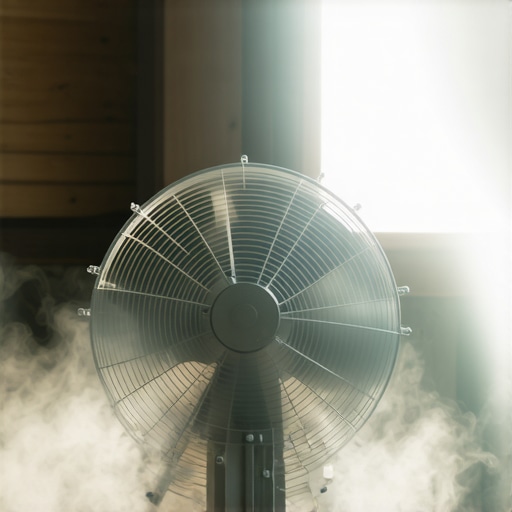
The Sensory Warning: When the Attic Becomes a Pressure Cooker
You don’t usually notice the attic fan until it stops. You’re sitting in your living room and you realize the AC is running a marathon but losing the race. Then you smell it—that sharp, metallic tang of ozone, or worse, the sickly sweet scent of melting wire insulation. When an attic fan dies during a heatwave, it’s not just a convenience issue; it’s a forensic event. As a licensed master electrician, I’ve spent decades diagnosing why these motors give up the ghost exactly when you need them most. The attic environment is brutal. We are talking 140 to 160 degrees Fahrenheit in the peak of July. That heat doesn’t just make you sweat; it changes the molecular behavior of your electrical system.
My journeyman used to smack my hand if I stripped a wire with a knife. ‘You nick the copper, you create a hot spot,’ he’d scream. He was right. That tiny nick reduces the cross-sectional area of the conductor. Under the heavy load of a high-static pressure fan motor trying to move thick, hot air, that nick becomes a point of high resistance. Resistance creates heat. Heat creates more resistance. It’s a thermal runaway loop that ends with a 24 hour emergency electrician standing in your driveway at 2 AM. When we look at a failed attic fan, we aren’t just looking for a dead motor; we are conducting an autopsy on the circuit.
“Every motor shall be protected against excessive heating due to motor overload and failure to start.” – NEC Article 430.32
The Forensic Breakdown: Why the Motor Quit
The first thing I check isn’t the switch; it’s the capacitor. In the world of industrial motor controls, we know that the start capacitor is the weak link. It’s a chemical device designed to give the motor a phase-shifted jolt of energy to overcome the inertia of the fan blades. During a heatwave, the dielectric oil inside that capacitor can literally boil. If you see the silver canister bulging or leaking what we call ‘monkey shit’ (duct seal or potting compound), it’s toast. Without that kick, the motor sits there hum-locking. A hum-locked motor draws Locked Rotor Amps (LRA), which is often five to six times the Running Load Amps (RLA). This is where the heat goes from ‘uncomfortable’ to ‘fire hazard.’
Then there is the issue of Cold Creep in older homes. If your house was built in the mid-70s, there is a high probability your attic fan was wired with aluminum branch circuits. Aluminum is a temperamental beast. It expands and contracts at a much higher rate than copper. Over decades of summer-winter cycles, the wire actually crawls out from under the terminal screws on the thermostat. This loose connection creates an arc. Arcing doesn’t always trip a standard thermal breaker—especially if you’re still running an old Federal Pacific or Zinsco panel where the breakers are notorious for jamming. This is why electrical inspections are non-negotiable for older properties.
The Physics of Resistance and Harmonic Distortion
We also need to talk about harmonic filter services and power quality. In modern homes filled with LED drivers, computer power supplies, and variable speed drives, the electrical ‘noise’ or total harmonic distortion (THD) is higher than ever. This noise causes additional heating in induction motors like the ones found in attic fans. The motor’s windings are thin copper wire coated in a microscopic layer of varnish. When you subject that varnish to harmonic-induced heat and 150-degree ambient temperatures, it becomes brittle and cracks. Once the varnish fails, you get a turn-to-turn short. The motor might still spin, but it’ll run hot enough to bake bread on the housing.
If you’ve recently had a smart meter installation, you might be seeing more precise data on your usage, but it won’t tell you that your attic fan’s home run (the direct line from the panel) is undersized. Many builders used 14-gauge Romex for attic fans when they should have used 12-gauge to account for the voltage drop. Voltage drop is the enemy of torque. If the voltage at the fan motor drops because the wire is too long or too thin, the motor has to pull more current to do the same amount of work. More current equals more heat. It’s a physics trap.
“Aluminum wire connections can overheat and cause a fire without tripping the circuit breaker.” – CPSC Safety Alert 516
The Fix: Beyond the Handyman Special
When a homeowner calls for same day service appointments, they usually expect me to just swap the motor. But a licensed master electrician looks at the whole system. We check the battery backup wiring if you have a solar-integrated system, and we ensure the pendant light hanging in the hallway below isn’t showing signs of heat damage from a failing fan circuit. If the fan is dead, we don’t just replace it with the cheapest big-box store unit. We look for a motor with true ball bearings rather than sleeve bearings, which seize up when the lubricant dries out in the attic kiln.
We also look at the thermostat. Most attic fan thermostats are cheap bi-metal strips that lose their calibration. I’ve seen them stuck ‘on’ for three years straight, eventually burning out the motor through sheer exhaustion. Upgrading to a digital controller with a remote probe allows you to monitor the attic temperature from your smartphone, often integrated with your doorbell camera install or home automation hub. This isn’t about upselling; it’s about creating a system that doesn’t require me to crawl through your insulation again in two years.
Final Inspection: Sleep Soundly
Don’t trust a ‘handyman’ with your attic’s electrical. They’ll use a tick tracer, see that there’s ‘some’ power, and tell you the motor is bad. They won’t use a Wiggy (solenoid voltmeter) to check for a dropped neutral or high-resistance ground. They won’t check the torque on your bus bar lugs. When I finish a job, I want to know that every connection is torqued to inch-pounds, every rough-in is secure, and the trim-out is clean. Electricity isn’t a hobby; it’s a force of nature that wants to return to the ground, and it’ll go through your house to get there if you let it. Get the inspection, fix the underlying wiring, and keep your roof from melting.