The Scent of a Slow-Motion Disaster
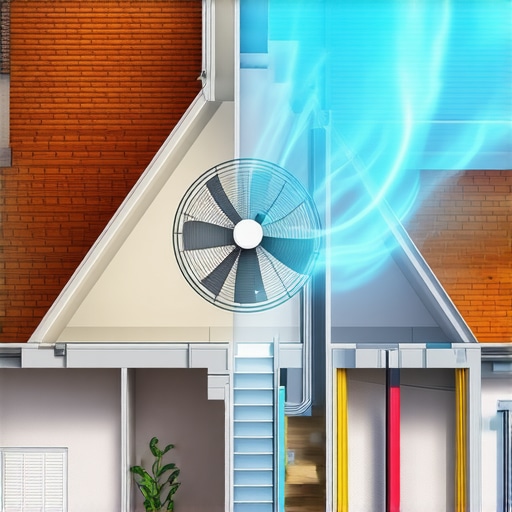
The attic smells like a combination of sun-baked 1970s fiberglass and something else—something sharper. Ozone. If you stand under the access hatch and hear a rhythmic, low-frequency thrumming, you aren’t hearing the sound of a cooling house; you’re hearing the sound of a mechanical parasite. As a licensed master electrician with thirty-five years of forensic inspections under my belt, I’ve spent more time in 140-degree crawlspaces than I care to admit. I’ve seen plenty of ‘innovations’ that were actually just house-sized energy drains. The power attic ventilator (PAV) is often the worst offender. You think it’s helping your air conditioner, but the physics of the neutral pressure plane suggest it’s actually robbing you blind and potentially setting the stage for a fire damage wiring restoration project.
My journeyman used to smack my hand if I stripped a wire with a knife. ‘You nick the copper, you create a hot spot,’ he’d scream. He was right. That same obsessive attention to detail applies to how your home handles its thermal load. When you install a high-powered fan in the roof, you aren’t just moving air; you’re changing the pressure dynamics of the entire structure. If your attic isn’t air-sealed from the living space with monkey shit (duct seal) and proper insulation, that fan starts pulling conditioned air through every unsealed lighting installation services gap, every chandelier installation canopy, and every top plate wire penetration. You are literally paying to cool the outdoors.
“Attic fans can create a negative pressure in the attic that pulls conditioned air from the house into the attic, increasing the cooling load on the air conditioner.” – CPSC Safety Alert
The Forensic Breakdown: Why the Motor is Fighting You
Let’s perform a forensic autopsy on a standard builder-grade attic fan. These units are often the cheapest components the flipper could find, usually wired into a home run that shares a circuit with other critical loads. When the motor bearings start to fail, they don’t just stop; they struggle. This struggle manifests as heat and vibration. If you haven’t had vibration analysis services performed on your industrial or high-end residential equipment, you might not realize that a wobbling fan blade is slowly backed out of the wire nuts in the junction box. I’ve seen Romex sheathing worn down to the bare copper because it was vibrating against a sharp roofing nail for five years.
This vibration leads to what we call high-resistance connections. As the copper nicks and oxidizes, the resistance goes up. According to Ohm’s Law, as resistance increases at a fixed voltage, heat is the byproduct. That heat is what cooks the insulation until it’s as brittle as a potato chip. By the time I get called in for storm damage electrical repair, I often find that the storm wasn’t the cause—it was just the final shove that caused the compromised wiring to arc over. A simple fan becomes a thermal lance, melting the plastic box and igniting the surrounding dust.
The Mechanical Paradox of the 1970s Home
In mid-century homes, we see a lot of code violation corrections related to how these fans were added later. Often, they were tapped into the nearest junction box without a load calculation. If you’re also running hot tub wiring services or a modern kitchen on a 100-amp service, that 5-amp fan motor under heavy load might be the straw that breaks the camel’s back. When the fan motor stalls due to heat or debris, the locked rotor amps (LRA) can jump significantly before the breaker ever thinks about tripping. During that window, the wire is the fuse.
Furthermore, consider the salt air if you’re near the coast. Salt bridges the gap between phases in the motor housing, leading to a slow-motion short circuit that doesn’t always trip the widow maker breaker (those old Federal Pacific or Zinsco units that are famous for jamming). If you haven’t checked your panel lately, you might be sitting on a time bomb. I always tell my clients that a senior discount services check-up is cheaper than a new roof and a legal battle with an insurance company that won’t cover fire damage wiring restoration because of an unpermitted DIY fan installation.
“All electrical equipment shall be installed in a neat and workmanlike manner.” – NEC Article 110.12
The Solution: Fixing the Pressure, Not Just the Temperature
If you want to keep your house cool without making your AC work double shifts, you need to look at the system holistically. Instead of a high-draw motor that shakes the rafters, focus on passive ventilation and air sealing. If you must have a powered unit, it needs to be installed by a professional who understands retail store wiring standards of durability. Use your tick tracer to ensure the circuit isn’t overloaded and that the grounding path is continuous back to the main lug. Don’t just slap it in; torque the connections to the manufacturer’s spec.
When I do a rough-in, I make sure the attic fan circuit is isolated and that the thermal switch is set to a realistic temperature. Setting it too low means it runs 24/7, sucking the humidity out of the air and making your AC coil work harder to dehumidify the house. It’s a feedback loop of waste. If the fan is making noise, don’t ignore it. That noise is a warning. Grab your dikes, cut the power, and call someone who knows how to handle code violation corrections before you’re looking at a charred pile of lumber.
At the end of the day, electricity isn’t a hobby. It’s a force of nature that we’ve managed to put into copper pipes. Treat it with the respect it deserves. Whether you’re upgrading your kitchen or just trying to survive a heatwave, make sure your infrastructure can handle the load. Sleep at night knowing your connections are torqued, your Romex is secure, and your Wiggy isn’t showing a phantom voltage on your ground wire.