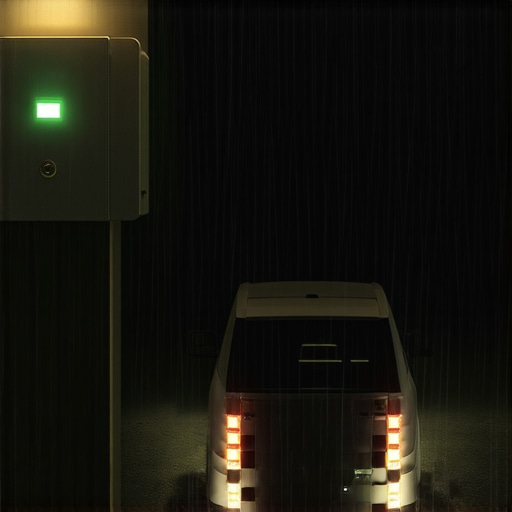
The Ghost in the Machine: Why Dead Gates are More Than an Inconvenience
I remember my first year as an apprentice, standing in a torrential downpour while my journeyman, a man who smelled exclusively of solder and stale coffee, watched me struggle with a jammed manual release on a massive wrought-iron gate. He didn’t help. He just stood there under his umbrella and said, ‘Kid, if you nick the copper while stripping those control wires, you create a hot spot that’ll cook the board by July. But if you don’t install a battery backup, you’re just building a very expensive cage for the customer.’ He was right. That gate wasn’t just a security feature; it became a barricade the second the local transformer gave up the ghost. I spent three hours that night on an after hours electrical repair call just because a homeowner couldn’t get their car out of the driveway to go to work. That’s the reality of automation without redundancy.
The Forensic Breakdown of a Power Failure
When the grid fails, your gate opener isn’t just ‘off.’ It’s a mechanical deadweight. Most people think a gate motor is just a simple DC or AC engine, but it’s a delicate balance of torque, limit switches, and logic boards. Without a home automation setup that includes a dedicated battery reservoir, the system relies entirely on the house’s service. When that service drops, the solenoid locks engage. If you’re lucky, you have a key. If you’re unlucky, you’re climbing over a six-foot fence in a storm. From a forensic standpoint, I’ve seen gate motors burn out their secondary windings because they were ‘hunting’ for voltage during a brownout. A battery system acts as a buffer, a literal shock absorber for the electronics. It’s the same principle we use in power factor correction for industrial plants; you want to smooth out the demand so the hardware doesn’t take the hit.
“Where a backup power system is required for life safety or security, the installation shall comply with Article 700 of the NEC to ensure permanent and reliable operation under emergency conditions.” – National Electrical Code (NEC) Section 700.1
The Physics of ‘Cold Creep’ and Battery Chemistry
Let’s talk about why batteries die in the first place. You can’t just throw a lawnmower battery in a box and call it a day. In the electrical trade, we deal with a phenomenon called thermal cycling. During the day, the sun beats down on the control box; at night, it drops to freezing. This causes the lead plates in a standard battery to expand and contract—a process similar to ‘cold creep’ in old aluminum wiring. Over time, the active material sheds from the plates, settling at the bottom until it shorts out a cell. This is why preventative electrical maintenance isn’t just a suggestion; it’s a requirement. I’ve seen pool pump electrical systems fail for the same reason—corrosion and heat cycles destroying the capacitors. For a gate, you need a Deep Cycle AGM or, better yet, a LiFePO4 battery that can handle the high inrush current required to break the static friction of a heavy gate without sagging the voltage so low the processor resets.
Coastal Corruption: The Silent Killer
If you live near the coast, your gate opener is under constant chemical attack. Salt air is a conductor. It drifts into the cabinet and settles on the terminals of your battery. This creates a high-resistance bridge. I’ve opened cabinets where the battery terminals looked like they were growing white moss. That ‘moss’ is lead sulfate mixed with salt, and it will eat through a 10-gauge wire in a season. During a rough-in, I always use ‘monkey shit’ (duct seal) to plug the conduit entries into the box. If you don’t, the conduit acts like a chimney, drawing moist, salty air directly onto the electronics. It’s the same reason deck lighting services often fail; people forget that electricity and moisture are constantly trying to find each other. A battery backup system in a coastal environment needs stainless steel enclosures and a heavy coating of dielectric grease on every connection point.
The Infrastructure Context: Why Your Panel Matters
If you’re still running an old Federal Pacific or Zinsco panel, your gate opener is the least of your worries, but it’s a significant part of the safety chain. I often recommend a fuse box to breaker conversion before we even talk about gate automation. Why? Because an old, ungrounded system can’t properly handle the surges that an outdoor inductive load (like a gate motor) throws back onto the line. When that motor stops, the magnetic field collapses, sending a spike back toward the house. Without a proper bonding jumper services setup and a modern grounding electrode system, that spike is looking for a path to ground—and it might find it through your speaker system setup or your laptop. Adding a battery backup provides a layer of isolation. The battery absorbs the transient spikes, protecting the sensitive logic chips on the gate’s control board.
“Aluminum wire connections can overheat and cause a fire without tripping the circuit breaker, particularly in outdoor high-load applications where vibration is present.” – CPSC Safety Alert 516
Vibration Analysis: The Mechanical Stress of Starting
Every time your gate starts, it’s a violent event. The motor has to overcome the inertia of hundreds of pounds of steel. We use vibration analysis services in industrial settings to predict motor failure, but you can hear it in a gate. That ‘clunk’ is a massive draw on the power supply. If you’re running a long home run of wire from the house to the gate—say 200 feet—you’re dealing with significant voltage drop. By the time the power gets there, it’s ‘thin.’ A battery backup keeps a local reservoir of ‘thick’ power right at the motor. It’s like having a water tank right at the faucet instead of relying on a long, skinny hose. This reduces the heat generated in the motor windings, which is the number one killer of gate operators. It’s the same logic we apply to pool pump electrical installations; you want the source as close to the load as possible to prevent the ‘widow maker’ scenario of a stalled motor drawing max amps until the insulation melts.
Final Inspection: Sleep at Night Knowing It’s Torqued
At the end of the day, electricity isn’t a hobby. It’s a force of nature that we try to contain in copper and plastic. Installing a gate opener without a battery backup is like buying a car without a spare tire—you’re fine until you’re not. When the sky turns green and the wind starts howling, you don’t want to be out there with a tick tracer or a wiggy trying to figure out why your gate won’t budge. You want to press a button and have it work. Ensure your installer isn’t just a ‘handyman’ with a set of dikes and some electrical tape. Ensure they understand the load calculations, the bonding requirements, and the chemistry of the backup system. A gate that stays shut during a blackout isn’t a security feature; it’s a liability. Get the battery, torque the lugs to spec, and seal the cabinet. That’s how a Master Electrician does it. That’s how you stay safe.