The Ghost in the Driveway: When ‘Blocked’ Doesn’t Mean Obstructed
You’re standing in your driveway at 11:00 PM, the rain is starting to come down sideways, and that gate just won’t close. You’ve wiped the lenses of the photoelectric eyes three times, kicked away every stray leaf, and yet the motor just clicks and sits there like a stubborn mule. Most homeowners think it’s a physical obstruction. I’m here to tell you that after 35 years in the trade, 90% of the time, it’s not the sensor being ‘blocked’ by an object—it’s the electrical integrity of the system collapsing under the weight of poor installation, moisture ingress, and the relentless physics of the outdoors. I’ve seen gate systems installed by guys who shouldn’t be trusted with a toaster, let alone a motor circuit. I walked into a ‘fully renovated’ estate recently where the gate had stopped working just after the closing. The flipper had buried live junction boxes three inches under the mulch with no drainage and wrapped the splices in cheap electrical tape. I found them with my tracer; they hadn’t just failed, they had essentially turned into an underground battery, electrolyzing the rainwater into a conductive sludge. This wasn’t a blocked sensor; it was a forensic crime scene.
The Forensic Breakdown: Why Sensors Fail from the Inside Out
When your gate sensor ‘blocks,’ the control board is looking for a specific voltage return or a break in the infrared beam. In coastal environments, the enemy isn’t just dirt; it’s salt air corrosion and galvanic reaction. Salt bridges the gap between phases on your terminal blocks. I’ve pulled covers off gate operators where the copper was so green it looked like it was growing moss. This is why bonded insured electrical work is non-negotiable for outdoor systems. A ‘handyman’ doesn’t understand that when you have dissimilar metals—like a steel screw holding a copper wire—and you introduce salt spray, you’ve created a galvanic cell that will eat that connection until the resistance is so high the sensor can’t pull enough current to fire its LED.
“Aluminum wire connections can overheat and cause a fire without tripping the circuit breaker.” – CPSC Safety Alert 516
When the resistance climbs, the voltage drops. Your sensor might look like it has power because the little ‘power’ LED is dim, but it lacks the ‘oomph’ to send a coherent signal back to the board. We call this ‘ghosting.’ If you’re dealing with an older system, you might even need a 100 amp service upgrade or a full service entrance upgrade if the voltage sag from the house to the gate (which is often a 200-foot run of undersized 14-gauge Romex some amateur buried) is too great when the motor kicks in.
The Physics of Moisture and Resistance
Water is the ultimate infiltrator. During holiday emergency calls, the culprit is almost always a failed seal. I talk about ‘Monkey Shit’ (duct seal) constantly because if you don’t seal the conduit where it enters the sensor housing, warm air from the ground rises into the cold sensor box, condenses, and drips directly onto the circuit board. This creates a high-resistance path that mimics a blocked beam. Furthermore, flood water electrical safety is a major concern. If your sensors were submerged during a heavy storm, the capillary action can pull water up inside the wire insulation itself. I’ve seen ‘waterproof’ UF cable that, when cut with dikes, literally leaked water from inside the jacket. This moisture changes the capacitance of the wire. For modern ‘smart’ gates, we often recommend our CAT6 cabling services using shielded, outdoor-rated cable to ensure the data signal isn’t corrupted by the 120V or 240V power lines running in the same trench.
Component Zooming: The Hidden Failures
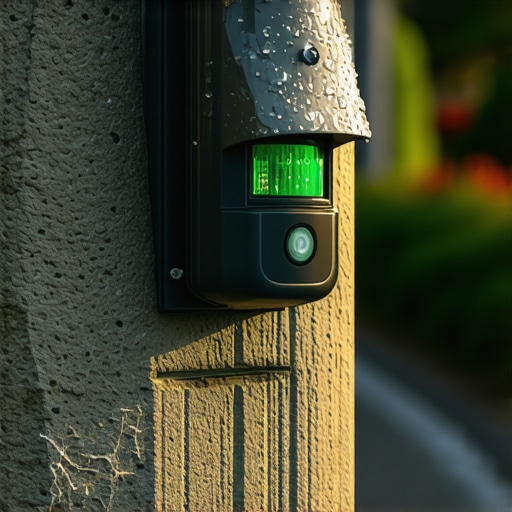
Let’s talk about ‘Cold Creep’ and thermal expansion. Outdoor enclosures can swing 60 degrees in a single day. This expansion and contraction loosens the screw terminals on your sensors. A loose neutral is a widow maker for electronics; it can send 240V through a 120V circuit, frying your gate’s logic board in a millisecond. If you are running a commercial operation, you likely need three phase power services to handle the torque of heavy gates, but even then, the control side is delicate. [IMAGE_PLACEHOLDER] To prevent these issues, we look at AFCI breaker services. While usually for bedrooms, arc-fault protection on outdoor control lines can detect the ‘sizzling’ of a corroded wire before it starts a fire in the dry brush near your driveway. We provide free electrical estimates to diagnose these hidden gremlins. Sometimes, the solution isn’t a new sensor; it’s temporary power services to bypass a failed underground run until a new, code-compliant trench can be dug.
Protecting Your Perimeter
Don’t let an amateur play with your property’s security. When a sensor fails, it’s a symptom of a larger electrical health issue. Whether it’s the lack of ‘Monkey Shit’ in the conduit or a home run wire that was nicked during a rough-in ten years ago, electricity eventually reveals all sins. I’ve spent my life with a Wiggy and a tick tracer in my hands, and I can tell you: a gate that won’t close is an invitation. Ensure your system is bonded, the connections are torqued to spec, and your grounding rods aren’t just rusted stubs in the dirt. Sleep at night knowing your gate isn’t just ‘working,’ but is electrically sound.