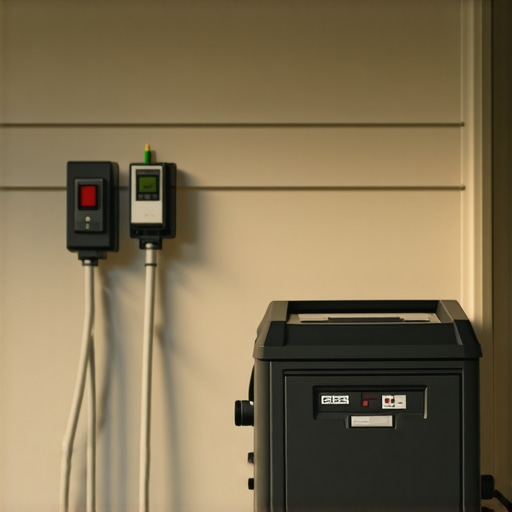
Why Your Home Backup Generator Fails When You Need It Most: A Guide to Total Reliability
The sky turns a bruised shade of purple, the wind begins to howl through the eaves, and suddenly – darkness. The grid has failed. For a homeowner with a standby system, this is the moment of truth. You wait for that reassuring roar of the engine, the mechanical heartbeat that signifies safety and continuity. But instead, there is only silence. Or perhaps a rhythmic, pathetic clicking sound. The generator has failed. In that moment, the investment you made for peace of mind becomes a heavy, expensive lawn ornament.
As an expert in the home service industry, I see this scenario play out far too often. But there is a deeper, more insidious parallel for business owners. Imagine the “storm” is your peak season – the time when customers are searching frantically for your services. If your digital presence is dark, if your phone isn’t ringing, it is because your local seo for contractors has failed just as surely as a dead battery in a storm. Just as a generator requires precise mechanical maintenance to perform under pressure, your business requires a high-performing google business profile seo strategy to ensure you appear when the “power” of organic traffic is most needed. If you find yourself in the aftermath of a surge, you may also need to review 3 Immediate Steps for Handling Storm Damage Electrical Repair Safely to regain your footing.
The Top 5 Technical Reasons Generators Fail
To understand how to prevent failure, we must first diagnose the mechanics of the breakdown. Technical research into standby power systems reveals that failure is rarely a matter of “bad luck.” It is almost always a result of neglected variables. Here are the primary culprits that leave homeowners in the dark:
1. Battery Failure: The Silent Killer
Statistically, battery failure accounts for over 50% of all standby generator failures. The primary cause is “sulfation,” the buildup of lead sulfate crystals on the battery plates. This occurs when a battery remains in a low-charge state for too long. Furthermore, because generators sit outside, extreme temperature fluctuations can loosen connections or evaporate electrolyte fluid. If the battery cannot provide the “cranking amps” required to turn the starter motor, the system is dead on arrival.
2. Fuel Degradation and Contamination
Whether you run on diesel, gasoline, or propane, fuel is your system’s lifeblood. Diesel and gasoline are particularly volatile; they can begin to degrade or “go stale” in as little as 3 to 6 months. This degradation leads to the formation of gum and varnish in the fuel lines and injectors. In diesel systems, “microbial growth” (algae) can clog filters entirely. Without a clean, high-octane fuel supply, the engine may sputter and stall or refuse to catch at all. Ensuring your system is up to date is critical; for instance, Is Your 2026 Standby Generator Install Legal? 4 Codes to Check to ensure your fuel storage meets modern safety standards.
3. The Automatic Transfer Switch (ATS) Malfunction
The ATS is the “brain” of your backup system. It is responsible for sensing when utility power has dropped below a certain threshold and signaling the generator to start. If the ATS has a mechanical bind or an electrical fault in its control logic, the generator may run perfectly, but the power will never reach your home’s electrical panel. This is often caused by debris, insect infestation in the housing, or dated firmware. To avoid these issues, many professionals recommend a google maps ranking service for technical service providers to ensure they are visible to homeowners needing urgent ATS repairs.
4. Low Coolant and Oil Levels
Generators are internal combustion engines. They create immense heat. If the unit detects low coolant or low oil pressure, it will trigger a safety shutdown to prevent the engine from seizing. Leaks in hoses or seals, often caused by dry rot during periods of inactivity, are the most common reasons for fluid loss.
5. The “Infrequent Use” Trap
Mechanical systems are designed to move. When a generator sits idle for months, seals dry out, moisture accumulates in the alternator windings (leading to shorts), and the fuel system clogs. Without a regular “exercise” cycle, the system loses its readiness.
The Digital Parallel: Why Your Google Business Profile “Stalls”
Just as a generator is your backup for physical power, your Google Business Profile (GBP) is the backup for your lead flow. If you aren’t getting calls, your digital engine has stalled. In the world of google business profile seo, the same principles of maintenance apply.
Consider the “Dead Battery” analogy. In the digital world, your reviews are your cranking power. If you haven’t received a fresh review in months, your “battery” is sulfated. Google sees a lack of recent activity as a sign that your business may not be “active” enough to handle a new lead. Without those fresh reviews to provide the initial spark of trust, you will never rank higher on google maps when a customer is searching for an emergency electrician.
Then there is the “Stale Fuel” problem. Your business information – your hours, your service area, and your list of services – is the fuel that runs the Google algorithm. If your profile still says you are open 9-5 but your website says you offer 24/7 emergency service, that “contaminated” data creates friction. Google’s engine won’t run a profile that it doesn’t trust. Comprehensive google business profile optimization ensures that every “drop” of data is clean, consistent, and high-octane.
Neglecting your profile is exactly like neglecting your generator’s exercise cycle. If you only look at your GBP once a year, don’t be surprised when it fails to produce leads during your busiest season. To ensure you aren’t falling for common pitfalls, you should investigate 3 Red Flags Your 2026 Free Electrical Estimates Should Reveal, as these often correlate with poor digital transparency.
Diagnosing the “Click-Through” Blockage
Sometimes, the generator runs, but the lights don’t come on. In SEO terms, this is when you are appearing in the search results, but no one is clicking “Call.” This is a failure in local map pack seo. Google uses three primary pillars to determine who wins the top three spots: Proximity, Relevance, and Prominence.
- Proximity: How close is your business to the searcher? While you can’t move your office, you can optimize your service areas.
- Relevance: Does your profile match the intent? If a user searches for “generator repair” and your profile only mentions “general wiring,” you lose.
- Prominence: How well-known is your business? This is determined by your backlinks, mentions across the web, and your overall digital footprint.
If you find that your ranking is stagnant, you may need to employ specialized local seo tools to diagnose where the blockage lies. Is it a lack of geo-tagged photos? Is it a “NAP” (Name, Address, Phone) inconsistency across the web? Or is it simply that your competitors are “exercising” their profiles more frequently than you are? For those looking into more advanced power solutions, understanding 5 Microgrid Integration Fixes for Off-Grid Power in 2026 can also provide a competitive edge in your service offerings, which should be highlighted on your profile.
Advanced Maintenance: The 2026 Local SEO Checklist
Reliability in 2026 requires a proactive service plan. Whether you are maintaining a 22kW standby unit or a multi-location Google Business Profile, the steps are remarkably similar. You cannot wait for the storm to check your systems.
The Generator Service Plan
- Weekly Exercise: Set your generator to run for 15-20 minutes every week under no load to circulate oil and stabilize fuel.
- Annual Fluid Change: Replace oil and filters at least once a year, regardless of run time.
- Battery Testing: Use a multimeter to check for a resting voltage of at least 12.6V and replace the battery every 3 years.
- Infrared Scans: Use thermal imaging to check for hot spots in the ATS and wiring. In fact, Why You Need Infrared Thermography Scans for 2026 Fire Safety explains how this technology prevents catastrophic failures before they start.
The SEO Service Plan
- Weekly Google Posts: Treat these like your generator’s exercise cycle. Share a photo of a recent job, a safety tip, or a glowing review. This tells Google your “engine” is healthy.
- Review Management: Aim for at least two new reviews per week. Respond to every review – both positive and negative – within 24 hours.
- Audit Your Profile: Use a google business profile audit tool to check for hidden errors, such as duplicate listings or incorrect map pins.
- Monitor Your Rankings: Use a google maps rank tracker to see how you perform across different neighborhoods. Local SEO is hyper-local; you might rank #1 at your office but #10 three miles away.
By treating your digital presence with the same technical rigor as an electrical system, you ensure that your business is the one customers find when their own systems fail. This is the essence of high-level google business profile seo.
Conclusion: Reliability is Earned, Not Found
In the electrical trade, we know that “hope” is not a strategy. You don’t hope the generator starts; you ensure it starts through maintenance, testing, and high-quality components. The same is true for your online visibility. If you want to improve google maps rankings, you must be willing to put in the work before the “storm” of competition arrives.
Whether you are a homeowner looking to secure your family’s comfort or a contractor looking to secure your company’s future, the lesson is the same: neglect leads to failure. Don’t wait for the power to go out or the phone to stop ringing. Audit your systems today. Ensure your physical backup is ready for the next grid failure, and ensure your google business profile seo is optimized to keep your leads flowing year-round. For the tools you need to dominate the local map pack, explore the resources at seovipertools.com and take control of your digital reliability.
Comments are closed.