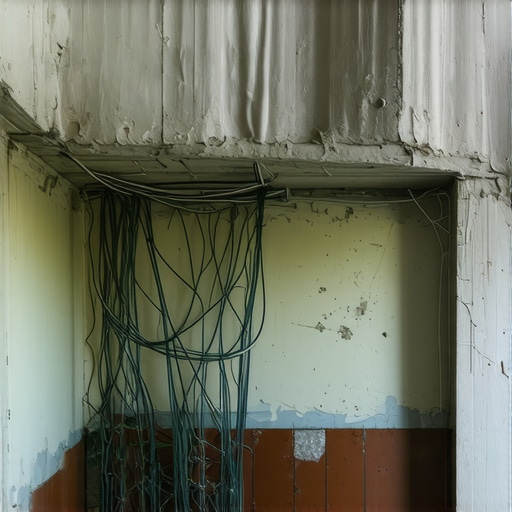
The Ghost in the Walls: Why Your Vintage Wiring is a Forensic Crime Scene Waiting to Happen
Every time I step into a crawlspace of a home built between 1920 and 1950, I’m not just looking for copper; I’m looking for a history of bad decisions. There’s a specific smell to an old electrical system—a mix of scorched dust, decaying organic matter, and that sharp, metallic bite of ozone that tells me a connection is arcing somewhere behind the lath and plaster. Homeowners love the ‘charm’ of these old places, but as a Master Electrician with 35 years of forensic inspections under my belt, I don’t see charm. I see a thermal disaster held together by hope and brittle cotton threads.
My journeyman used to smack my hand if I stripped a wire with a knife during a rough-in. ‘You nick the copper, you create a hot spot,’ he’d scream. He was right. Back then, we were transitioning from knob-and-tube to early cloth-jacketed cables. If you even breathed on that old wire the wrong way, the insulation would flake off like a dry snakeskin. In those days, we didn’t have the luxury of modern Romex with its durable PVC jacket. We had copper wrapped in rubber, then encased in a woven cotton braid impregnated with asphalt or tar. It worked—until it didn’t.
“Aluminum and older copper wiring connections can overheat and cause a fire without tripping the circuit breaker, especially when the insulation has degraded over decades of thermal cycling.” – CPSC Safety Alert 516
1. The Physics of Brittle Failure: Asphaltic Desiccation
The first danger is the simple breakdown of the insulation’s chemistry. This isn’t just ‘old wire’; it’s a chemical reaction that has reached its expiration date. The organic cotton and rubber layers were never meant to last 70 years. Over time, the heat generated by the resistance in the copper—especially as people plug in modern high-draw appliances—bakes the oils out of the asphalt. This process, known as desiccation, turns the once-flexible jacket into a rigid, carbonized shell. If you so much as wiggle a switch during a lighting installation services call, that insulation shatters. Once it flakes off, you have ‘widow makers’—bare, energized conductors sitting millimeters away from grounded pipes or flammable wooden studs. I’ve used my Tick Tracer on walls where the current was literally bleeding through the damp plaster because the cloth wire inside was completely naked. If you’re considering home theater wiring or adding a complex security camera wiring system, you’re essentially putting a Ferrari engine into a horse-drawn carriage. The old infrastructure cannot handle the load without a service entrance upgrade.
2. The Absence of the Equipment Grounding Conductor (EGC)
Most cloth-insulated wiring from the early to mid-20th century lacks a dedicated grounding wire. This is the ‘missing safety net.’ In a modern system, if a hot wire touches a metal box, the ground wire provides a low-resistance path back to the panel, instantly tripping the breaker. In an old cloth-wired home, that metal junction box just sits there, energized and waiting for you to touch it while you’re reaching for a light switch or plugging in a vacuum. I’ve walked into kitchens where the sink and the stove were at different potentials because of a lack of grounding, creating a lethal shock hazard. This is why a smoke detector installation in these homes is non-negotiable, though it’s a bandage on a bullet wound. Without a ground, your expensive electronics—the ones you’re setting up with virtual consultation wiring—have no surge protection. A single spike and your whole rig is toast because the energy has nowhere to go but through your motherboard.
“All electrical installations shall be made in a workmanlike manner… and shall provide a continuous path to ground to ensure the safety of the occupants.” – National Electrical Code (NEC) Article 110.12
3. Thermal Trapping and the ‘Over-Fusing’ Nightmare
The third hidden danger is the ‘insulation trap.’ Modern building codes require us to insulate attics to high R-values to save energy. When you bury old cloth-insulated wire under twelve inches of blown-in fiberglass, you are essentially putting a thermal blanket over a heater. These wires were designed to dissipate heat into open air pockets. Once they are buried, the ambient temperature around the conductor skyrockets. I’ve seen cases where the copper reached temperatures high enough to melt the rubber core, leading to a direct short. To make matters worse, many of these old 14-gauge circuits are protected by 20-amp or even 30-amp fuses because some previous owner got tired of the fuse blowing when they used the toaster. This ‘over-fusing’ means the wire becomes the fuse. It glows cherry red inside the wall before the overcurrent device even thinks about tripping. If you are looking into EV charger installation or retail store wiring for an older building, the very first step is a forensic load calculation. You cannot push 40 amps through a system designed for a few 60-watt lightbulbs. Whether it’s track lighting services or sign lighting installation for a vintage storefront, if the bones are cloth, the building is a time bomb. You need a total rewire, utilizing modern AFCI breakers that can detect the micro-arcs these old wires produce before they ignite the dust in your joist bays. Don’t trust a handyman with a roll of electrical tape; get a pro who knows how to use a Wiggy and understands that electricity isn’t a hobby—it’s a force of nature that wants to go home, and it’ll burn your house down to get there.
Comments are closed.