The Hidden Fire Hazard: Why Your Modern Splice is a Knob and Tube Time Bomb
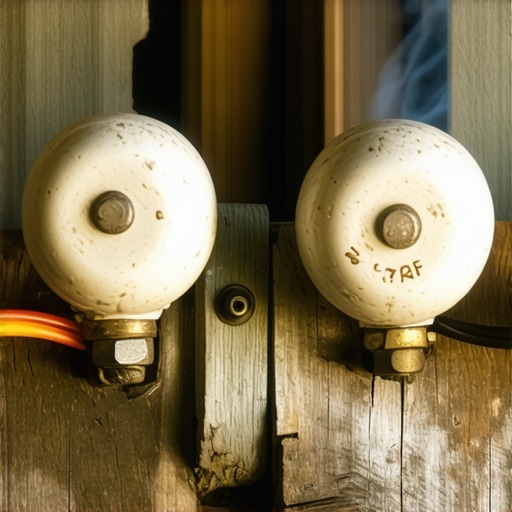
Walking into a 1920s attic is like stepping into a museum of electrical hubris. You see those porcelain standoffs, the elegant ceramic knobs, and the tubes through the joists. It looks solid. It looks like history. But to a forensic inspector who has smelled the acrid, metallic stench of a house fire at 3 AM, that history is a liability waiting for a catalyst. The most dangerous thing a homeowner or a ‘jack-of-all-trades’ can do is take a length of modern Romex and try to ‘marry’ it to a century-old circuit. This isn’t just a code violation; it is a fundamental misunderstanding of physics and material science.
“Concealed knob-and-tube wiring shall be permitted for extensions of existing installations… [but] shall not be covered by insulating materials.” – NEC Article 394.12
My old journeyman used to smack my hand if I even looked like I was going to nick a conductor. ‘You nick that copper, you create a hot spot,’ he’d scream. He was right. In the world of knob and tube (K&T), every connection is a potential point of failure, and when you introduce modern loads and materials, you are basically inviting a disaster. My journeyman’s lesson was simple: respect the conductor, or it will bite you. When you splice modern NM-B cable into K&T, you aren’t just extending a circuit; you are creating a high-resistance junction in a system that was never designed for the thermal envelope of a modern home.
The Anatomy of Failure: Component Zooming into the Splice
To understand why this fails, you have to look at the chemistry of the wire itself. Old K&T is typically a single-strand copper conductor wrapped in a layer of natural rubber and a cotton braid. Over 80 to 100 years, that rubber undergoes pyrolytic carbonization. It dries out, becomes brittle, and eventually turns into a fine powder or a hard, conductive shell. The moment you move that wire to strip it for a splice, the insulation cracks. You’ve just exposed live copper in a space likely filled with dust, old newspaper, or wood shavings. When you twist that brittle, tinned-copper K&T wire with modern, soft-drawn copper using a standard wire nut, you create a mechanical mismatch. Modern wire nuts rely on spring tension to keep the connection tight. However, the old tinned copper is harder and less forgiving. Over time, thermal expansion—the constant heating and cooling as you turn your microwave or vacuum on and off—causes the splice to loosen. This is called ‘cold creep.’ A loose splice creates an arc. An arc generates heat in excess of 1,000 degrees Fahrenheit. Because K&T lacks a ground wire, your breaker won’t trip. It will just keep feeding the fire.
The Infrastructure Conflict: Modern Loads on Antique Systems
We live in a world of high-amperage demands. A 1920s home was designed for three light bulbs and maybe a radio. Today, we are talking about a chandelier installation in the foyer, a bathroom exhaust fan running for hours, and the constant draw of a CAT6 cabling services hub or fiber optic cabling equipment. When you splice into a K&T circuit to add more outlets, you are overloading a ‘home run’ that was never sized for modern life. The lack of an equipment grounding conductor (EGC) is the real killer. Modern appliances require a ground to safely dissipate fault current. When you splice Romex into K&T, you might have a three-prong outlet, but that ground wire is ‘dead.’ It’s a ‘bootleg ground’ or an open ground, providing a false sense of security while leaving your electronics vulnerable and your family at risk of shock. This is why load center upgrades are not a luxury; they are a life-saving necessity. If you’re planning an ADU electrical services project, the first thing you need to do is isolate that new construction from any old K&T infrastructure.
“Aluminum wire connections can overheat and cause a fire without tripping the circuit breaker.” – CPSC Safety Alert 516
While K&T is copper, the principles of connection failure cited by the CPSC regarding aluminum apply here too: thermal expansion and oxidation. When you mix different wire types and ages, you’re dealing with different rates of expansion. The ‘widow maker’ in these old homes is the junction box where the transition happens. Most of the time, I find these splices hidden inside walls—buried junctions that are illegal by every code book ever written. I’ve used my ‘tick tracer’ to find hot spots behind lath and plaster that were radiating enough heat to start a localized fire. If you are dealing with an insurance claim electrical work situation, the first thing an adjuster looks for is unauthorized K&T extensions. If they find them, your coverage might evaporate faster than the rubber insulation on a shorted wire.
The Forensic Breakdown: Why the ‘Quick Fix’ Costs More
I’ve seen people try to use K&T to power an RV hookup installation or sign lighting installation. It’s madness. The voltage drop alone is enough to burn out the motors in your appliances. When you have a high-resistance connection at a splice, you are wasting energy as heat. That heat further degrades the surrounding wire. It’s a feedback loop of destruction. Instead of a cheap splice, the solution is always a dedicated circuit back to the panel. This often requires main disconnect services to safely de-energize the entire property while we run new copper. We use a ‘Wiggy’ to test for actual voltage under load because a digital meter can give you ghost readings on these old high-impedance lines. If we see a drop, we know there’s a hidden splice somewhere acting as a heater. We don’t just ‘trim-out’ the project; we gut the risk. If you’re doing a rough-in for a renovation, pull the old stuff out. Don’t leave it ‘hot’ behind the walls. Use ‘monkey shit’ (duct seal) to plug the holes where the old tubes were, and run fresh Romex. It’s the only way to sleep at night without one eye on the smoke detector. Your home’s electrical system isn’t a hobby; it’s a life-support system. Treat it with the respect 120 volts of alternating current demands, or it will find the weakest link—and that link is almost always the splice you thought would be ‘good enough.’