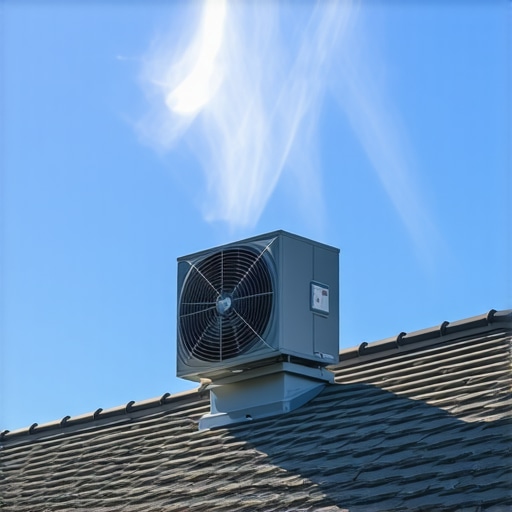
The Shimmering Heat of a Neglected Attic
You ever stand in a driveway in August and see those heat waves shimmering off the roof shingles? That is not just air; that is a house gasping for breath. Inside that attic, temperatures are likely hitting 150 to 160 degrees Fahrenheit. Your AC compressor is screaming, drawing massive current, trying to fight the thermal mass of a thousand square feet of sun-baked plywood. This is where the physics of heat soak meets the reality of your utility bill. Most homeowners ignore the attic because it is a dark, fiberglass-filled oven, but as a forensic inspector, I see the result: baked wire insulation, brittle plastic junction boxes, and HVAC units that die five years early because they never get a break.
The Old Timer’s Lesson on Hot Spots
My journeyman used to smack my hand if I stripped a wire with a knife. ‘You nick the copper, you create a hot spot,’ he’d scream. He was right. In an attic that stays at 140 degrees for six months a year, that tiny nick becomes a point of high resistance. The copper expands and contracts at a different rate than the lug, a process known as thermal cycling. Eventually, the connection loosens, arcing begins, and you have a fire. I have seen home run circuits for attic fans that were chewed by squirrels or installed by some ‘handyman’ who did not understand the amperage draw of an induction motor at start-up. When that fan kicks on, it pulls a surge of current; if your wiring is sub-par, that surge generates heat, and heat is the enemy of every bonded insured electrical system.
The Thermodynamics of Air Exchange
An attic fan is not just a luxury; it is a pressure relief valve for your home’s thermal load. By pulling cooler air through the soffit vents and pushing the stagnant, superheated air out of the gables or roof, you drop the ambient temperature of the attic by 30 to 40 degrees. This reduces the ‘delta T’—the temperature difference—between your living space and the attic. Your insulation can only do so much. Once it is saturated with heat, it begins radiating that energy downward into your bedrooms. This forces your AC to work overtime, leading to premature failure of the capacitor and contactors.
“Aluminum wire connections can overheat and cause a fire without tripping the circuit breaker.” – CPSC Safety Alert 516
This is especially critical in mid-century homes built between 1960 and 1980. These houses often suffer from ‘Cold Creep’ in their aluminum wiring. As the attic heats up, the aluminum expands more than the steel screws in your meter base replacement or your panel, leading to loose neutrals that can fry every appliance in your house.
Component Zooming: The Physics of the Motor
Let’s talk about the motor itself. Most attic fans use a Permanent Split Capacitor (PSC) motor. They are simple, but they are sensitive to voltage drops. If you have a long run of 14-gauge Romex going from a basement panel all the way to the peak of the roof, you are going to see a voltage drop. When voltage drops, amperage must increase to do the same amount of work (Ohm’s Law). That increased amperage translates to heat in the motor windings. I have seen motors that were so hot the ‘monkey shit’ (duct seal) used to seal the penetration had melted and run down the siding. This is why preventative electrical maintenance is non-negotiable. You need to check the bearing friction and the capacitor values. A failing capacitor will cause the motor to hum and draw Locked Rotor Amps (LRA) without turning, which is a textbook recipe for an attic fire.
Why You Need More Than Just a Fan
If you are thinking about EV charger installation or adding a hot tub, you are already taxing your home’s electrical capacity. Adding a high-draw attic fan to an overloaded 100-amp Zinsco or Federal Pacific panel is like playing Russian roulette with a fully loaded cylinder. These old breakers are notorious for ‘jamming’ or failing to trip even when the bus bar is melting. When we do a meter base replacement, we are looking at the entire system’s health. We check if you need harmonic filter services to deal with the electrical noise created by modern LED lighting and variable speed drives. If your power is ‘dirty,’ your fan motor will run hotter and less efficiently, negating the energy savings you were looking for in the first place.
The Installation Reality: Beyond the Fan
Installing an attic fan is more than just cutting a hole in the roof. It is about the rough-in and the trim-out. You need a dedicated circuit. Tapping into the bedroom lights is a amateur move that leads to flickering LEDs and nuisance tripping. If you are doing a full yard renovation, including bollard light installation or pathway lighting install, that is the time to think about your exterior electrical footprint. We often see people try to run trenching electrical conduit for a generator transfer switch and forget that their main service mast is rotting off the side of the house because of salt air or simple age.
“The NEC requires that all 15A and 20A branch circuits supplying outlets or devices installed in dwelling unit kitchens, family rooms, dining rooms, living rooms, parlors, libraries, dens, bedrooms, sunrooms, recreation rooms, closets, hallways, laundry areas, or similar rooms or areas shall be protected by a listed arc-fault circuit interrupter.” – NEC 210.12
Even though an attic isn’t listed specifically there, any forensic inspector worth his salt will tell you that AFCI protection on an attic fan circuit is the difference between a tripped breaker and a 3:00 AM visit from the fire department.
The Forensic Takeaway
Do not trust a tick tracer to tell you a circuit is safe; it only tells you if voltage is present, not if the connection is tight or if the wire is compromised. When we perform dock electrical services or high-load installs, we use dikes to strip back old insulation to check for ‘pitting’ on the copper. If your attic has been a kiln for twenty years, your wiring is likely compromised. An attic fan, properly installed with a calibrated thermostat and a fire-stat (a safety shut-off that kills the fan if it senses fire-level heat), is the single most effective way to lower your cooling costs and preserve your home’s infrastructure. It is not just about the money; it is about making sure that your 100-amp service isn’t being pushed to its thermal limit by a preventable heat load. Get it rough-in right, use a wiggy to verify your loads, and sleep at night knowing your house isn’t trying to cook itself from the top down.