The Ghost in the Attic
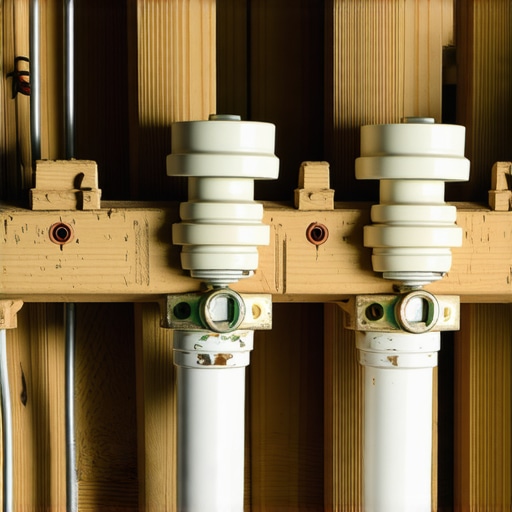
You climb the pull-down stairs, and the smell hits you first—the scent of dust that hasn’t seen the light of day since the Hoover administration. You’re up there because the lights in the master bedroom are doing that rhythmic pulse, or maybe because your insurance agent mentioned something about a surcharge. You click on your flashlight, and there they are: white ceramic spools, nailed to the rafters like rows of tiny, calcified teeth. This is Knob and Tube (K&T) wiring, and if you have it, your house is running on an electrical heart that was designed when the most high-tech appliance in the home was a toaster that barely worked. My old journeyman used to smack my hand if I stripped a wire with a knife. ‘You nick the copper, you create a hot spot,’ he’d scream. He was right. Every nick, every bad splice, and every century-old connection in your attic is a thermal event waiting to happen.
The Forensic Identification: What You’re Actually Looking At
Identifying K&T isn’t just about spotting the knobs; it’s about understanding the anatomy of a system that refuses to die. In a modern home rewiring services project, we see cables—plastic-jacketed Romex—where the hot, neutral, and ground are all bundled together. K&T is the exact opposite. It’s a two-wire system where the hot and neutral are kept physically separate. The ‘knobs’ are the ceramic insulators that hold the wire away from the wood framing, and the ‘tubes’ are the sleeves that carry the wire through the joists.
‘Aluminum wire connections can overheat and cause a fire without tripping the circuit breaker.’ – CPSC Safety Alert 516
While that quote specifically targets aluminum, the principle of resistance-driven heat applies even more aggressively to old K&T that has been improperly modified. The fastest way to identify it? Look for the ‘loom’—the flexible, asphalt-saturated cloth sleeve that protects the wire as it enters a junction box or fixture. If you see those black, frayed snakes poking out of the top of your ceiling joists, you’ve found it.
The Physics of Failure: Why It’s Not ‘Grandfathered’ Into Safety
Electricity is lazy and violent. It wants to go home, and it’ll generate as much heat as necessary to get there. K&T was designed as an ‘open-air’ system. The conductors were meant to dissipate heat into the vast, empty attic space. The moment a well-meaning homeowner or a cheap contractor dumps R-38 fiberglass insulation over those wires, the thermal envelope is destroyed. The heat can’t escape. The vulcanized rubber insulation, already brittle from eighty years of seasonal expansion and contraction, begins a process called pyrolytic carbonization. It turns into charcoal. Eventually, that charcoal becomes conductive, or it simply flakes off with the slightest vibration—like a heavy truck driving by—exposing bare copper. This is why a power quality analysis often reveals massive voltage drops in older homes; the infrastructure is literally choking. If you see ‘Monkey Shit’ (duct seal) smeared over an old connection, someone was trying to hide a problem. Grab your Tick Tracer—a non-contact voltage detector—and wave it near those wires. If it screams, you’re looking at a live, ungrounded circuit that is one bad day away from a structure fire.
The Modern Load vs. The Ancient Wire
Think about what we ask of our electrical systems now. Between a home automation setup, high-end entertainment systems, and the heavy draw of modern appliances, we are pushing ten times the current through these houses than the original installers ever envisioned. I’ve seen people try to run an RV hookup installation or garage wiring services off an old K&T circuit. It’s suicidal. The wire gauge is usually #14 or #12, but the insulation isn’t rated for the 75 or 90 degrees Celsius that modern THHN wire can handle. When you try to add smart home wiring or high-speed CAT6 cabling services, you’re often pulling on those old, brittle K&T lines behind the walls. You snap the insulation, and suddenly the wall cavity is pressurized with ionized gas.
‘The installation of thermal insulation around knob-and-tube wiring is a violation of the National Electrical Code.’ – NFPA 70 Section 394.12
If you’re planning on adding tree mounted lights for the holidays or upgrading your outdoor space, don’t just bridge into the nearest outlet. You need a meter base replacement and a dedicated home run to the panel to ensure you aren’t overloading a system that belongs in a museum.
The Forensic Red Flags: Splices and ‘Bootleg’ Grounds
The biggest danger isn’t the K&T itself; it’s what ‘Handyman Harry’ did to it in 1974. Because K&T doesn’t have a ground wire, people get creative when they want to install three-prong outlets. They’ll perform a ‘bootleg ground,’ jumping the neutral screw to the ground screw on the receptacle. Your 3-light tester will say it’s fine, but your Wiggy (solenoid voltmeter) or a true forensic inspection will show the truth. If the neutral wire ever breaks, the entire metal chassis of your toaster or refrigerator becomes live. It becomes a Widow Maker. During a rough-in for a renovation, I often find these ‘rats’ nests’ where someone has spliced modern Romex directly onto K&T without a junction box, wrapped it in friction tape, and buried it under the floorboards. This creates a high-resistance point. Resistance equals heat. Heat equals fire. This is why I always provide free electrical estimates that prioritize a full rewire over ‘patch jobs.’ Your family’s safety isn’t a place to cut corners.
Conclusion: Taking Control of the Grid
You don’t need to be an electrician to know that eighty-year-old rubber is a bad insulator for 120 volts of energy. If you’ve spotted those ceramic knobs in your attic, the clock is ticking. It’s not just about passing an inspection or getting a lower insurance rate; it’s about the fact that your house shouldn’t be a liability. Whether you need meter base replacement to handle a modern 200-amp service or you’re looking for CAT6 cabling services to bring your home into the 21st century, the foundation must be solid. Don’t wait for the smell of ozone or the sight of flickering lights. Get a pro in there to look at the bones of the house. Sleep better knowing your home is torqued to spec and your circuits aren’t screaming for mercy behind the plaster.