The Ghost in the Walls: Why Your Current Service is Failing
You don’t hear it at first. It is a silent, microscopic dance of atoms that eventually leads to a 3:00 AM visit from the fire department. If you live in a house built between 1965 and 1978, you are likely sitting on a structural vulnerability that most homeowners ignore until the smell of burning fish—that unmistakable scent of overheating phenolic resin—wafts from the hallway. Most people think a 100-amp service is fine because the lights turn on, but they don’t see the carbonized paths forming on the bus bars. We are living in an era of smart lighting installation, EV chargers, and high-draw heat pumps, yet we are trying to pipe that energy through a straw. My old journeyman, a grizzly guy named ‘Pops’ who had lost two fingers to a 480-volt capacitor, used to smack my hand if I didn’t use a torque wrench on a main lug. ‘You feel that?’ he’d growl, pointing at a slightly loose screw. ‘That’s a heater. In two years, that loose connection will expand and contract until it creates an oxide layer so thick it’ll melt the casing.’ He wasn’t being dramatic. He was right. Nicking a conductor or failing to apply oxide inhibitor during an aluminum wiring repair isn’t just a mistake; it’s a future insurance claim.
“The grounding electrode conductor shall be connected to the equipment grounding terminals of the service equipment… to provide a low-impedance path for fault current.” – National Electrical Code (NEC) 250.4(A)(1)
The Physics of Failure: Component Zooming on Cold Creep
When we talk about aluminum wiring repair, we aren’t just swapping out wire. We are battling the physics of Cold Creep. Aluminum is a fickle metal; it expands at a different rate than the steel screws in your breakers. Every time you turn on your dryer, that wire heats up and expands. When it cools, it doesn’t quite return to its original shape. Over a decade, that screw becomes loose. This creates an air gap. Electricity, being the stubborn force it is, jumps that gap. That’s your arc. That arc is roughly the temperature of the surface of the sun. This is why a 200 amp panel install is often a necessity rather than a luxury. Modern panels use plated copper bus bars and specialized bonding jumper services to ensure that if a fault occurs, the energy has a clear, low-resistance path to ground, rather than through your drywall. If you’ve been dealing with flickering or need outlet switch repair frequently, you aren’t just looking at bad devices; you are likely looking at a service that is choked at the neck.
The 200 Amp Upgrade Checklist: A Forensic Inspector’s Requirements
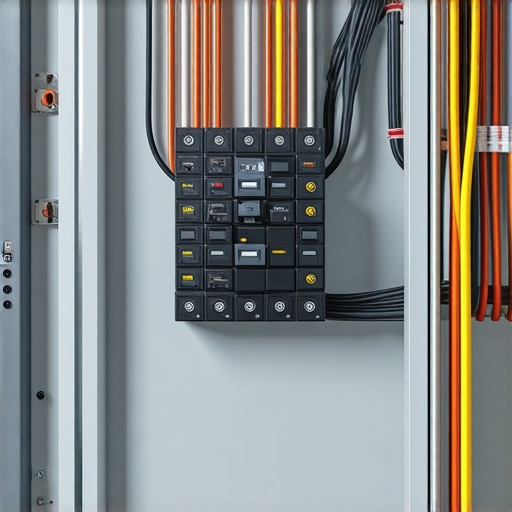
Upgrading your service isn’t just about the box on the wall. It’s a systemic overhaul. If you are planning for a camper electrical panel in the garage or sophisticated up lighting services for your landscape, your checklist must be absolute. First, we look at the Service Entrance Cable (SEC). If you’re still running #2 copper, you’re capped. For 200 amps, we’re pulling 2/0 copper or 4/0 aluminum. Next is the meter socket. I’ve opened meter cans where the lugs were so corroded by galvanic reaction that they crumbled like a dry biscuit. This is where we apply the Monkey Shit (duct seal) to keep moisture from migrating down the service pipe. Then comes the Home Run—the main feed from the meter to the panel. We don’t just ‘rough-in’ these lines; we secure them with the precision of a surgeon. If your house has seen better days, perhaps needing fire damage wiring restoration, this is the moment to install structured wiring panels to organize your data and power separately, preventing electromagnetic interference from ruining your high-speed internet.
“Aluminum wire connections can overheat and cause a fire without tripping the circuit breaker.” – CPSC Safety Alert 516
The Tool of Truth: Wiggy vs. Tick Tracer
In this trade, we have a name for the non-contact voltage testers every handyman carries: the Widow Maker. They’re fine for a quick check, but for a forensic inspection, I trust my Wiggy (solenoid voltmeter). It puts a load on the circuit. If you have a high-resistance connection—a ‘ghost’ voltage—a tick tracer will glow red, but a Wiggy will tell you the truth: that the line will sag and fail the moment you plug in a toaster. This is critical when performing warranty backed repairs. We don’t just look for power; we look for the integrity of the bonding jumper services. Without a proper bond between the neutral and ground at the main service, your entire home’s metal piping could become live during a fault. Imagine touching your kitchen faucet and becoming the path to ground. That is the reality of shoddy work.
Final Inspection: The Peace of Mind
A 200 amp panel install is the foundation of a modern home. It allows for the safe integration of smart lighting installation without the fear of overloading a 40-year-old split-bus panel. When I finish a trim-out, I use my thermal imager to check every breaker under load. I want to see cool blues and greens, not the angry oranges of a loose lug. Whether you are adding a camper electrical panel for your summer trips or just fixing years of neglect, do it once and do it to code. Torque matters. Material science matters. Your family’s safety isn’t a hobby. When the job is done right, with warranty backed repairs and a clean rough-in, you can sleep through the night without sniffing the air for ozone. That is the only way a Master Electrician leaves a job site.”