The Invisible Warning Signs of an Electrical Heart Attack
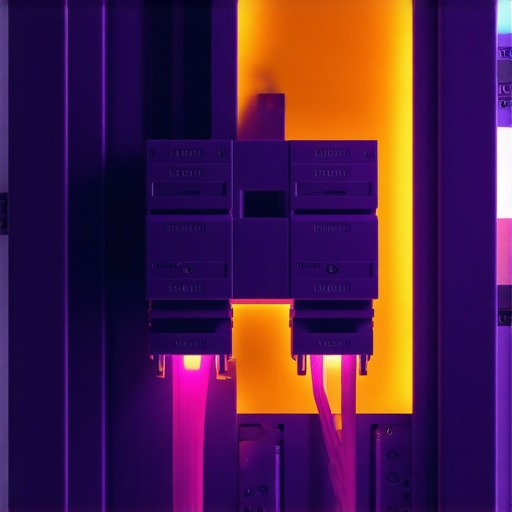
You smell it before you see it. That cloying, chemical stench of burning phenolic resin and ozone that lingers in the back of your throat. It is the scent of a house trying to warn you that its most critical infrastructure is melting. Most homeowners think electrical failure is an on-off switch—either the lights work, or they do not. But as someone who has spent 35 years pulling back the dead fronts of panels in the dark of night, I know the truth. Electricity is a patient killer. It builds heat over months, or even years, through a process we call high-resistance arcing. By the time you see the smoke, the autopsy has already begun. This is why infrared (IR) technology has become the most vital tool in my pack. It is the only way to see the ‘white-hot’ ghost of a loose connection before it transitions from a nuisance to a catastrophe.
I remember my first week as a green helper. My lead, a grizzled journeyman who had lost two fingers to a 480V bus bar in the eighties, didn’t just use a screwdriver for the rough-in. He used a calibrated torque wrench on every single neutral and hot lug. He told me, ‘Kid, metal has a memory, and it is a deceptive one. If you do not stretch the bolt just right, the wire will walk its way out of the lug before the paint is dry on the drywall.’ He was teaching me about the invisible tension that keeps a house from becoming a pile of ash. He would make me feel the temperature of the breakers with the back of my hand after they had been under load. Today, we have microbolometer sensors that can detect a temperature difference of 0.1 degrees, but the lesson remains the same: heat is the signature of failure.
The Physics of the ‘Death Spiral’: Why Connections Fail
To understand how IR technology works, you have to understand the physics of a connection. When we perform aluminum wiring repair or a 60 amp panel upgrade, we are fighting a phenomenon called ‘Cold Creep.’ Aluminum is a soft metal; under the constant pressure of a steel screw, the aluminum atoms actually migrate, or ‘creep,’ out from under the point of contact. This reduces the surface area where the electrons can jump. According to Ohm’s Law, when you decrease the surface area (increasing resistance) while the current ($I$) remains constant, the power dissipated as heat ($P = I^2 R$) goes through the roof. This is a logarithmic disaster. The hotter the wire gets, the more it expands. When the load drops and the wire cools, it contracts. Each cycle makes the connection a fraction of a millimeter looser. Eventually, an oxide layer—an insulator—forms between the wire and the lug. Now, the electricity has to arc across that gap. That arc is hotter than the surface of the sun.
“Aluminum wire connections can overheat and cause a fire without tripping the circuit breaker.” – CPSC Safety Alert 516
This is why a standard visual inspection is worthless. You can look at a subpanel installation and think it looks clean, but the IR camera sees a different story. In a mid-century home, those old Federal Pacific or Zinsco panels often have bus bars that have been pitted by years of micro-arcing. We call these ‘Widow Makers’ for a reason. The IR camera shows us the ‘hot spot’ long before the breaker’s internal thermal-magnetic trip mechanism even realizes there is a problem. The breaker is looking for an overcurrent situation, but it is blind to a high-resistance connection that is slowly cooking the insulation off a home run wire.
Component Zooming: The Anatomy of a High-Load Failure
Consider your pool pump electrical system. These motors are high-vibration, high-draw inductive loads. Every time that pump kicks on, the surge of current causes the conductors to physically twitch inside the conduit due to magnetic fields. If the garage wiring services performed on your home involved a handyman using a pair of dikes and a ‘close enough’ attitude on the torque, that vibration will rattle the connection loose. We use IR cameras to scan the motor starters and the disconnects. We are looking for a ‘Delta T’—a temperature differential. If one leg of the 120V circuit is 15 degrees Celsius hotter than the other, we know the lug is failing. We don’t guess. We don’t just ‘tighten it up’ and hope for the best. We disassemble, clean the oxidation, apply antioxidant paste, and torque to the manufacturer’s specific inch-pound rating.
“Terminal connection torque shall be tightened to the manufacturer’s specified values.” – NEC 110.14(D)
The same logic applies to smart home wiring and network cable installation. People think low voltage means low risk, but PoE (Power over Ethernet) switches generate significant heat. If you have a rack of servers or a complex smart hub tucked away in a closet without proper airflow, the IR camera will show a blooming cloud of heat that is slowly drying out the plasticizers in the wire jackets, making them brittle and prone to shorting.
[IMAGE_PLACEHOLDER]
The Forensic Process: From Detection to Correction
When I arrive for free electrical estimates, I’m not just looking for more outlets. I’m looking for the infrastructure’s integrity. We start at the meter can. Often, in older mid-century homes, the service mast is sealed with what we call monkey shit (duct seal), which has dried out and cracked. Water follows the service entrance wires right into the main lugs. The IR camera will show a ‘thermal bridge’ where the water has caused corrosion, creating a massive heat signature on the main 200-amp lugs. If we catch this early, we can avoid a full service replacement. If we don’t, the heat will eventually weld the breaker to the bus bar.
We then move to the fence line lighting and patio cover outlets. Outdoor electrical is notoriously prone to failure because of thermal cycling and moisture. A loose neutral on a patio circuit can send a surge through your home’s electronics, frying your $3,000 OLED TV. Using a tick tracer and a Wiggy (solenoid voltmeter) tells us there is power, but the IR camera tells us if that power is struggling to pass through a corroded splice. If we see a hot spot inside a junction box behind your new cedar patio cover, we know the handyman didn’t use the right wire nuts or didn’t twist the conductors properly before capping them.
Conclusion: Sleeping Soundly in a Mid-Century Home
If your home was built between 1960 and 1980, you are living inside a laboratory for thermal expansion. Between the potential for aluminum wiring and the aging of early PVC insulation, your electrical panel is a ticking clock. Infrared technology stops that clock. It allows us to perform a non-invasive ‘autopsy’ on a system that is still alive. We find the loose lugs, the pitted bus bars, and the overloaded circuits before they become a 911 call. Electricity is not a hobby, and it is not a ‘DIY’ project. It is a force of nature that we have temporarily bribed to stay inside copper (or aluminum) pipes. Do not wait for the flickering lights or the smell of ozone. Get a forensic inspection. When I leave a job site, I know every screw is torqued and every heat signature is flat. That is the only way I, and my customers, can sleep at night.