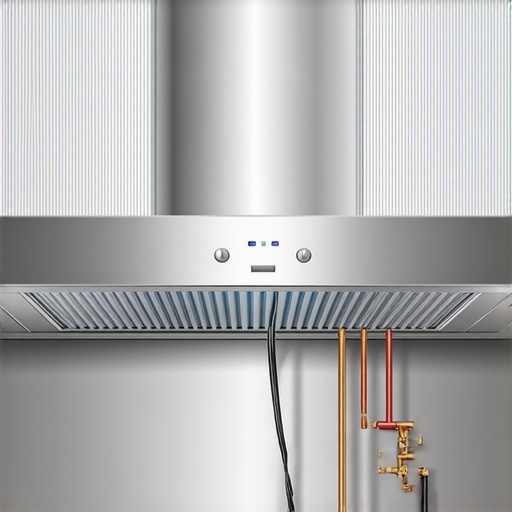
The Smell of a Kitchen Fire Waiting to Happen
I walked into a ‘fully renovated’ kitchen last month where the flipper had buried a live junction box behind a subway tile backsplash just to make the range hood ‘look cleaner.’ I found it with my tracer after the homeowner complained that the brand-new 900 CFM hood was hummed like a trapped hornet but didn’t move enough air to clear a match. This wasn’t just a ducting issue; it was a forensic disaster. When you combine high-performance kitchen ventilation with old-school electrical infrastructure, you aren’t just installing an appliance; you are managing a thermodynamic system. If the wiring isn’t sized for the motor’s inrush current, and the ducting provides too much static pressure, you’re creating a recipe for a thermal event inside your cabinets.
The Physics of Resistance: Electrical and Mechanical
Most homeowners think a range hood is just a fan and a light. As a Master Electrician, I see it as a motorized load that requires precision. Let’s talk about Component Zooming: the motor winding. When you flip that switch, the motor experiences ‘inrush current’—a surge of power significantly higher than its running amps. If you’re pulling power from a shared circuit that’s already stressed by a toaster or a fridge, that voltage drop causes the motor to struggle. This struggle creates heat. In mid-century homes, specifically those built between 1960 and 1980, we often find aluminum wiring. Aluminum has a nasty habit called Cold Creep. Because aluminum expands and contracts at a different rate than the brass screws on a cheap receptacle or a hood’s internal terminal block, the connection loosens over time. A loose connection is a high-resistance connection. High resistance equals heat. Heat equals a call to the fire department.
“Aluminum wire connections can overheat and cause a fire without tripping the circuit breaker.” – CPSC Safety Alert 516
When the ducting is undersized—say, a 4-inch flex pipe squeezed into a space meant for an 8-inch rigid duct—the fan motor has to work twice as hard to push air against that ‘static pressure.’ This mechanical resistance translates directly back to the electrical side. The motor draws more current to maintain its RPMs. If you’re running this on an old Federal Pacific or Zinsco panel, you are playing Russian Roulette. Those breakers are notorious for ‘jamming.’ They won’t trip even when the wire is hot enough to melt the insulation. This is why we often recommend load center upgrades or a full 100 amp service upgrade before adding high-end chef-grade appliances.
The Rough-In: Doing It Right Before the Drywall Goes Up
During the rough-in phase, my dikes are usually busy cutting back old, brittle Romex to find clean copper. You cannot trust the previous guy’s work. If the kitchen range hood wiring is part of a larger renovation, you need to calculate the total load. We see people trying to add an EV charger in the garage and a pro-style range hood in the kitchen on a service that’s already maxed out. That’s how you end up needing holiday emergency calls when the main lug decides to give up the ghost during Thanksgiving dinner. Proper ventilation requires a dedicated circuit. I don’t care what the ‘handyman’ told you. A dedicated 15 or 20-amp circuit ensures that the motor gets the ‘clean’ power it needs without interference from other household loads.
Then there’s the ducting. If you don’t use monkey shit (duct seal) and proper metallic tape, you’re leaking grease-laden air into your wall cavities. From a forensic standpoint, I’ve seen wall studs charred black because a poorly wired hood ignited grease that had leaked through unsealed duct joints. The National Electrical Code (NEC) is very specific about how these enclosures are handled.
“Receptacles shall be installed in accordance with the provisions of 406.4(D) and shall be grounded.” – NEC Article 422.16
Modern Solutions for Old Infrastructure
If you’re living in a home with a 1970s electrical footprint, a virtual consultation wiring session can help identify these ‘time bombs’ before you spend $2,000 on a designer hood. We look for the ‘Widow Maker’ signs: charred bus bars, flickering lights when the fan starts, or the smell of ozone. Sometimes the solution isn’t just a new wire; it’s a meter socket replacement because the old one has corroded so badly from moisture or flood water that it can’t provide steady voltage. For those looking at portable generator hookup options, remember that your range hood is a critical part of your home’s air exchange; you want it on your backup list if you’re cooking during a power outage.
Don’t just stick a fan in the ceiling and hope for the best. Check the torque on your terminals with a Wiggy or a reliable multimeter. Make sure your home run back to the panel is solid copper, 12-gauge if you’re smart. And for the love of all things holy, if you’re doing a chandelier installation in the same room, don’t pig-tail it off the range hood circuit. Keep your loads separate, your ducts straight, and your connections tight. That’s how you sleep at night without one eye open, watching for the glow of an electrical fire in the kitchen soffit.