
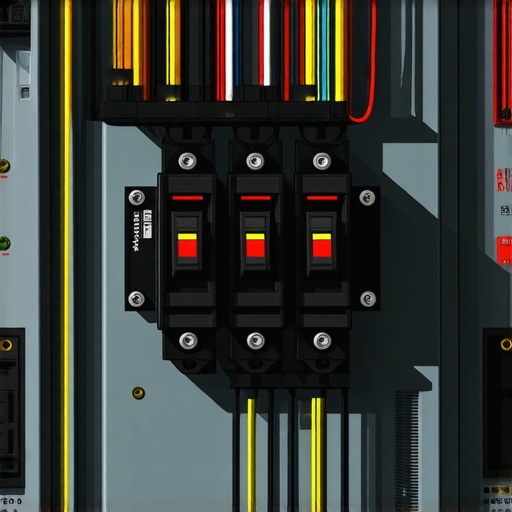
The Old Timer’s Warning and the Reality of 60 Amps
My journeyman used to smack my hand with his heavy lineman’s pliers if I ever stripped a wire with a pocket knife. ‘You nick the copper, kid, and you’ve just created a localized hot spot,’ he’d growl through a mouthful of coffee. ‘In ten years, that nick becomes a brittle break, and in twenty, it’s a fire.’ He wasn’t being a jerk; he was teaching me the forensic reality of electrical resistance. That lesson stayed with me for 35 years as I’ve crawled through soot-stained attics and peered into panels that were more char than metal. When we talk about a 60-amp panel in 2024, we aren’t talking about ‘vintage charm.’ We are talking about a system designed for a world where the biggest electrical load in the house was a toaster and a few incandescent bulbs. Today, with your air fryer, EV charger, and high-speed mesh networks, those old bus bars are screaming for mercy. If you’re still running on a 60-amp service, you aren’t just behind the times; you’re sitting on a thermal event waiting for an invitation.
1. The Physics of Failure: Why Heat is Your Primary Enemy
Electricity is not a liquid; it is the movement of electrons through a medium, and that movement generates heat. In a 60-amp panel, the physical surface area of the bus bars is significantly smaller than in a modern 200-amp service. When you pull 55 amps through a 60-amp main, you are pushing that metal to its absolute thermal limit. This leads to a phenomenon called Joule Heating. As the metal gets hot, its resistance increases. As resistance increases, it gets even hotter. This is a feedback loop that ends with a melted service lateral or a house fire.
“Aluminum wire connections can overheat and cause a fire without tripping the circuit breaker.” – CPSC Safety Alert 516
If you touch your panel cover and it feels like it’s been sitting in the sun, you have a critical problem. That heat is energy bleeding out of your system because the connections are loose or the panel is over-taxed. We often see this in mid-century homes where aluminum wiring was used. Aluminum has a higher coefficient of thermal expansion than copper—a problem we call ‘Cold Creep.’ Every time you turn on a heavy load, the wire expands. When you turn it off, it contracts. Eventually, the wire literally ‘creeps’ out from under the terminal screw. This creates a tiny air gap where arcing occurs. I’ve used my tick tracer on panels that appeared ‘dead’ only to find they were radiating enough EMI to light up the sensor from three feet away because of internal arcing.
2. The Smell of Fish and the Ozone Warning
If you walk into your utility room and smell something fishy or a sharp, metallic scent like a thunderstorm, don’t call a plumber. That’s the smell of burning urea-formaldehyde or phenolic resin—the plastics used in old circuit breakers and wire insulation. When these materials reach their flashpoint, they release gases that are unmistakable to a forensic inspector. This is usually the sign of a widow maker—a breaker that has failed to trip despite a massive overcurrent. In many 60-amp configurations, specifically those using old Federal Pacific or Zinsco components, the internal stabs that connect the breaker to the bus bar lose their spring tension. Instead of a tight, low-resistance connection, you get a loose contact that acts like a miniature welder. I’ve pulled breakers out where the bus bar was literally pitted and vaporized by micro-arcs. If you smell it, you need same day service appointments. This isn’t a ‘wait until 2027’ scenario; it’s a ‘turn off the main and call me now’ scenario.
3. Dimming Lights and Power Quality Analysis
Many homeowners think flickering lights are just a quirk of an old house. It’s not. It’s a symptom of voltage drop. When your refrigerator compressor kicks on and your living room lights dim, your 60-amp panel is failing to provide the instantaneous current required. This instability wreaks havoc on modern electronics. While your old 1950s fridge didn’t care about a 10% voltage sag, your $2,000 OLED TV and your access control wiring systems do. Frequent voltage fluctuations degrade the capacitors in your devices, leading to premature failure. This is why a power quality analysis is a core part of a certified journeyman services inspection. We don’t just look for ‘on’ or ‘off’; we look at the ‘health’ of the sine wave entering your home. If your panel is struggling to maintain 120V under load, your appliances are paying the price in shortened lifespans.
4. The Insurance Industry’s Cold Shoulder
In the last three years, the landscape for home insurance has shifted violently. Actuaries have crunched the numbers, and they’ve realized that 60-amp services are a liability they no longer want to carry. I’ve seen homeowners get dropped by their carriers during a routine renewal because a 60-amp panel was spotted during a four-point inspection. They don’t care if the panel looks clean; they see the 60-amp main as a fire hazard by default. Upgrading to a modern 200-amp service is often the only way to keep your policy active or to secure a reasonable rate. If you’re planning on deck lighting services or a fire alarm system install, these modern additions often require a permit that will trigger a mandatory panel upgrade anyway. You can’t put a new engine in a car with a rusted-out frame; you can’t add modern safety features to an obsolete electrical backbone.
5. The Danger of the “Handyman Special” in Small Panels
Because 60-amp panels are constantly ‘full,’ I often find what I call the ‘Handyman Special’—double-tapped breakers or, worse, wires tapped directly off the main lugs without any overcurrent protection. This is how rough-in work becomes a death trap. People try to squeeze one more circuit for a garage workshop or a hot tub into a panel that was full in 1974. They use Romex in ways it was never intended, bypassing safety protocols to avoid the cost of a 60 amp panel upgrade. This leads to imbalanced loads where one leg of your service is pulling 50 amps while the other pulls 10. This imbalance puts massive stress on the neutral wire, which can lead to a ‘floating neutral.’ If that neutral fails, you could see 240V running through your 120V outlets, frying everything in the house instantly.
“Each occupant of a dwelling unit shall have ready access to all overcurrent devices protecting the conductors supplying that occupancy.” – NEC 240.24(B)
Why a Pro Upgrade Beats a Weekend Fix
When we perform a 60 amp panel upgrade, we aren’t just swapping a box. We are resizing the service entrance conductors, installing new grounding rods, and ensuring the home run for every major appliance is up to code. We use Monkey shit (duct seal) to ensure no moisture enters the service mast, and we torque every lug to the specific inch-pound requirements listed on the device. A bonded insured electrical contractor provides a level of security that a handyman simply can’t. We provide annual maintenance contracts to ensure those connections stay tight as the seasons change. Don’t let your home be the subject of a forensic report. If you’re seeing the signs—the heat, the smell, the dimming, or the insurance notices—the time for a heavy-up is now. Your family’s safety is worth more than the cost of a few copper bus bars. Secure your peace of mind with weekend electrician services if you have to, but don’t let 2027 be the year your luck runs out.