
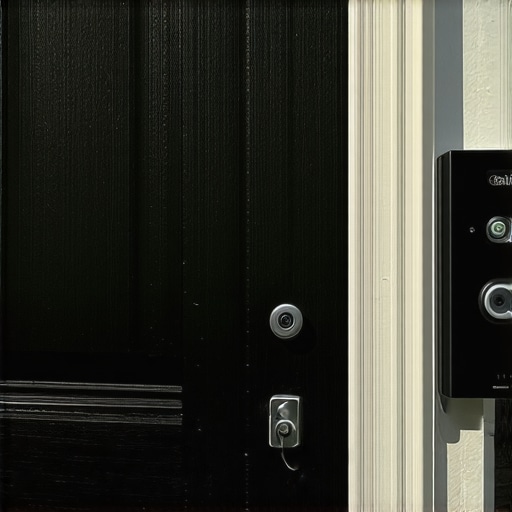
The Ghost in the Chime: Why Your Doorbell Camera Fails When Porch Pirates Strike
I’ve spent 35 years listening to the hum of live circuits and the silence of dead ones. Most homeowners think a doorbell camera is a ‘plug-and-play’ gadget. They buy it, screw it into the siding, and wonder why the video feeds are choppy or why the device goes offline the second a package thief walks up the driveway. As a licensed master electrician who has seen 1970s aluminum wiring turn into a charcoal briquette, let me tell you: your security is only as good as the copper—or aluminum—feeding it. In 2026, package theft has evolved. The tactics used to bypass cameras require more than just a battery-powered plastic box. You need a hardened infrastructure. If you’re living in a mid-century home, you’re likely sitting on a ticking time bomb of aluminum wiring and underpowered transformers that will starve your ‘smart’ home until it dies.
The Old Timer’s Lesson: The Nick That Nullifies Your Security
My journeyman used to smack my hand if I stripped a wire with a knife. ‘You nick the copper, you create a hot spot,’ he’d scream. He was right. I remember a job where a homeowner complained their high-end doorbell camera kept resetting. I pulled the chime cover and found a bird’s nest of 22-gauge bell wire. The previous ‘installer’—likely a handyman with a pair of rusty dikes—had scored the conductor so deeply that only three strands of copper were actually carrying the load. When the camera’s IR night vision kicked in, the current demand spiked, the nicked wire heated up, the resistance climbed, and the voltage dropped. The camera rebooted exactly when the thief was in frame. That’s the physics of failure. You can’t cheat Ohm’s Law. If you’re doing a home automation setup, you start with the wire, not the app.
“Aluminum wire connections can overheat and cause a fire without tripping the circuit breaker.” – CPSC Safety Alert 516
Tactic 1: The Transformer Heavy-Up
Most mid-century homes are equipped with a 10VA (Volt-Ampere) transformer. That was fine in 1974 when all it had to do was strike a mechanical plunger against a piece of brass. Modern cameras are computers that happen to live on your porch. They require 16V to 24V and at least 30VA to maintain a stable Wi-Fi connection and drive the local storage. When I perform virtual consultation wiring reviews, the first thing I ask the client to do is find their transformer—usually buried in a dark corner of the basement or the garage. If it looks like a rusty cube from the Cold War, it’s garbage. We replace those with a shielded 40VA transformer. This ensures that even when your whole house fan wiring kicks on and creates an inductive spike on the line, your camera doesn’t blink. [image_placeholder_1]
Tactic 2: Solving the Mid-Century Aluminum Nightmare
If your home was built between 1965 and 1978, your doorbell is likely pigtailed into an aluminum branch circuit. This is where things get forensic. Aluminum has a high coefficient of thermal expansion—a phenomenon called ‘Cold Creep.’ Every time your doorbell transformer pulls power, the wire expands. When it stops, it contracts. Over decades, this loosens the screw terminals. Loose wires create micro-arcs. Micro-arcs create oxidation layers. Oxidation is an insulator. Suddenly, your 120V input is struggling to get through a layer of aluminum oxide that’s as tough as sapphire. This is why aluminum wiring repair isn’t optional for security; it’s a prerequisite. We use AlumiConn connectors or COPALUM crimps to ensure the home run to the panel is solid. Without this, your camera is just a plastic ornament on a burning house. This is also why we recommend AFCI breaker services to detect these parallel arcs before they find a fuel source in your wall.
Tactic 3: Hardened Conduit and Physical Security
2026 porch pirates aren’t just wearing hoodies; they’re carrying signal jammers and snips. If your camera’s wiring is exposed, it’s useless. During ADU electrical services or new rough-in phases, I insist on running 1/2-inch EMT (Electrical Metallic Tubing) or liquid-tight flexible conduit for any exterior security runs. Don’t just slap Romex through a hole in the stucco. A thief can reach up with dikes and snip the power in two seconds. By hardening the exterior run and integrating it with your deck lighting services, you create a ‘zone of light’ that makes it impossible to approach the camera undetected. If the thief can’t see the wire, they can’t cut the wire.
“All electrical equipment shall be installed in a neat and workmanlike manner.” – National Electrical Code (NEC) Article 110.12
Tactic 4: The Power Redundancy Loop
A camera that goes dark during a power outage is a gift to a criminal. In my 35 years, I’ve seen ‘planned’ outages used as cover for neighborhood-wide thefts. This is why a standby generator install is the ultimate security play. When the grid drops, your transfer switch should click over in less than 10 seconds. For the gap, we install a local UPS (Uninterruptible Power Supply) for the network rack. This keeps the ‘brain’ of your house alive. If you’re a veteran, ask about our military discount wiring for these redundancy systems. We take care of those who protected us by protecting their perimeters. Whether it’s a virtual consultation wiring check or a full trim-out of a new security suite, the goal is the same: zero downtime.
The Forensic Conclusion: Torque is Life
I’ve used my Wiggy to test thousands of circuits, and I’ve used my tick tracer to find buried junctions that ‘flippers’ hid behind cabinets. The common thread in every electrical failure is a lack of respect for the medium. Electricity isn’t a hobby; it’s a physical force that wants to return to the earth, and it will go through your house to do it if the path of least resistance is a fire. When you’re looking at 2026 package theft tactics, don’t just look at the camera’s megapixels. Look at the torque on the transformer’s terminal screws. Look at the gauge of the wire. If you aren’t sure, get a licensed master electrician to pull the panel cover. Sleep at night knowing your connections are torqued, your AFCI breaker services are active, and your camera has the ‘juice’ it needs to catch the guy trying to walk off with your property. It’s not about gadgets; it’s about the grid behind the gadget.
This post really hits home for me, especially since I’ve seen how overlooked wiring issues can completely undermine home security systems. The detail about aluminum wiring and its tendency for ‘Cold Creep’ is especially eye-opening—it’s one of those hidden dangers that many homeowners probably aren’t aware of until it causes a failure or worse, a fire. Upgrading transformers and ensuring secure wire connections seem like fundamental steps that can really make a difference, but it’s surprising how often these are ignored during home upgrades. I also appreciate the emphasis on physical security of wiring—covering exterior runs with EMT conduit can be a game-changer, especially as thieves become more sophisticated. Has anyone had experience with integrating UPS systems for their security cameras? I’m curious about the cost-benefit balance there, and whether it’s accessible for the average homeowner. Ensuring 24/7 operation might seem like overkill for some, but as the theft tactics evolve, I’d love to hear what others are doing to stay ahead of porch pirates.