
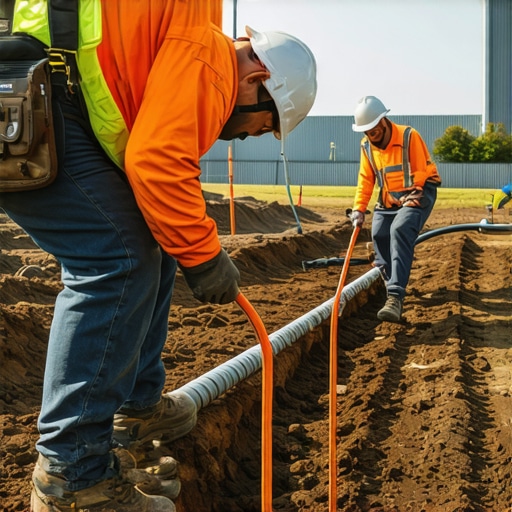
The Sound of a Backhoe Meeting 240 Volts
There is a specific sound that haunts the dreams of every certified journeyman who’s spent more than a week in the field: the sickening thud-pop of a backhoe tooth snagging a live secondary line. I remember walking onto a ‘renovated’ job site for a luxury ADU electrical service last year where the previous contractor—a guy who probably learned electrical work from a cereal box—had buried direct-burial Romex barely three inches under a flower bed. The homeowner found it with a garden spade. She’s lucky to be alive. That ‘flipper special’ cost them three times the original quote to fix because I had to rip out the entire path, pull permits for a project that was never recorded, and do a full electrical safety audit before the utility company would even think about reconnecting the meter. Electricity doesn’t forgive laziness, and when you’re burying it in the dirt, you’re building a tomb or a power line; the difference is in the details.
“Direct buried conductors and cables shall be protected by burial in accordance with Table 300.5.” – National Electrical Code (NEC) Article 300.5
1. The Shallow Grave: Ignoring Minimum Burial Depths
The most common mistake I see in shed wiring install projects is what I call the ‘shallow grave.’ People think 12 inches is plenty of dirt. It’s not. In most jurisdictions, if you aren’t using rigid metal conduit (RMC), you’re looking at a 24-inch trench for PVC. Why? Because of the physics of Frost Heave and Soil Compaction. Over a decade, the earth moves. In the winter, moisture in the soil freezes and expands, pushing upward. If your conduit is too shallow, that soil pressure will eventually snap the PVC couplings like a dry twig. Once that pipe breaks, it fills with silt and water. Now, your THWN wires are sitting in a literal soup of grit and minerals, which leads to insulation tracking and eventually a catastrophic short. When we do a 200 amp panel install for an outbuilding, we dig to code—no exceptions. If you want a lifetime workmanship guarantee, you start with a shovel at the 24-inch mark.
2. The PVC Glue Disaster: Forgetting Thermal Expansion
PVC (Polyvinyl Chloride) is basically a giant plastic straw. In the summer heat, it expands. In the winter, it contracts. If you glue a 100-foot run of Schedule 40 PVC between two fixed points—say, your 400 amp service entrance and a subpanel installation in the garage—without an expansion coupling, the physics of Linear Thermal Expansion will win every time. I’ve seen meter cans literally ripped off the side of a house because the underground conduit shrunk in the cold and pulled the lugs right out of the bus bar. You need to account for that inch or two of movement. We also use Monkey Shit (that’s trade talk for duct seal) at every entrance point. If you don’t seal the ends of the conduit, the warm air from the house meets the cold air from the ground, creates condensation, and turns your brand-new panel into a rusty bucket of water within three years.
3. The ‘Home Run’ Friction Burn: Too Many Bends
The NEC limits you to 360 degrees of bends between pull points (usually four 90-degree elbows). DIYers and hack contractors love to snake conduit around every rock and tree root, adding five or six bends. When it comes time for the rough-in, they realize they can’t pull the wire through. They use a truck to ‘tug’ the wire, which creates immense Sidewall Pressure. This friction can literally melt the outer jacket of the wire before it’s even energized. You’re creating a ‘Widow Maker’—a wire that looks fine but has a hairline split in the insulation. We use high-grade wire lube and keep the bends to a minimum. If the run is too long, we install a junction box or a ‘C’ conduit body to break up the pull. It’s the difference between a system that lasts 50 years and one that trips the breaker the first time it rains.
“Aluminum wire connections can overheat and cause a fire without tripping the circuit breaker.” – CPSC Safety Alert 516
4. Undersizing for the Future: The Ampacity Trap
I get calls all the time for ADU electrical services where the owner wants to add a kitchen and an EV charger to a shed I wired for a single lightbulb five years ago. They think they can just ‘tap’ into the existing line. That’s how you burn down a backyard. When trenching, the labor is 90% of the cost; the wire and pipe are the cheap parts. If you’re digging a trench for a 60-amp subpanel, do yourself a favor and size the pipe for 100 amps. We call this future-proofing the home run. With the rise of electrification and rebate assistance programs for heat pumps and EVSEs, your 2026 power needs will be vastly different by 2030. Don’t bury a 1-inch pipe when a 2-inch pipe is only a few dollars more. You don’t want to be the guy who has to dig up a manicured lawn twice because you saved $40 on plastic.
5. The Missing Tracer and Warning Tape
In 35 years, I’ve seen too many ‘surprises’ found with a shovel. You MUST bury red ‘Caution: Buried Electric Line’ tape about 12 inches above the actual conduit. It’s a simple, cheap safety measure. If you’re using PVC, you also need a tracer wire if the run is long, so a tick tracer or professional locator can find the path later. When we perform certified journeyman services, we map every run. If you’re planning a major upgrade, like a 400 amp service entrance, knowing exactly where those lines are buried saves hours of exploratory digging. We always recommend an electrical safety audit before any major excavation on an old property to find the ‘hidden gems’ left by previous owners who didn’t believe in permits.
The Final Torque: Don’t Gamble with the Dirt
Trenching isn’t just about moving dirt; it’s about protecting the lifeblood of your home. Whether you’re doing a subpanel installation for a workshop or a massive 200 amp panel install, the rules are written in blood and charred copper. Don’t let a ‘handyman’ convince you that ‘code is just a suggestion.’ Use permit pulling services to ensure a third party verifies the depth and the connections. When I finish a job, I want to know that the lugs are torqued to spec and the conduit is deep enough that a rototiller won’t find it. Sleep is easy when you know the physics are on your side. If you’re looking for a lifetime workmanship guarantee, stop looking for the cheapest bid and start looking for the guy who carries a Wiggy and a code book that’s falling apart from use.