
The Invisible Enemy: Why Your Nose Often Fails Before the Fire Starts
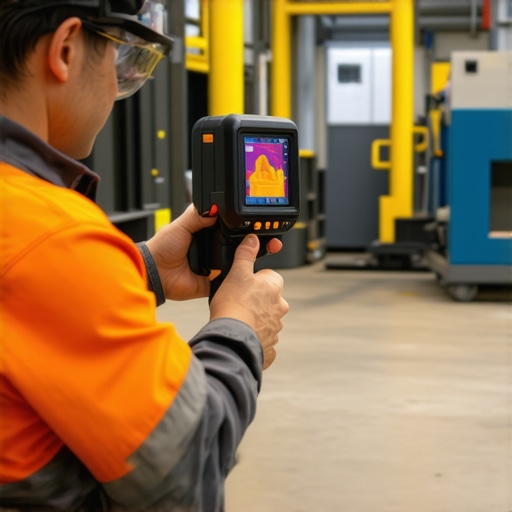
Electricity doesn’t care about your aesthetics, your budget, or your ‘renovated’ kitchen dreams. It follows the path of least resistance, and when it finds a hurdle, it converts into pure, unadulterated heat. By the time you smell that distinctive, cloying scent of fish—the smell of overheating PVC and phenolic resin—you’re likely minutes away from a structure fire. In my 35 years as a master electrician, I’ve seen homeowners ignore flickering lights for months, only to have me open their main panel and find a bus bar so warped it looks like a piece of saltwater taffy. In 2026, the technology has evolved, but the physics of a bad connection remain the same. Using drone thermography scans has changed the game for commercial inspections, but for the average residential property, a hand-held Flir or a high-resolution thermal imager is the only thing standing between safety and a catastrophic failure.
“Aluminum wire connections can overheat and cause a fire without tripping the circuit breaker.” – CPSC Safety Alert 516
My old journeyman, a man who smelled like stale coffee and copper dust, used to smack my hand if I stripped a wire with a pocket knife. ‘You nick the copper, you create a hot spot,’ he’d scream over the sound of a sawzall. ‘You’re thinning the conductor, junior. That’s a bottleneck for electrons. Bottlenecks make heat.’ He was right. That tiny nick reduces the circular mil area of the wire, and under the heavy continuous loads of modern life—like a sustained EV charger pull—that nick becomes a glowing filament. Let’s perform an autopsy on the top five risks I’ve identified this year using forensic thermal imaging.
1. The EV Charger ‘Thermal Bloom’ and Terminal Creep
The most frequent culprit I find in 2026 involves the EV charger. People think they can just slap a 50-amp breaker into a 1980s panel and call it a day. But an EV charger is a ‘continuous load,’ meaning it pulls full power for three hours or more. This is where the physics of ‘Cold Creep’ destroys a system. When electricity flows, the wire heats up and expands. When the car finishes charging, it cools and contracts. If those terminals weren’t torqued to the exact inch-pound specification with a calibrated wrench, the screw eventually backs off just a hair. This increases resistance. Increased resistance creates more heat. It’s a death spiral. Thermal imaging catches this as a ‘bloom’—a bright white spot on the breaker lug that’s 40 degrees hotter than the rest of the panel. By the time you notice the car isn’t charging right, the breaker has likely annealed, losing its internal spring tension and becoming a ‘widow maker’ that won’t trip even during a dead short.
2. Three-Phase Imbalance in Residential ‘Heavy-Ups’
We are seeing more high-end homes requesting three phase power services to handle massive HVAC arrays and workshop equipment. The risk here is phase imbalance. When one leg is pulling 80 amps and the others are at 20, the neutral wire starts to carry the return current in ways it wasn’t designed for. A thermal scan of the transformer or the main disconnect often reveals a glowing neutral lug. This is frequently caused by a ‘Rough-in’ gone wrong, where the home run circuits weren’t balanced across the phases. I’ve used my Wiggy (solenoid voltmeter) to confirm the voltage drop, but the thermal imager shows the why. You see a heat signature wicking up the insulation, often melting the Monkey Shit (duct seal) used to plug the conduit, allowing moisture to enter the enclosure and accelerate corrosion.
3. The ‘Flipper Special’ and Fire Damage Wiring Restoration
I recently did an inspection on a house that had undergone fire damage wiring restoration two years prior. The contractors had replaced the visible Romex, but they left the wiring inside a wall cavity that had been subjected to extreme heat. While the insulation looked okay to the naked eye, the thermal imager showed a persistent heat signature inside the wall whenever the microwave was running. This is ‘carbon tracking.’ The heat from the original fire had carbonized a small portion of the wire’s jacket, creating a high-resistance path between the hot and the ground. It wasn’t enough to trip a standard breaker—though an AFCI would have caught it—but it was enough to keep that wall cavity at a constant 110 degrees. Without certified journeyman services to do a proper forensic megger test, this house would have caught fire again within a year.
4. Corroded Junctions in Pathway Lighting Installs
Landscape lighting is often treated like a DIY hobby, but a pathway lighting install using low-voltage transformers can still be a fire risk. In coastal areas, salt air enters the transformer housing and creates a galvanic reaction. I’ve seen 12-volt taps that were so corroded they were pulling 20 amps of ‘phantom load’ just through the resistance of the oxidation layer. A thermal scan of the mulch bed often reveals buried splices that are literally simmering. People bury these junctions without a waterproof ‘grease nut’ or proper access control wiring enclosures, thinking ‘it’s only 12 volts.’ Tell that to the dry cedar mulch when the splice hits 300 degrees.
“All mechanical elements of the conductor termination (lugs and bolts) shall be torqued to the manufacturer’s specified value.” – NEC 110.14(D)
5. The Hidden Load of the Home Backup Generator Install
A home backup generator install is only as good as the transfer switch. I frequently see ‘back-stabbing’ on the smaller 30-amp transfer panels. Back-stabbing—pushing the wire into a spring-loaded hole instead of wrapping it around a screw—is the hallmark of a lazy installer. Under the vibration of a running generator, those spring clips lose their bite. A thermal scan during a load test will show those points as bright stars. I’ve also caught issues with camper electrical panel tie-ins where the homeowner tried to back-feed their house. The heat signature on the male-to-male ‘suicide cord’ they built was visible from 20 feet away through my Tick Tracer and thermal camera. If you’re not using a certified journeyman services professional, you’re essentially building a slow-motion bonfire.
Forensic Solutions: Beyond the Visual Inspection
So, how do we fix this? You don’t just ‘tighten’ a hot wire. Once a wire has been overheated, the copper becomes brittle and the insulation loses its dielectric strength. You have to ‘Trim-out’ the damaged section, strip back to shiny copper, and use a de-oxidizing agent if you’re dealing with older aluminum leads. For phone line installation or low-voltage data lines that have been run too close to high-voltage lines, we see ‘inductive heating.’ The thermal camera catches the high-voltage line ‘bleeding’ heat into the smaller data lines. We use Dikes to snip out the damaged sections and reroute the data paths to ensure no interference. Whether it’s a camper electrical panel or a 2000-amp service, the rule is the same: if it’s hot, it’s wrong. Don’t trust a guy with a multi-meter and a smile. Demand a thermal report. Sleep at night knowing your lugs are torqued, your phases are balanced, and your home isn’t an unplanned science experiment in resistive heating.