The Sound of a House Under Siege
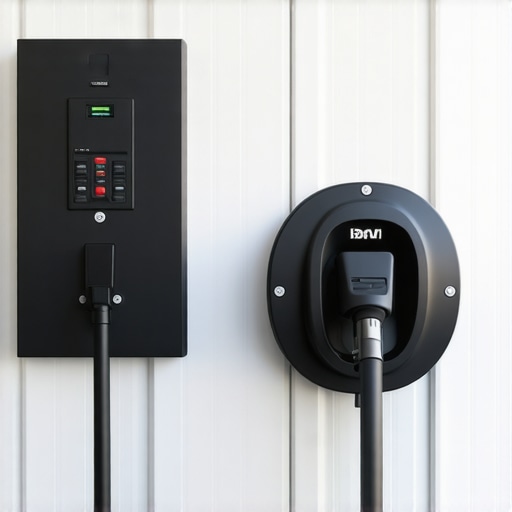
I can usually tell if a load center is about to give up the ghost before I even pull the dead front. It is a specific frequency—a low, aggressive hum that vibrates in your molars. That is the sound of resistance. It is the sound of a system designed for a 1970s toaster trying to quench the thirst of a 48-amp Level 2 electric vehicle charger. People think of electricity like water in a pipe, but it is more like a high-speed collision occurring inside your walls millions of times a second. When you plug in an EV, you aren’t just adding another appliance; you are essentially asking your house to run a marathon while holding its breath.
The Forensic Breakdown: A Case of Hidden Thermal Fatigue
I walked into a ‘fully renovated’ colonial last month where the homeowner was complaining that his new smart thermostat kept resetting and his lights flickered whenever he plugged in his Tesla. The flipper had done a ‘lipstick on a pig’ job. They’d installed a shiny new 200-amp sub-panel, but when I took my tick tracer and started digging, I found they had tapped into a 60-year-old service entrance cable that was literally crumbling inside the conduit. I found a buried junction box behind the master bedroom closet where the wire nuts had melted into a single glob of charred plastic. They were lucky. The resistance at that point was so high it was generating enough heat to cook a steak, but because it hadn’t shorted to ground yet, the breaker just sat there, fat and happy, while the house slowly cooked from the inside. This is why electrical inspections are not optional; they are a survival strategy.
“Aluminum wire connections can overheat and cause a fire without tripping the circuit breaker.” – CPSC Safety Alert 516
The Physics of the ‘Continuous Load’
In the trade, we talk about ‘Duty Cycles.’ Most things in your home—your coffee maker, your microwave, even your AC compressor—cycle on and off. They give the copper time to cool down. An EV charger is a 100% continuous load. It pulls maximum amperage for hours on end. This brings us to the physics of Thermal Expansion and Contraction. Every time current flows, the conductor heats up and expands. When it stops, it cools and shrinks. Over years, this ‘breathing’ can loosen the mechanical lugs holding the wires in your panel. If you have an older mid-century home with aluminum branch wiring, you are dealing with ‘Cold Creep.’ Aluminum expands at a much higher rate than copper, which leads to the lugs backing off just enough to create a tiny air gap. That gap is where the arc lives. Arcing creates carbon tracking, and carbon is conductive. Eventually, the path of least resistance isn’t through the wire; it’s through the charred remains of your panel’s bus bar.
The Hit List: Is Your Panel a Time Bomb?
Before you even think about home theater wiring or a chandelier installation, you need to look at the brand of your load center. If you see the name ‘Federal Pacific’ (FPE) or ‘Zinsco,’ stop. Do not pass go. These aren’t just old; they are fundamentally flawed. FPE Stabs-Lok breakers are notorious for ‘jamming.’ In a forensic autopsy of these panels, we often find that the internal trip mechanism has seized due to corrosion or poor metallurgy. You could have a dead short, and that breaker will hold until the Romex melts into a puddle. If you’re planning an EV install, a home rewiring service or at least a panel change-out is the only sane path. We call these ‘Widow Makers’ for a reason. Modern preventative electrical maintenance involves checking these old bus bars for pitting. If I see a rainbow discoloration on the metal, I know it has been through a thermal event. It’s lost its temper, and it’s no longer safe to carry a load.
The Math of the Heavy-Up
A standard Level 2 charger needs a 50-amp or 60-amp circuit. If your home has a 100-amp service, you are likely already at 70% capacity during a summer evening when the AC and dryer are running. Adding a 48-amp continuous load pushes you into the ‘nuisance tripping’ zone, or worse, it creates a bottleneck at the main lug. We solve this with a ‘Heavy-Up’—upgrading the service mast, the meter can, and the load center to 200 or 400 amps. During this rough-in phase, we also look at battery backup wiring. If you are going green with an EV, you want a system that can bridge the gap during a brownout. We use ‘Monkey Shit’ (duct seal) to ensure no moisture migrates from the outdoor meter into the indoor panel, preventing the salt-air corrosion that destroys coastal infrastructure.
“The total load shall not exceed the rating of the circuit or the maximum load permitted by the manufacturer.” – NEC Article 220.10
The Infrastructure Checklist
Check your grounding electrode system. Is your ground rod just a rusted piece of rebar from 1954? An EV charger requires a solid path to earth to dissipate surges. We often install dual 8-foot copper-clad rods spaced six feet apart to ensure we hit the right ohms on the Wiggy. If you’re doing smart thermostat wiring or phone line installation simultaneously, keep your low-voltage lines away from those high-amp home runs. The electromagnetic interference from a charging car can wreak havoc on unshielded data lines. And don’t forget the military discount wiring programs often available for veterans looking to modernize their home theater wiring or basic safety systems. Reliability isn’t a luxury; it is the result of torquing every screw to the manufacturer’s inch-pound specifications. I don’t care if you have weekend electrician services available; if they aren’t using a torque screwdriver, they aren’t finishing the job.
Final Verdict: Sleep When It Is Torqued
Electricity is a lazy, dangerous beast. It wants to find the easiest way to ground, and it doesn’t care if that path is through your drywall or your skin. When you add a massive demand like an EV charger, you are testing every single connection in your house. If you haven’t had an inspection in the last five years, you are flying blind. Get the load calculation done, verify the integrity of your bus bars, and ensure your preventative electrical maintenance is up to date. You want to wake up to a charged car, not a fire truck in your driveway. Electrical work is not a hobby. It is forensic science applied to daily life.