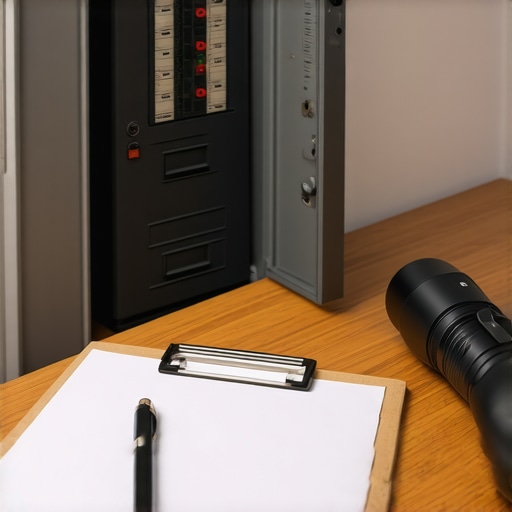
The Ghost in the Walls: Why Your Wiring Is a Silent Time Bomb
You think your home is safe because the lights flicker on when you flip the switch. I see it differently. I see a thirty-year-old split-level as a collection of high-resistance heating elements disguised as wiring. After 35 years in the trade, I’ve learned that electricity doesn’t give warnings; it gives post-mortems. My old mentor, Miller, used to say, “The copper doesn’t care about your feelings; it only cares about the path of least resistance.” He once saw me using a cheap plastic non-contact tester on a 480V motor lead and nearly threw his dikes at my head. “If you don’t use a Wiggy to verify zero potential, you’re just guessing with your life,” he growled. That lesson—that you never trust what you can’t measure—is the foundation of every electrical inspection I perform today.
The Anatomy of a Failure: Understanding the 1970s Legacy
If your home was built between 1960 and 1980, you aren’t just living in a house; you’re living inside a giant science experiment involving metallurgy and thermal expansion. This is the era of aluminum wiring and the infamous Federal Pacific Electric (FPE) panels. We need to talk about Cold Creep. Unlike copper, aluminum expands and contracts significantly when it carries a load. Over decades, this constant movement causes the wire to literally ‘creep’ out from under the terminal screws on your outlet switch repair jobs or inside the main lugs. This creates a tiny air gap. Electricity, being the lazy but aggressive force it is, jumps that gap. That’s arcing. Arcing creates heat. Heat creates carbon. Carbon is conductive. Before you know it, your junction box is a 2,000-degree kiln.
“Aluminum wire connections can overheat and cause a fire without ever tripping a circuit breaker.” – CPSC Safety Alert 516
When I conduct a forensic audit, I’m looking for the ‘telltale soot’—that fine black powder inside the device box that indicates the insulation has been cooking for years. If you’re preparing for an inspection, your first check isn’t cosmetic. It’s opening the dead front of your panel (if you’re qualified, which you probably aren’t) and looking for the brand name. If you see ‘Zinsco’ or ‘Federal Pacific,’ stop. Don’t pass go. You don’t need an inspection; you need a licensed master electrician to perform a panel changeout before the bus bars melt into a singular lump of slag.
The Checklist: Beyond the Visible
A real inspection involves more than just plugging a three-prong tester into a wall. It requires vibration analysis services for heavy-duty equipment and a deep dive into your NEC code updates. Here is what I look for, and what you should be worried about:
1. The Service Entrance and Bonding Jumper Services
Your electrical system is only as safe as its path to the earth. I often find that the bonding jumper services have been neglected. If your water heater was replaced by a plumber who didn’t understand electrical continuity, they might have installed PEX piping, breaking the ground path for the entire house. Without a proper bond, a fault in your toaster could energize every copper pipe in the building. During an inspection, I’m looking for that home run back to the service equipment to ensure that the ground-fault current path is permanent and electrically continuous.
2. The Panel and Overcurrent Protection
We check for ‘double tapping’—where some DIY genius has stuffed two wires into one breaker lug. This creates a high-resistance connection that can’t be properly torqued. We also look for evidence of ‘oversizing.’ If I see a 20-amp breaker on a 14-gauge Romex line, I know I’m looking at a fire hazard. The wire will melt long before the breaker ever thinks about tripping. We also verify the generator transfer switch. Back-feeding a panel with a male-to-male ‘suicide cord’ is the fastest way to kill a utility lineman and earn yourself a permanent spot in the local obituary.
3. The Modern Infrastructure: EV and Solar
Modern homes are pushing the limits of 100-amp and 200-amp services. Between a solar panel electrical hookup and a Level 2 EV charger, your old bus bars are screaming. A forensic inspection calculates the total connected load. If you’re adding solar, you need to ensure the 120% rule in the NEC is followed—you can’t just slap a 60-amp solar feed into a 200-amp panel without considering the bus bar rating. It’s physics, not a suggestion.
“The grounded conductor shall be connected to the equipment grounding conductors… by means of a main bonding jumper.” – NEC Section 250.24(A)
4. The Low Voltage Nightmare: Data Closet Organization
People ignore the data closet organization and home theater wiring because it’s ‘low voltage.’ But I’ve seen data racks where the 120V power strips are buried under a mountain of Cat6 cable, creating a heat trap that would melt a lead soldier. Proper electrical inspections include checking the cable management and power distribution for your network gear. If it looks like a bird’s nest, it’s a hazard.
The Technical Reality of the Rough-in
During the rough-in phase of a renovation, I often see ‘nicked’ conductors. When a tick tracer indicates power is present, the homeowner thinks they’re fine. But if that copper was nicked by a wire stripper, the cross-sectional area of the conductor is reduced. This creates a localized hot spot. It’s like a kink in a garden hose, but instead of water pressure building up, it’s heat. You won’t see it until the wall is closed and the smell of ozone starts wafting through the vents. This is why we insist on vibration analysis services for industrial-scale home installs; we need to see how the system behaves under the mechanical stress of high-current draws.
The Final Word on Safety
Electricity is a patient killer. It will wait decades for a screw to loosen just enough or for a bonding jumper to corrode. A proper checklist isn’t about passing a municipal inspection so you can sell the house; it’s about forensic verification that your infrastructure can handle the demands of 21st-century life. Don’t trust a handyman with a ‘will-do’ attitude. Hire a licensed master electrician who treats every wire like a potential ‘Widow Maker.’ Because at the end of the day, I want you to sleep soundly knowing your breakers are the only things that will trip tonight.