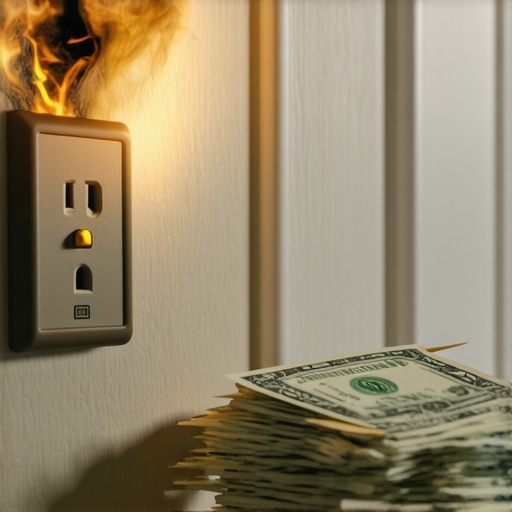
The Ghost in the Walls: Why Cheap Labor Costs a Fortune
I’ve spent thirty-five years smelling things most people ignore until it’s too late. I can walk into a basement and tell you if a transformer installation was handled by a pro or a guy who learned his trade from a 10-minute video. There’s a specific, metallic tang to the air when a bus bar is overheating—a precursor to a structure fire that insurance adjusters love to use as an excuse to deny a claim. My first foreman had a habit of checking every single wire nut with a physical tug test that would’ve pulled a tooth. He told me about a job in ’74 where a loose neutral on a high-amperage service didn’t just flicker the lights—it sent 240 volts through the electronics of a whole neighborhood because the guy before him didn’t understand the physics of a shared return path. ‘Electricity is lazy,’ he’d say, ‘it’ll take the shortcut through a human heart if you give it half a chance.’ That’s the reality of hiring an unbonded or uninsured contractor. You aren’t just saving a few bucks on a ceiling fan install; you are gambling your entire net worth on a stranger’s lack of accountability.
The Anatomy of a Service Entrance Failure
When we talk about a 400 amp service entrance, we aren’t just talking about bigger wires. We are talking about massive amounts of potential energy held back by mechanical connections. In homes built between 1900 and 1950, these systems are often shoehorned into structures never designed for the load of modern life. An uninsured ‘handyman’ won’t use a torque wrench to ensure the lugs are set to the manufacturer’s inch-pound specifications. They’ll just crank it until it feels ‘tight.’ But copper and aluminum are subject to cold creep—the physical deformation of the metal under constant pressure and thermal cycling. Over time, that ‘tight’ connection becomes a high-resistance point. Resistance creates heat. Heat creates oxidation. Oxidation increases resistance. It’s a death spiral that leads to an arc-fault that can vaporize steel in milliseconds. Without a bond or insurance, when that 400-amp service turns into a localized sun in your utility room, you are the one paying for the excavation and the rebuild.
“The AHJ (Authority Having Jurisdiction) shall be permitted to require evidence of the qualifications of the person, firm, or corporation responsible for the design, installation, maintenance, or operation of the electrical system.” — National Electrical Code (NEC) 110.3
The Smart Home Trap and Ungrounded Reality
Everyone wants smart lighting installation and security camera wiring these days, but in a 1920s home, the existing infrastructure is a minefield of brittle rubber insulation and cloth-covered Romex. An unbonded contractor will happily swap out your old toggle switches for smart dimmers without checking the integrity of the insulation. I’ve seen ‘technicians’ use a tick tracer to confirm power, then bury a bootleg ground because they didn’t want to tell the homeowner that the circuit lacks a proper equipment grounding conductor. This creates a ‘Widow Maker’ scenario where the metal chassis of a device becomes energized. If you touch that device and a grounded surface simultaneously, you become the path of least resistance. Ethernet wiring services are another common failure point; people think low voltage means low risk. But running PoE (Power over Ethernet) through bundles of substandard cable in an attic filled with old-growth pine dust is a recipe for a slow-burning fire that starts in the dark where no one sees it until the roof collapses.
Preventative Electrical Maintenance vs. Forensic Inspection
Preventative electrical maintenance isn’t a luxury; it’s a survival strategy for your bank account. I’ve performed forensic inspections on properties where flood water electrical safety was ignored. After a basement flood, an uninsured contractor might just ‘dry out’ a panel and flip the breakers back on. They don’t understand the capillary action of water. Moisture wicks up into the stranded wire, carrying minerals that create internal corrosion you can’t see from the outside. A smart meter installation performed by someone without the proper credentials can lead to jaw tension loss in the meter socket. When the utility company hooks up their side, the arcing starts immediately, but it’s hidden behind the glass. By the time you see the smoke, the meter box is fused to the side of your house.
“Arc-faults are a leading cause of home fires. Many of these fires could be prevented if the electrical systems were installed and maintained by qualified, insured professionals who adhere to current safety standards.” — CPSC Safety Alert
The Financial Ruin of the ‘Handyman Special’
If you hire an uninsured worker to install a camper electrical panel at your property and they nick a conductor during the rough-in, that damage might stay dormant for months. Then, one night, the vibration of a passing truck or a shift in the house’s foundation completes the path for an arc. The resulting fire burns the garage down. Your insurance company sends out a forensic investigator like me. I find the ‘rough-in’ work was done without a permit by an unlicensed, uninsured individual. The insurance company then denies the claim based on the ‘negligence’ clause or ‘unauthorized work’ provision. You are now personally liable for the damages to your own home and potentially your neighbor’s. An insured and bonded contractor carries the weight of that risk. Their bond is a financial guarantee that the work will be completed to code, and their insurance covers the ‘what ifs’ that keep me up at night.
The Physics of Failure in High-Load Systems
Consider the humble ceiling fan. It seems simple, right? But in an old home with ungrounded boxes, a fan’s motor creates constant vibration. If the ‘contractor’ didn’t use the correct mounting hardware or failed to secure the Romex properly, that vibration will eventually chafe the insulation. I’ve seen fans where the lead wires were stripped with dikes instead of proper wire strippers, leaving score marks that became heat-blooms. These small errors are why I carry a Wiggy and a thermal camera. I don’t trust what it looks like; I trust what the physics tell me. When you pay for a master electrician, you aren’t paying for the time it takes to twist wires; you are paying for the thirty years of knowing exactly why those wires shouldn’t be twisted that way. From transformer installation to the final trim-out of a smart home system, the difference between a safe house and a time bomb is the license and the insurance policy behind the man holding the tools. Don’t let your legacy go up in monkey shit and ozone just to save a few hundred dollars on the front end. It is the most expensive mistake you will ever make.