You hear that low-frequency thrumming in the attic? That is not the sound of comfort; that is the sound of an inductive load screaming for more juice than your 1970s branch circuit was ever designed to provide. As a master electrician who has spent three decades sniffing out the metallic tang of ozone in crawlspaces, I can tell you that wiring a whole house fan into an existing bedroom circuit is the fastest way to earn a visit from the fire department during a July heatwave. Most homeowners treat electricity like water—if it flows, it’s fine. But electricity has physics, and physics does not care about your DIY ambitions. When you flip the switch on a massive 30-inch attic fan, you aren’t just turning on a light; you are initiating a high-torque startup that demands a massive gulp of electrons, known as Locked Rotor Amps (LRA). If that demand is shared with your home automation setup or your smoke detector installation, you are creating a recipe for catastrophic failure.
The Old Timer’s Lesson: Why Precision Prevents Pyrotechnics
My journeyman used to smack my hand with a pair of dikes if I even thought about stripping a 14-gauge wire with a pocket knife. ‘You nick that copper, you create a hot spot, and that hot spot becomes a fuse that never blows until the house is gone,’ he’d scream. He was right. Every single connection point in an electrical system is a point of resistance. When you add a heavy-duty motor like a whole house fan to a circuit already burdened by bathroom exhaust fans or smart home wiring, you increase the total thermal load on every wire nut and terminal screw in that path. In older homes, where knob and tube removal hasn’t been completed, adding a modern fan is like trying to shove a firehose’s worth of water through a cocktail straw. The insulation, already brittle from sixty years of heat cycles, simply gives up the ghost.
“Aluminum wire connections can overheat and cause a fire without tripping the circuit breaker.” – CPSC Safety Alert 516
The Physics of the ‘Startup Gulp’ and Voltage Drop
Let’s zoom in on the component level. A whole house fan motor is an inductive load. Unlike a toaster, which is a resistive load, a motor requires a massive surge of current to break the inertia of the heavy blades and start spinning. This inrush current can be five to six times the normal running amperage. If your fan is on a shared circuit, this surge causes a momentary ‘voltage drop.’ You’ve seen it: the lights flicker when the fan kicks on. That flicker is the visual representation of your troubleshooting nightmare. That drop in voltage isn’t just annoying; it’s lethal to sensitive electronics. If you have a high-end home automation setup on that same line, you are effectively brown-outing your processors every time you want a breeze. Over time, this heat-stresses the solder joints on your circuit boards until they fail, leading to expensive weekend electrician services to find out why your ‘smart’ house has gone dumb. On a dedicated circuit, that Home Run goes straight from the breaker to the fan, ensuring no other devices are starved for voltage during that critical startup phase.
The Shared Neutral Trap and Thermal Expansion
In many mid-century homes, ‘handymen’ love to save time by pulling a ‘bootleg’ ground or sharing a neutral wire between two circuits. When you install a whole house fan without a dedicated line, you risk overloading the neutral conductor. While the hot wire is protected by the breaker, the neutral—which carries the return current—is often the silent victim of ‘Cold Creep.’ Aluminum conductors, frequently found in homes built in the 60s and 70s, expand and contract significantly more than copper. Every time that fan cycles on and generates heat, the wire expands. When it cools, it contracts. This microscopic movement eventually loosens the terminal screws in the panel. A loose connection creates an arc. Arcing creates heat in excess of 3,000 degrees Fahrenheit. I’ve used my Tick Tracer to find live wires inside walls that were so hot they had scorched the wood studs to charcoal without ever tripping a 20-amp breaker. This is why ADU electrical services always require a separate load calculation; you cannot simply ‘tap in’ to the nearest junction box and expect the laws of thermodynamics to take a holiday.
“Branch circuits shall be sized to carry the maximum load and shall be protected by an overcurrent device…” – NFPA 70 (National Electrical Code)
The Forensic Breakdown: Why Your Breaker Won’t Save You
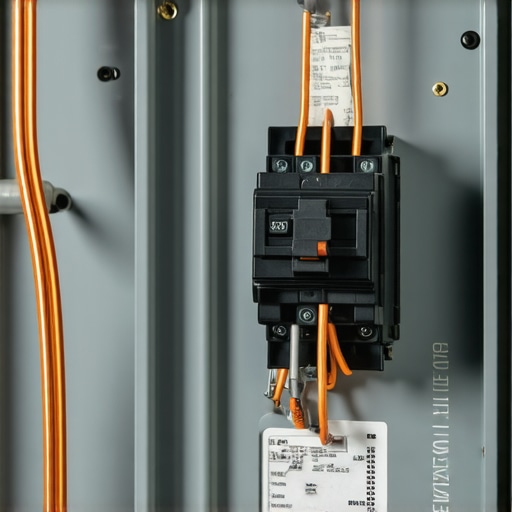
People have a blind faith in breakers. They think if there’s a problem, the ‘click’ will happen and they’ll be safe. But breakers are mechanical devices, and like any machine, they can jam. If you’re still rocking an old Federal Pacific or Zinsco panel, you’re basically living with a widow maker. These breakers are notorious for ‘internal welding’—the contacts fuse together under load, and even if the circuit is melting, the breaker stays closed. When I’m called out for holiday emergency calls, it’s usually because someone plugged in too many space heaters or ran their whole house fan on a circuit shared with a standby generator install transfer switch. The result is a charred mess of Romex and melted plastic. A dedicated circuit for your fan means you can size the breaker specifically for the motor’s requirements, often using an AFCI (Arc-Fault Circuit Interrupter) that can detect the specific signature of a loose wire sparking long before it reaches the temperature of the sun. We use monkey shit (duct seal) to plug the holes where the wire enters the attic to prevent moist air from the house from hitting the cold electrical components, but even the best sealing won’t save you from a circuit that is fundamentally overloaded.
Infrastructure Integrity: From ADUs to Retrofits
Whether you are looking at ADU electrical services or just trying to modernize a 1940s bungalow, the logic remains the same: separation of powers. A dedicated circuit allows for proper grounding, which is often missing in knob and tube removal projects. Without a dedicated ground, the metal housing of your fan could become ‘live’ if there’s an insulation failure. Imagine reaching up to adjust the louvers and becoming the path of least resistance to the earth. Not a great way to start your weekend. When we perform a rough-in for a new fan, we pull a fresh 12/2 copper Romex line. We don’t mess with existing junctions. We don’t hide boxes behind drywall. We ensure that every connection is torqued to the manufacturer’s inch-pound specifications. It sounds like overkill until you realize that your home is essentially a tinderbox held together by thin strands of copper. Investing in a dedicated circuit isn’t just about ‘code compliance’; it’s about ensuring that your smoke detector installation never actually has to do its job. It’s the difference between a house that’s cool and a house that’s a crime scene. Don’t let a ‘handyman’ convince you that tapping into the light circuit is ‘fine.’ Use your Wiggy, check your loads, and run the dedicated line. Sleep at night knowing your connections are tight and your house isn’t vibrating its way toward a thermal event.