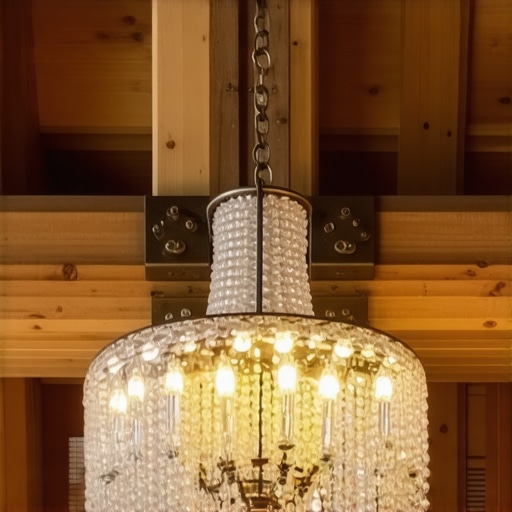
The Sound of a 50-Pound Guillotine
I was standing in a dining room in an old Victorian home when I heard it—a faint, rhythmic creak that made my skin crawl. The homeowner wanted a pendant light hanging swapped out for a massive, 60-pound crystal heirloom. I pulled my Tick Tracer out of my pocket and checked the box. The previous installer, likely a ‘handyman’ with more ambition than sense, had secured a standard plastic pancake box to a piece of 1×2 wood lath using two drywall screws. Drywall screws have zero shear strength; they are brittle as glass. Gravity was winning the war of attrition. This wasn’t just a lighting fixture; it was a 50-pound guillotine waiting for a vibration to finish the job. My old journeyman used to smack my hand if I stripped a wire with a knife. ‘You nick the copper, you create a hot spot,’ he’d scream. He was right. Precision in this trade isn’t about being neat; it’s about preventing the thermal expansion that leads to a structure fire while the family is eating dinner.
The Physics of the Failure: Beyond the Canopy
Most people look at a chandelier and see aesthetics. I see a static load fighting against a dynamic environment. When you have a speaker system setup pumping bass through the house, or even just kids running on the floor above, those vibrations travel through the joists. This is where vibration analysis services in commercial settings become relevant to residential safety. Every vibration acts like a tiny hammer blow to the mounting screws. If you’re using a standard electrical box rated for 35 pounds, and your fixture is 40, you’re betting your life on a safety factor that doesn’t exist. The National Electrical Code (NEC) is very specific about this.
“Outlet boxes shall not be used as the sole support for ceiling-suspended (paddle) fans unless the outlet box is listed and marked as being suitable for the purpose.” – NEC 314.27(C)
While that quote mentions fans, the same logic applies to heavy luminaires. A heavy-duty brace—often called a ‘fan brace’—is a telescoping steel bar that wedges between two ceiling joists. It doesn’t rely on the plaster or the drywall for support. It transfers the weight directly into the skeletal structure of the building.
Component Zooming: The Anatomy of a Collapse
Let’s talk about the metallurgical nightmare of improper mounting. When a heavy fixture hangs from a weak box, the box begins to tilt. This tilt puts an uneven load on the 8-32 or 10-24 screws holding the fixture to the strap. As the screws bend, they create a gap in the electrical connections. Now you have a loose neutral or a hot wire rubbing against the edge of a stamped steel box. Over time, the vibration from the HVAC system or a nearby pool pump electrical circuit causes the insulation to chafe. Eventually, you get an arc. I’ve seen boxes where the Romex was charred black because the mechanical failure of the brace led to an electrical failure of the circuit. This is why a bonded insured electrical professional won’t just ‘make it fit.’ We look at the electrical panel upgrade requirements and the structural integrity of the rough-in before we even think about the trim-out phase.
The Old Home Trap: Lath, Plaster, and False Security
In homes built between 1900 and 1950, you aren’t dealing with predictable 2×10 joists and 5/8-inch drywall. You’re dealing with old-growth timber that has cured to the hardness of concrete and plaster that is crumbling into dust. In these environments, a ‘simple’ pendant light hanging project can turn into a shed wiring install level of complexity. The original boxes were often ‘mud boxes’ or shallow pans that were never intended to hold anything heavier than a porcelain socket and a 40-watt bulb. If you try to mount a modern, heavy chandelier to these, the weight will literally pull the plaster off the ceiling. This is where we bring in a Home Run—a dedicated circuit if the fixture is high-wattage—and ensure the brace is lagged into the center of the joist. If you miss the center and ‘toe-nail’ the screw, you’re creating a pivot point that will fail in five years. I use Dikes to trim back the old wires and a Wiggy to verify the voltage is true before I even trust the ground.
Commercial Standards in a Residential World
When I work on restaurant kitchen electrical or parking lot lighting, the safety margins are massive because the liability is huge. Why should your dining room be any different? A heavy-duty brace isn’t an ‘upsell’; it’s the baseline of electrician ethics.
“Aluminum wire connections can overheat and cause a fire without tripping the circuit breaker.” – CPSC Safety Alert 516
While we mainly use copper now, many old ceiling boxes still have ancient aluminum or tinned-copper wires that are incredibly brittle. Moving these wires around to install a new brace requires a delicate touch. If you snap one, you’re looking at a full electrical panel upgrade or a junction box nightmare behind the drywall. We use ‘Monkey Shit’ (duct seal) to keep air from moving through the conduit in exterior applications, but in a ceiling, we use thermal-rated insulation to ensure that the heat from those high-wattage bulbs doesn’t bake the wire insulation into a crisp.
The Verdict: Sleep Better with Steel
At the end of the day, electricity is lazy and gravity is relentless. They are both looking for the easiest path to the ground. If your chandelier isn’t backed by a steel brace, you’re providing the path. Whether you are doing a shed wiring install or hanging a $5,000 light, the mechanics of the mount are more important than the beauty of the glass. Always verify your electrician is bonded and insured, and don’t be afraid to ask to see the brace before the canopy goes up. If it’s plastic, send them back to the van. [{“@context”:”https://schema.org”,”@type”:”HowTo”,”name”:”How to Verify a Heavy Duty Chandelier Support”,”step”:[{“@type”:”HowToStep”,”text”:”Turn off the breaker and verify the circuit is dead using a Wiggy or Tick Tracer.”},{“@type”:”HowToStep”,”text”:”Remove the decorative canopy to expose the electrical box.”},{“@type”:”HowToStep”,”text”:”Inspect the box for a UL listing label that specifies ‘Suitable for Fan Support’ or weight ratings over 50lbs.”},{“@type”:”HowToStep”,”text”:”Check for a steel bar spanning between the joists, secured with lag bolts rather than drywall screws.”}]}]