The Invisible Liability Hiding in Your Walls
Your homeowners insurance company is not your friend; it is a professional risk assessor. When an underwriter looks at a house built between 1960 and 1980, they aren’t looking at the crown molding or the granite. They are looking for the thermal signatures of a disaster waiting to happen. I remember my old journeyman, a man who smelled eternally of ozone and stale coffee, once saw me stripping a piece of Romex with a pocketknife. He slapped the back of my head so hard I saw sparks that weren’t electrical. ‘You nick that copper, you create a microscopic bottleneck,’ he barked. ‘Resistance generates heat, heat creates fire, and fire creates a jobless electrician.’ He was right. That tiny nick is where the physics of failure begins, and it is exactly why your insurance company is suddenly demanding proof of certified journeyman services before they’ll renew your policy.
The Mechanics of the ‘Time Bomb’ Panel
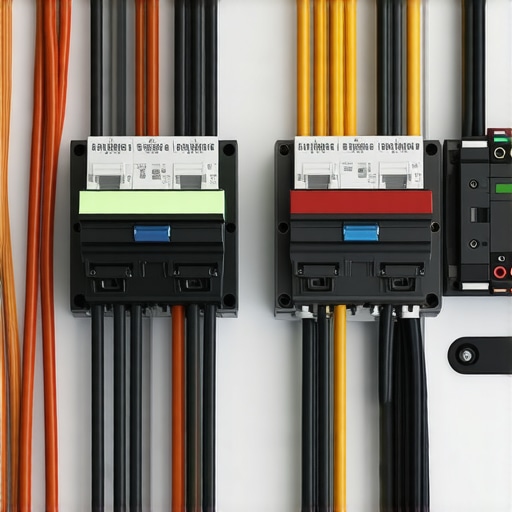
If your garage or utility room houses a Federal Pacific Electric (FPE) or Zinsco panel, you aren’t just looking at an old piece of hardware; you are looking at a mechanical failure point. In a standard breaker, two metal surfaces—the bus bar and the breaker stab—must maintain a high-pressure, low-resistance connection. In these legacy panels, the metallurgy was flawed. Over decades, a process called ‘cold creep’ occurs, especially if you have aluminum branch circuit wiring. The metal expands and contracts at different rates than the steel screws holding them. This creates a microscopic gap. Oxygen enters that gap, creating an aluminum oxide layer. This oxide is an insulator, not a conductor. Now, the electricity has to jump that gap, creating a micro-arc that reaches temperatures hotter than the surface of the sun. The breaker doesn’t trip because the current hasn’t exceeded the rating, but the heat is melting the bus bar. This is why main disconnect services are often the first thing an inspector flags. If you can’t kill the power instantly and reliably, the house is a write-off.
“Aluminum wire connections can overheat and cause a fire without tripping the circuit breaker. This condition exists at every connection point in the home, including outlets, switches, and junction boxes.” – CPSC Safety Alert 516
The Insurance Trap: Unbonded Systems and DIY Hazards
Insurance companies have grown weary of ‘The Handyman Special.’ I’ve walked into countless basements where a homeowner installed their own generator transfer switch or attempted a garage wiring services project without understanding bonding vs. grounding. To the uninitiated, they look like the same thing. They aren’t. Grounding is your path to the earth for lightning and surges. Bonding is what ensures that if a hot wire touches a metal casing, the breaker actually trips. Without proper bonding, that metal casing stays energized. If you touch your bathroom exhaust fan while standing on a damp tile floor, you become the path to ground. This is a ‘Widow Maker’ scenario. When an insurance company sees a lack of a ‘bonded’ sticker or a permit for spa grounding services, they see a liability they cannot calculate, so they drop you.
The Physics of Modern Loads on Aging Infrastructure
We are asking 1970s infrastructure to handle 2024 demands. When you add a solar panel electrical hookup or a smart meter installation, you are changing the load profile of the entire dwelling. A 100-amp service was plenty for a world of incandescent bulbs and one television. Today, between EV chargers and high-draw appliances, that old bus bar is screaming. I use my Tick Tracer to find live circuits buried behind drywall, but I use my thermal imager to show homeowners why their insurance agent is scared. You can actually see the heat radiating from a loose neutral wire. If that neutral fails, you get a ‘floating neutral,’ which can send 240 volts through your 120-volt electronics, frying everything from your fridge to your laptop in a millisecond.
“All electrical equipment shall be installed and used in accordance with the instructions included in the listing or labeling.” – National Electrical Code (NEC) Section 110.3(B)
Why Professional Certification is Non-Negotiable
When you hire for permanent holiday lighting or even a simple holiday light installation, you might think it’s just about aesthetics. But a pro knows how to calculate the ‘home run’ distance to prevent voltage drop. They know how to use ‘Monkey Shit’ (duct seal) to keep moisture out of the exterior conduits so your meter can doesn’t rot from the inside out. They carry dikes to cleanly snip wires and a Wiggy (solenoid voltmeter) to ensure the circuit is truly dead and correctly phased. Insurance companies want a paper trail. They want to see that a journeyman torqued every lug to the manufacturer’s specific inch-pound requirements. They want to know that the main disconnect services were performed by someone who knows the difference between a sub-panel and a service entrance. In the end, paying for certified journeyman services isn’t an expense; it’s the premium you pay to ensure that when you close your eyes at night, the only thing humming in your house is the refrigerator, not the walls.