
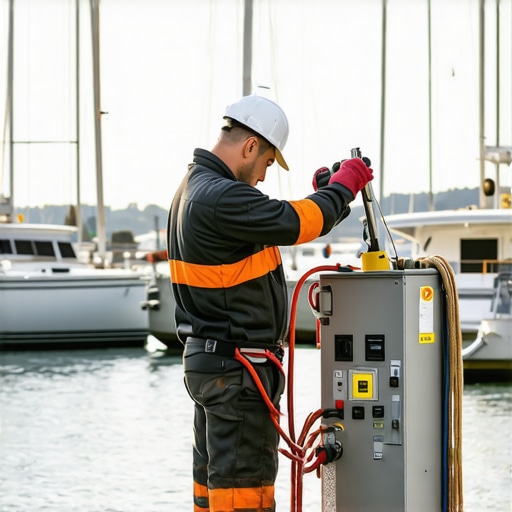
The Scent of a Short: A Forensic Look at Marine Power
The first thing you notice when stepping onto a failing dock isn’t the swaying of the timber or the sound of the tide; it’s the smell. It is a nauseating cocktail of rotting salt marsh, stagnant water, and the sharp, metallic sting of ozone. To a forensic inspector, that ozone isn’t just a smell—it’s the sound of a countdown. I have spent 35 years tracking down the ghosts in the machine, and nowhere are those ghosts more vengeful than where the power grid meets the waterline. In 2026, as we integrate energy storage systems and high-amperage hot tub wiring services into private piers, the margin for error has vanished. My old journeyman used to smack my hand with a pair of dikes if I even thought about stripping a wire with a pocketknife. ‘You nick that copper, you create a localized hotspot,’ he’d scream over the roar of the surf. ‘The resistance climbs, the heat builds, and before you know it, you’re not an electrician—you’re an arsonist.’ He was right. That microscopic nick becomes a point of mechanical failure under the constant vibration of a floating dock. When we talk about 6 Pro Tips for Safe Dock Electrical Services in 2026, we aren’t talking about aesthetics; we are talking about surviving the physics of a highly conductive, corrosive environment.
“Aluminum wire connections can overheat and cause a fire without tripping the circuit breaker.” – CPSC Safety Alert 516
1. The Physics of the Salt Bridge: Why Your Meter Can is Rotting
In coastal environments, the enemy is literal chemistry. Salt air isn’t just