
The Ghost in the Copper: Why Your Modern Home is a Forensic Site Waiting to Happen
My old journeyman, a man who had more scars from soldering irons than I have from mosquitoes, used to smack my knuckles with a pair of dikes every time I got sloppy with my wire strippers. ‘You nick that copper, you’re not just making a weak spot, you’re building a radiator,’ he’d growl through a cloud of cigar smoke. He was right. That microscopic notch creates a point of high resistance where electrons bunch up like a morning commute on a collapsed bridge. By 2026, with the grid becoming more unstable than a three-legged ladder on wet ice, those minor mistakes in your home’s wiring are going to be the difference between a functional smart home and a 3:00 AM visit from the fire department.
The Physics of the 2026 Grid: Why Spikes are Killing Your Gear
We are entering an era of ‘dirty power.’ Between the massive draw of neighborhood EV chargers and the fluctuating supply from renewable sources, your home’s electrical service is being hammered by voltage transients. When the grid fluctuates, it’s not just a flicker; it’s a surge of pressure that stresses every dielectric layer in your appliances. Think of it as water hammer in a plumbing system, but instead of a rattling pipe, you get a micro-arcing event inside your $4,000 refrigerator’s control board. This is where demand response systems come in—not just to save you a few bucks on your utility bill, but to act as a forensic shield for your infrastructure.
“Overloaded circuits or damaged wiring can lead to localized heating, which may ignite surrounding insulation or structural materials before a circuit breaker ever reaches its trip threshold.” – NFPA 70E Standard for Electrical Safety
1. Smart Load Centers: The Forensic Brain of Your Service Entrance
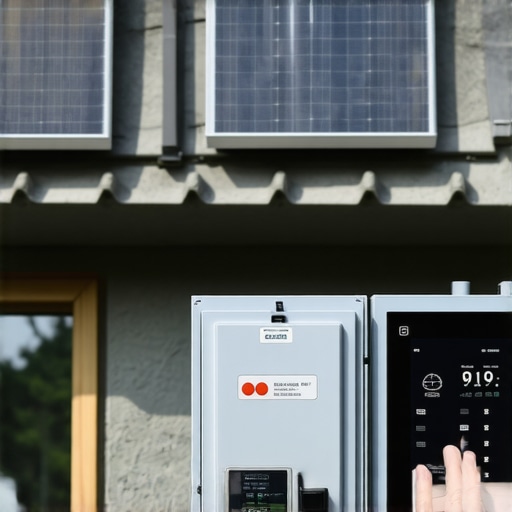
The traditional breaker panel is a dumb box of thermal-magnetic switches. It only cares about one thing: gross overcurrent. It doesn’t see the ‘leaking’ current of a failing compressor or the harmonic distortion from a cheap LED driver. A smart load center, however, allows for active load shedding. If the grid indicates a spike is imminent, the system can shed non-essential loads like your water heater in milliseconds. When we perform a standby generator install, we now integrate these smart panels to ensure that the transition from utility to backup power doesn’t send a massive inductive kickback through your sensitive electronics. This isn’t just a heavy-up; it’s an architectural shift in how we manage current flow.
2. High-Speed Low-Voltage Communication: Ethernet as a Safety Layer
You might think network cable installation is just for Netflix, but in the modern demand response ecosystem, it’s a critical safety component. WiFi is too latent and prone to interference for real-time load management. We are increasingly running ethernet wiring services directly to HVAC controllers and EV chargers. Why? Because when the utility sends a ‘demand event’ signal, the delay of a wireless signal can result in a contactor closing at the exact peak of a voltage wave, causing an arc that pits the contacts. Hardwired data ensures the ‘handshake’ between your home and the grid happens at the zero-crossing of the AC wave, minimizing wear and tear on your equipment.
3. The ‘Skin Effect’ and Whole-Home Surge Mitigation
Most homeowners think a power strip is enough protection. It isn’t. When a spike hits, the high-frequency components of that surge travel on the ‘skin’ of your conductors. This is why OSHA compliance wiring standards in industrial settings require specific grounding bonding that we are now bringing into residential homes. A true demand response system includes a Type 1 surge protective device (SPD) at the meter can. This catches the lightning or the grid spike before it even enters your home run circuits. If you’re looking for same day service appointments, it’s usually because someone skipped this step and fried their oven’s logic board.
“Aluminum wire connections in homes are 55 times more likely to have one or more wire connections reach fire hazard conditions than copper wire.” – CPSC Safety Alert 516
4. Hybrid Inverters and Battery Buffering
The best way to stop a spike is to not be connected to the grid when it happens. Modern hybrid inverters act as a massive capacitor for your entire house. They ‘clean’ the incoming power, converting AC to DC and back to AC, stripping away the transients. This is where rebate assistance programs become vital; the government wants you on these systems because it stabilizes the whole neighborhood. We’ve seen installations where the grid voltage was jumping between 108V and 132V, yet the interior circuits stayed a rock-solid 120V thanks to the battery buffer. For those in the service, military discount wiring programs often cover the specialized labor required to commission these complex energy storage systems.
5. Hardwired Fire Suppression and Perimeter Logic
Demand response isn’t just about turning things off; it’s about monitoring what’s on. Integrating your fire alarm system install with your load center means that if a circuit starts exhibiting arcing signatures—even if it hasn’t tripped the AFCI yet—the system can kill power to that zone and sound the alarm. We also see this in fence line lighting and temporary power services for construction; if the load sensing detects a ground fault in the yard, it can isolate that branch without killing the whole house. This level of granularity is what keeps a 2026 home from becoming a forensic headline.
The Master’s Verdict: Torque and Tension
At the end of the day, you can have the most advanced smart home in the state, but if your rough-in was done by a guy who didn’t use a torque screwdriver, you’re in trouble. Electrical connections are subject to thermal expansion and contraction. Over time, a loose lug will oxidize, creating a layer of non-conductive ‘skin’ that generates heat. I’ve walked into houses where the main bus bar was so hot it was humming like a disturbed hornet’s nest. Don’t gamble with ‘handyman’ fixes. Whether you need ethernet wiring services to manage your demand response or a full standby generator install, make sure the person behind the tick tracer knows the physics, not just the code. Sleep at night knowing every screw is torqued to spec and your home is ready for the 2026 grid chaos.
{“@context”:”https://schema.org”,”@type”:”HowTo”,”name”:”How to Implement Residential Demand Response for Surge Protection”,”step”:[{“@type”:”HowToStep”,”text”:”Audit your current electrical panel for smart-compatibility and torque specifications.”},{“@type”:”HowToStep”,”text”:”Install a Type 1 Surge Protective Device at the main service entrance.”},{“@type”:”HowToStep”,”text”:”Deploy Cat6a ethernet wiring to high-draw appliances for low-latency control.”},{“@type”:”HowToStep”,”text”:”Integrate a hybrid inverter or battery backup to buffer grid voltage transients.”}]}
This article really highlights the importance of proactive electrical system upgrades as we head into the chaos of 2026. I’ve recently installed a hybrid inverter and a Type 1 SPD at my main panel, mainly to protect my high-end home theater system from voltage spikes. The difference in power quality is noticeable, especially during those stormy days with frequent power fluctuations. That said, I wonder how many homeowners are aware of the need for proper torque specifications when installing these systems. I had a neighbor who skipped professional installation and ended up with loose connections that caused frequent tripping and, ultimately, damage to appliances. Do you think the average homeowner will prioritize these upgrades, especially amidst rising costs? Or should this become a standard part of home maintenance? It seems like a small investment for peace of mind and long-term safety.
Reading through this post really underscores the complexity and importance of proper electrical maintenance in the face of what’s coming in 2026. It’s not just about installing the latest gadgets but ensuring that every connection and component withstands the increasing volatility in power supply. I personally had a close call when a surge blew out my smart refrigerator’s control module, which I later realized was due to a loose lug that went unnoticed during a routine check. It makes me wonder, how many homeowners actually check and verify their wiring connections with the correct torque specs? I believe that proactive checks—perhaps even annual inspections—will become essential. Also, what are the best ways for the average homeowner to educate themselves on such technical details without necessarily hiring a professional every time? This piece has definitely motivated me to take a closer look at my own system and consider upgrading before the chaos hits.